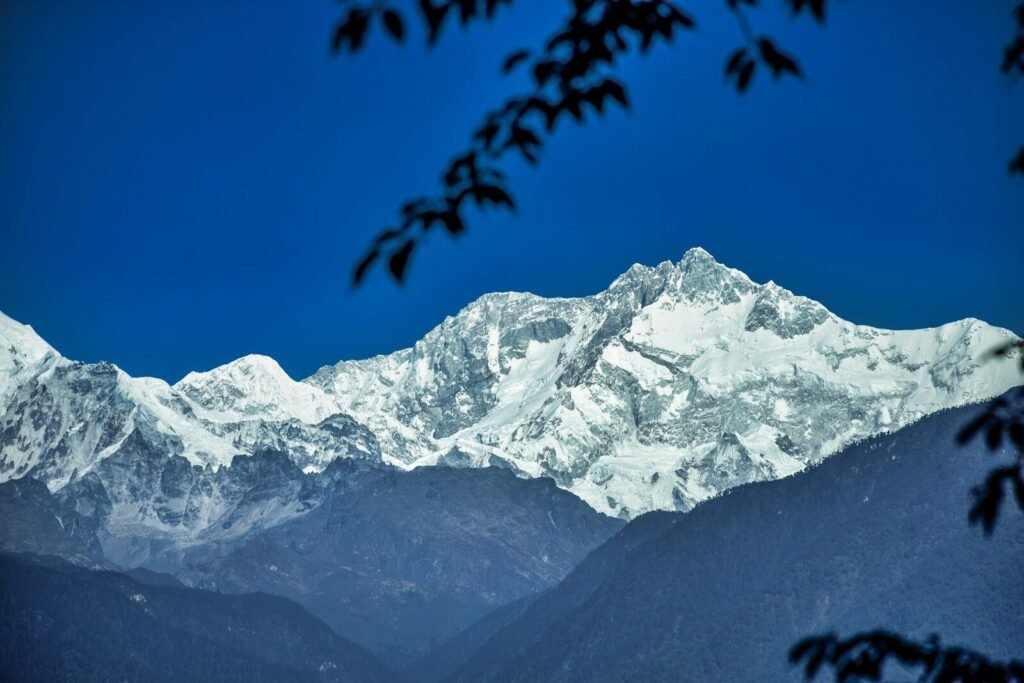
Pelling, a small town in West Sikkim, India, has transformed over the past century from a quiet mountain settlement into one of Sikkim’s most popular tourist destinations. Perched at an altitude of approximately 2,100–2,200 metres, Pelling offers commanding views of the snow-capped Kanchenjunga range, an array of Buddhist monasteries and historic sites, and access to alpine forests, sacred lakes and gentle treks. This article traces the history of Pelling in the context of tourism: how its heritage and geography shaped visitor interest, how tourism developed, and what the present and future look like for sustainable tourism in the region.
Pelling sits in West Sikkim, within easy access of Gangtok and the plains of West Bengal. The town lies amid rhododendron and oak forests, overlooking deep valleys that frame the eastern approaches to the Kanchenjunga massif. The local population is a mix of Lepcha, Bhutia and Nepali communities, whose cultures, languages and religious traditions — particularly Tibetan Buddhism — profoundly influence Pelling’s character and attractions.
To understand modern tourism, it helps to situate Pelling within the wider history of Sikkim. Sikkim’s historical centers and religious institutions date back several centuries, with dynastic capitals and monasteries shaping settlement patterns. Although Pelling itself was not a major political capital, it lies close to historically significant sites that directly shaped its identity.
Just above Pelling are the ruins of Rabdentse, once a royal seat of the Chogyal (Sikkimese monarchy). The ruins date from the 17th and 18th centuries and were the site of political and cultural activity before the capital moved and later conflicts altered the region’s political map. Rabdentse’s stone walls, terraced foundations and views of the Kanchenjunga contributed to the area’s historic aura and later attracted history-minded visitors.
Pemayangtse Monastery, a major Nyingma institution, was established several centuries ago and became an important center for Buddhist learning and ritual. The monastery’s architecture, masked dance ceremonies, and festivals have drawn pilgrims for generations and later became accessible to tourists seeking cultural immersion and photographic subjects.
Tourism in Pelling developed in phases, influenced by improvements in regional transport, the broader growth of hill-station tourism in northeast India, and increasing interest in Himalayan culture and ecology.
Before mass motorized travel, Pelling’s upper valleys were visited intermittently by traders, pilgrims and a few adventurous travelers. In the early- to mid-20th century, as colonial and later Indian hill-station culture popularized mountain retreats, areas across the Eastern Himalaya saw gradual interest from those seeking cooler climates and scenic landscapes. Pelling’s vantage points and proximity to historic monasteries put it in a favorable position when visitor numbers began to increase.
After Indian independence and as road networks improved in the latter half of the 20th century, Pelling became much more accessible from Siliguri/New Jalpaiguri and Gangtok. The 1970s–1990s saw incremental growth: more visitors, small guesthouses, and the first modest tourist facilities. The late 20th and early 21st centuries accelerated this trend as tourist demand for Himalayan culture, trekking and mountain vistas increased.
Since the 1990s and particularly in the 2000s, Pelling witnessed a notable expansion of tourism facilities: luxury and boutique resorts, homestays, guided treks, and tour operators. Social media and improved domestic transport further widened Pelling’s visitor base beyond foreign backpackers to include domestic family tourists, honeymooners and spiritual travellers.
An architectural and religious landmark, Pemayangtse embodies centuries of Buddhist practice in the region. The monastery’s chapels, murals and ritual calendar make it both a living religious center and a cultural attraction for tourists. Festivals featuring masked dances provide rare glimpses into ritual performance traditions that pre-date modern tourism.
The Rabdentse ruins offer tourists a tangible connection to Sikkim’s royal past. Interpretive walks among the foundations and viewpoints help visitors imagine the erstwhile capital’s layout and strategic position. The site’s historical value complements the region’s spiritual appeal, attracting both history enthusiasts and casual sightseers.
A sacred lake in the hills near Pelling, Khecheopalri is revered by Buddhists (and Hindus in the region) as a wish-fulfilling body of water. Its quiet setting, strict local taboos (such as bans on littering), and primeval forest fringe have become focal points for pilgrimage tourism and environmental appreciation.
The Singshore Bridge, several waterfalls and forested trails around Pelling provide attractions for day-trippers and trekkers. These landmarks complement Pelling’s historical sites by offering outdoor adventure and photography opportunities, contributing to the town’s well-rounded tourism profile.
Tourism has brought clear economic benefits to the Pelling area — livelihoods from hospitality, guiding, transport and handicrafts. Yet it has also posed environmental and cultural challenges that require attention.
Local communities, government agencies and NGOs have increasingly focused on sustainable tourism practices to protect Pelling’s natural and cultural assets while retaining tourism benefits.
Encouraging community-run homestays and local guiding helps retain tourism income locally and fosters authentic cultural exchange. Training in hospitality, language and environmental practice increases the value of community-based tourism.
Practical measures such as banning single-use plastics, creating village-level waste-collection systems, and implementing water-use restrictions during peak seasons are important for protecting fragile mountain ecosystems.
Sensitive sites — especially lakes and monastery precincts — benefit from regulated visitor flows, interpretive signage, and clear rules that reflect local spiritual values (for example, no-litter practices at Khecheopalri).
The clearest views of Kanchenjunga are generally in the autumn (October–December) and spring (March–May). The monsoon season (June–September) brings heavy rain and landslide risk, so travel then is less comfortable and sometimes unsafe.
Pelling offers a spectrum of accommodations from basic guesthouses and family homestays to mid-range and boutique resorts that trade on Kanchenjunga views. Booking in peak season is advisable. Expect simpler services than in larger hill towns, and value local cuisine and hospitality.
Pelling illustrates how a place with significant natural beauty and rich cultural heritage becomes a focal point for tourism when accessibility improves. Its trajectory — from quiet mountain hamlet to bustling tourist-node — mirrors many Himalayan settlements. The challenge and opportunity lie in balancing economic development with environmental stewardship and cultural authenticity.
Pelling’s history — tied to Sikkim’s dynastic past, Buddhist monastic culture and dramatic Himalayan landscapes — provides the foundations for its tourism appeal. Over recent decades, improved access and wider interest in Himalayan travel has turned Pelling into a sought-after destination. The ongoing task for residents, policymakers and visitors is to guide tourism so that economic benefits continue while safeguarding the natural and cultural resources that make Pelling unique. With mindful planning, Pelling can remain a vibrant place of pilgrimage, heritage and mountain hospitality for generations to come.
Visitors and researchers who want to explore Pelling’s history and tourism development further should consult local monastery records, district tourism publications from the Government of Sikkim, and community-led initiatives in West Sikkim that publish guidance on responsible tourism and cultural practices.
What makes us different from other tour package companies
Our travel experts have core and intense knowledge about Sikkim sector with over 10 years of experience that will help you choose the best possible itinerary as per your requirements.
Our travel experts are just one call away during your tour to help you with any kind of immediate assistance so that your tour is a more enjoyable and hassle-free tour.
eSikkimTourPackages ensures best rates to all our esteemed guests since we have our own hotels and fleet of vehicles and drivers and there is no third-party involvement. This ensures personalized service and best rates.























Kindly enter the details below for your Sikkim Tour Package