Table of Contents
- Introduction
- History and Importance
- Best Time to Visit
- Top Things to Do at Batasia Loop
- How to Reach Batasia Loop
- Nearby Attractions
- Local Experiences: Food, Shopping, and Culture
- Accommodation Options
- Estimated Travel Costs
- Travel Tips for Families, Honeymooners, and Friends
- FAQs
- Conclusion
Introduction
Batasia Loop is one of Darjeeling’s most scenic and memorable viewpoints, famous for its spiral railway track, mountain panoramas, and the moving war memorial at its center. Set on the route of the Darjeeling Himalayan Railway, this elegant loop is more than a photo stop. It is a place where engineering, history, and Himalayan beauty come together in a way that feels deeply iconic.
If you are planning a Darjeeling trip, Batasia Loop deserves a place on your itinerary. The sweeping views of the Kanchenjunga range, the toy train gliding through the curves, and the peaceful gardens make it a short but rewarding stop. It is especially appealing for first-time visitors, families, couples, and anyone who enjoys classic hill-station scenery.
History and Importance
What makes Batasia Loop special?
Batasia Loop was created to help the toy train negotiate the steep gradient as it climbs toward Ghum, one of the highest railway stations in India. The loop allows the train to make a smooth spiral turn, which is both practical and visually striking. Today, it is celebrated as one of the most photographed sections of the Darjeeling Himalayan Railway.
Historical and emotional significance
At the center of the loop stands a war memorial dedicated to Gorkha soldiers who sacrificed their lives in various operations after independence. This gives the site a solemn, respectful atmosphere beyond its tourist appeal. Visitors often pause here not only for the views, but also to reflect on the history and pride of the region.
Why it matters in Darjeeling tourism
- It showcases the engineering brilliance of the toy train route.
- It offers wide-angle views of the mountains and valley.
- It connects travelers to the cultural identity of the Darjeeling hills.
- It is a must-stop on many Darjeeling sightseeing routes.
Best Time to Visit
Ideal seasons
The best time to visit Batasia Loop is usually from March to May and October to December. These months often bring clearer skies, pleasant temperatures, and better mountain visibility.
- Spring and early summer: Fresh greenery, comfortable weather, and bright views.
- Autumn and early winter: Crisp air and a higher chance of seeing Kanchenjunga clearly.
Seasonal notes
- Monsoon (June to September): Lush and atmospheric, but fog and rain may limit views.
- Winter (December to February): Cold and beautiful, with occasional clear mornings and strong mountain visibility.
Best time of day
Early morning is often the best time for photography and mountain views. Late afternoon can also be lovely, but the light may soften quickly in the hills. If you want to catch the toy train passing through, check timings in advance and arrive early.
Top Things to Do at Batasia Loop
1. Watch the toy train cross the loop
One of the most memorable experiences is seeing the Darjeeling Himalayan Railway toy train navigate the spiral track. It is a charming sight that captures the old-world spirit of the region.
2. Enjoy panoramic Himalayan views
On a clear day, the viewpoint opens to spectacular views of the surrounding hills and the Kanchenjunga range. This is one of the main reasons travelers stop here even if only for a short visit.
3. Visit the war memorial
The memorial at the center of the loop is a quiet, respectful space that adds depth to the experience. It is worth spending a few moments here to appreciate its significance.
4. Take a leisurely garden walk
The landscaped area around the loop is pleasant for a short stroll. Flowers, open spaces, and viewpoints make it a good place to relax between sightseeing stops.
5. Capture photos and videos
Batasia Loop is one of Darjeeling’s best spots for photography. The curve of the track, the toy train, and the mountain backdrop create a classic postcard scene.
6. Combine it with nearby sightseeing
Because it is close to Ghum and other popular attractions, Batasia Loop fits easily into a half-day or full-day Darjeeling itinerary.
How to Reach Batasia Loop
From Darjeeling town
Batasia Loop is located a short drive from Darjeeling town, usually around 15 to 25 minutes depending on traffic and road conditions. Shared jeeps, private taxis, and sightseeing cars are the most common ways to get there.
By toy train
If you want a classic travel experience, the Darjeeling Himalayan Railway toy train is the most scenic way to approach the loop. It is a slower journey, but it offers a nostalgic and memorable ride through the hills.
Nearest rail and air access
- Nearest major rail access: New Jalpaiguri (NJP), followed by a road journey to Darjeeling.
- Nearest airport: Bagdogra Airport, from where you can hire a taxi to Darjeeling.
Travel notes
- Roads can be winding and steep, so allow extra travel time.
- Morning visits are smoother if you want to avoid heavy tourist traffic.
- Keep cash handy, as small local purchases may not always accept digital payments.
Nearby Attractions
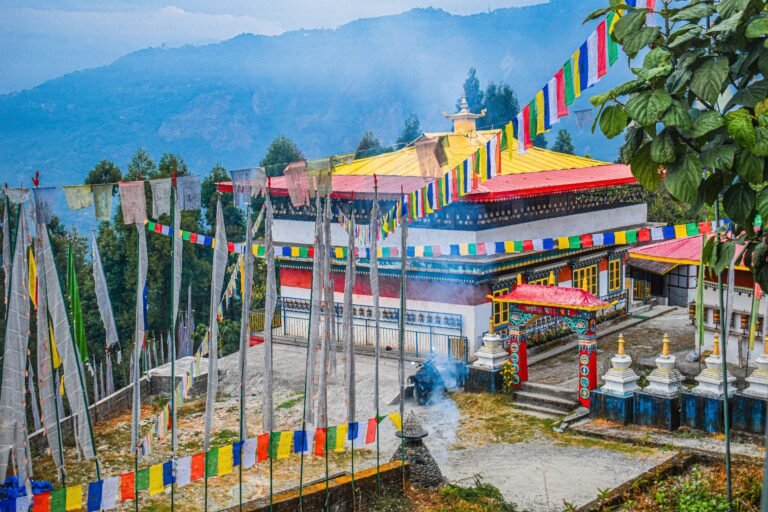
Ghum Monastery
One of the best-known monasteries near Batasia Loop, Ghum Monastery offers a peaceful spiritual stop and a strong cultural connection to the region.
Ghum Railway Station
Ghum is famous for being one of the highest railway stations in India on the Darjeeling Himalayan Railway line. Train lovers often pair it with Batasia Loop in the same outing.
Darjeeling Himalayan Railway Museum
For visitors interested in the toy train’s heritage, the railway museum adds useful historical context and a deeper appreciation of the line.
Darjeeling town viewpoints
Other viewpoints around Darjeeling can be combined with this stop if you are planning a longer sightseeing day. The region is rich in scenic overlooks and heritage spots.
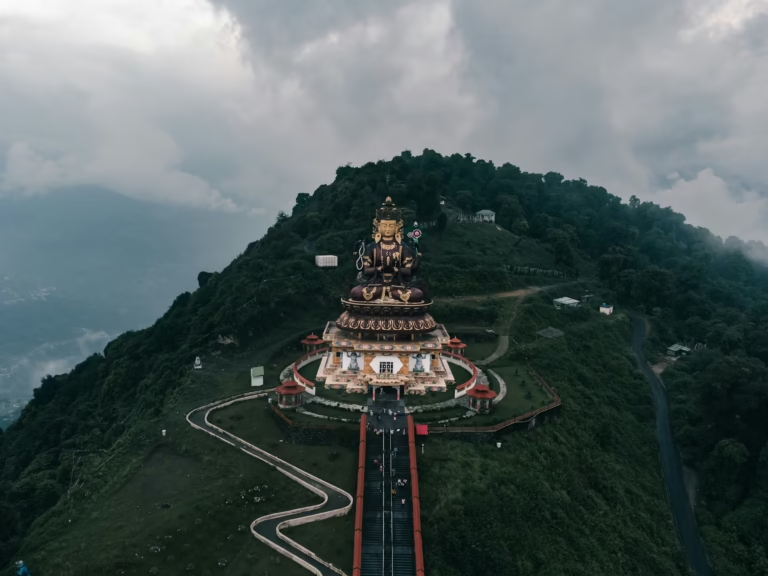
Peace Pagoda
This serene landmark is another popular nearby attraction, especially for travelers who enjoy combining mountain scenery with spiritual and cultural visits.
Local Experiences: Food, Shopping, and Culture
Food to try nearby
Darjeeling has a warm, comforting food culture that pairs beautifully with hill-station travel. Near Batasia Loop and in nearby Darjeeling town, look for local snacks and simple meals.
- Momos: Steamed or fried, often served with spicy chutney.
- Thukpa: A hearty noodle soup, perfect in cool weather.
- Darjeeling tea: The region’s signature drink and a must-try for visitors.
- Local bakery items: Fresh cakes, breads, and snacks are widely available in town.
Shopping ideas
Shopping around Darjeeling is best done in the town area rather than at the loop itself. Popular items include tea, woollens, handmade crafts, and small souvenirs that reflect local style.
- Darjeeling tea packets
- Handcrafted woollen goods
- Local handicrafts and souvenirs
- Prayer flags and cultural keepsakes
Culture and local atmosphere
The Batasia Loop experience is shaped by the broader culture of the Darjeeling hills, where Nepalese, Tibetan, and Bengali influences blend naturally. Visitors often notice the calm pace, warm hospitality, and strong connection to the landscape. The memorial, monastery visits, and tea culture together create a very distinctive regional experience.
Accommodation Options
There are no major hotels directly at Batasia Loop, but Darjeeling town and nearby areas offer a wide range of stays that work well for this visit.
Types of accommodation
- Budget hotels and guesthouses: Good for short stays and backpacking trips.
- Mid-range hotels: Comfortable for families and couples who want convenience.
- Heritage stays and boutique hotels: Ideal for a more scenic and characterful experience.
- Homestays: A nice choice if you want local hospitality and a quieter atmosphere.
Where to stay
For easy sightseeing, staying in central Darjeeling is usually the most practical choice. It gives you quicker access to Batasia Loop, Ghum, tea gardens, and the main market area.
Estimated Travel Costs
Costs in Darjeeling can vary based on season, transport choice, and accommodation style. The following is a general estimate for a comfortable visit.
Typical expenses
- Local taxi or sightseeing car: INR 800 to INR 2,500 for half-day or day trips, depending on route and vehicle type.
- Entry or viewing charges: Often low or included in local sightseeing arrangements; prices may change, so confirm on arrival.
- Food: INR 150 to INR 600 per person for simple meals to a nicer café-style lunch.
- Budget stay: INR 1,000 to INR 2,500 per night.
- Mid-range stay: INR 3,000 to INR 7,000 per night.
- Heritage or premium stay: INR 8,000 and above per night.
Helpful budgeting tip
If Batasia Loop is part of a larger Darjeeling circuit, booking one sightseeing car for multiple stops can be more economical than hiring separate vehicles for each location.
Travel Tips for Families, Honeymooners, and Friends
General travel tips
- Carry a light jacket, even in summer, because mornings and evenings can be cool.
- Wear comfortable shoes, as viewpoints and garden areas may involve short walks.
- Keep a camera or phone ready for sudden clear mountain views.
- Check weather conditions before planning a photography-focused visit.
- Respect the memorial area and keep noise levels low.
For families
- Plan a short, relaxed stop rather than a rushed visit.
- Keep children close near viewing edges and road access points.
- Carry water, snacks, and weather protection.
For honeymooners
- Choose an early morning or late afternoon visit for quieter surroundings.
- Combine Batasia Loop with a scenic café stop or a calm monastery visit.
- Book a room with a valley or mountain view if possible.
For friends and small groups
- Use a shared sightseeing car if you plan multiple stops in one day.
- Keep time flexible for photography and tea breaks.
- Pack light, as hill travel is easier with minimal luggage.
Packing guidance
- Layered clothing
- Rain protection during monsoon months
- Sun protection for clear days
- Power bank and portable camera storage
- Basic medicines for motion sickness if needed
FAQs
Q: Why is Batasia Loop famous?
A: It is famous for its spiral toy train track, beautiful Himalayan views, and the war memorial located at its center. It is one of the most scenic spots in Darjeeling.
Q: How much time is enough for Batasia Loop?
A: Most visitors spend 30 to 60 minutes here. If you want to watch the toy train, take photos, and explore nearby attractions, allow a bit more time.
Q: What is the best time of day to visit Batasia Loop?
A: Early morning is generally best for clear mountain views and photography. The light is softer, and the atmosphere is usually calmer.
Q: Is Batasia Loop good for families with children?
A: Yes, it is a family-friendly stop with open spaces, scenic views, and a short visit time. Just supervise children carefully near road edges and viewpoints.
Q: Can I include Batasia Loop in a half-day Darjeeling tour?
A: Yes, it fits easily into a half-day or full-day Darjeeling sightseeing plan, especially when paired with Ghum Monastery, Ghum Railway Station, or other nearby spots.
Conclusion
Batasia Loop is a compact but unforgettable part of Darjeeling, bringing together railway heritage, mountain scenery, and cultural meaning in one elegant stop. Its toy train curves, panoramic views, memorial space, and easy connection to nearby attractions make it a smart addition to any Darjeeling itinerary. For travelers who enjoy scenic places with a story, it offers exactly the right balance of beauty and depth.
This guide includes the subject overview, history and importance, best time to visit, top things to do, how to reach, nearby attractions, local food and shopping experiences, accommodation options, estimated costs, traveler-specific tips, and FAQs in a clear WordPress-friendly format.