- Why Visit Sikkim in August
- Sikkim Weather in August
- Festivals and Culture in August
- Best Places to Visit in August
- Areas to Avoid or Check Before Visiting
- Suggested 5-Day Monsoon-Friendly Itinerary
- What to Pack for August in Sikkim
- How to Reach and Get Around
- Permits and Travel Rules
- Responsible Travel and Safety Tips
- Where to Stay and Budget Tips
- Food and Drinks to Try
- Photography Tips for the Monsoon
- FAQ: Sikkim in August
- Conclusion
Why Visit Sikkim in August
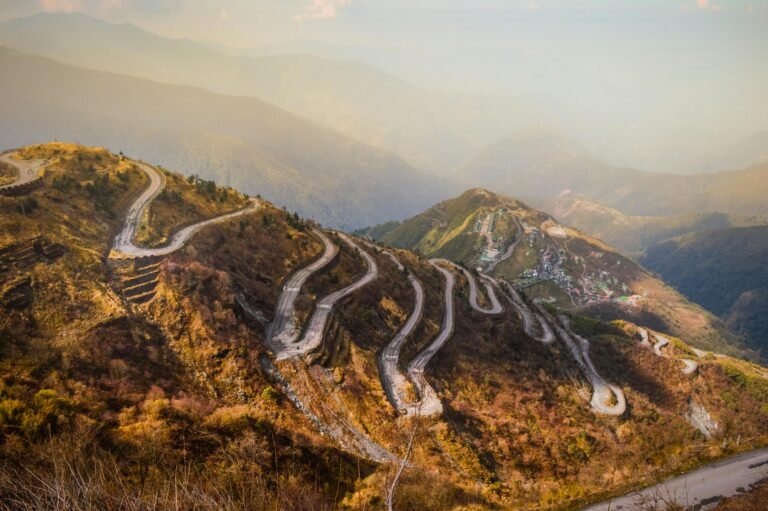
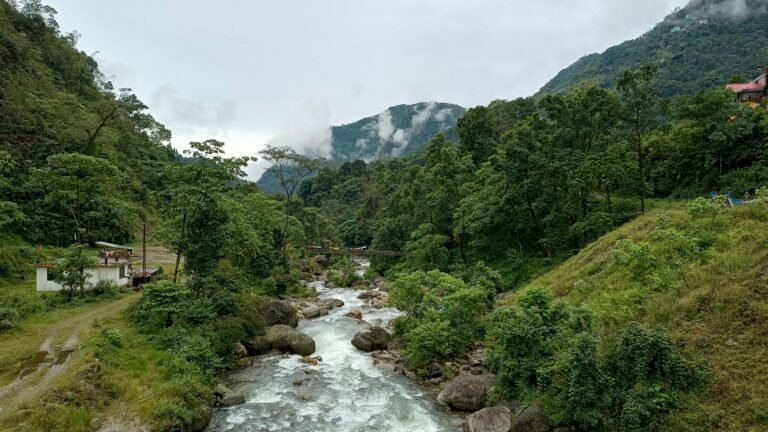
August paints Sikkim in its lushest greens. Waterfalls roar to life, tea gardens gleam, and cloud-laden valleys turn photogenic. While it’s monsoon season with intermittent showers, the rewards include fewer crowds, great deals on stays, vibrant festivals, and a serene, mystical vibe—especially around monasteries and lakes.
Sikkim Weather in August
- Temperature: Gangtok averages 14–22°C; higher altitudes can be cooler, especially at night.
- Rain: Frequent showers and occasional heavy downpours; mist and low visibility are common.
- What it means for travelers: Expect flexible plans, possible road delays, and dreamy, cloud-drift views.
Festivals and Culture in August
- Tendong Lho Rum Faat (usually in August): A Lepcha thanksgiving festival venerating Mount Tendong, celebrated with rituals and cultural programs around Namchi and Dzongu.
- Pang Lhabsol (late August to early September, dates vary): Marks reverence to Mount Kanchenjunga and the bond between communities. Look for masked cham dances at monasteries like Tsuklakhang in Gangtok.
Always check current dates with Sikkim Tourism or local monasteries, as festival calendars follow lunar cycles.
Best Places to Visit in August
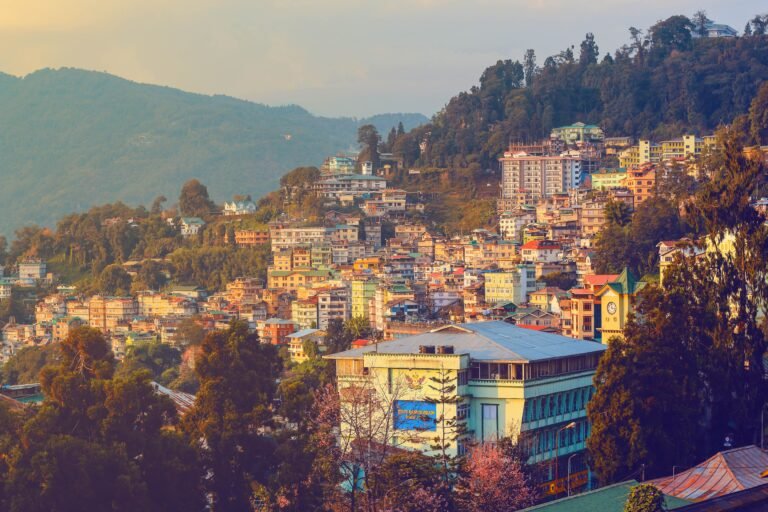
Gangtok and Around
- MG Marg: A pedestrian boulevard with cafés, bookstores, and boutique shops—perfect for rainy spells.
- Namgyal Institute of Tibetology and Do Drul Chorten: Quiet cultural stops offering insight into Sikkim’s spiritual heritage.
- Flower Exhibition Centre: Seasonal blooms thrive in monsoon; orchids and lilies add color to grey skies.
- Gangtok Ropeway: Operates weather-permitting; clouds drifting over the valley make for evocative views.
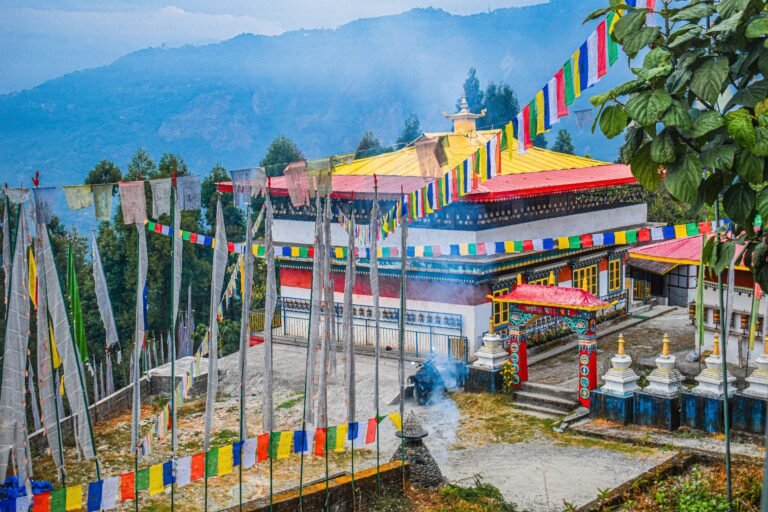
- Rumtek Monastery: A short drive away; its golden stupa halls are especially atmospheric in light rain.
South Sikkim Highlights
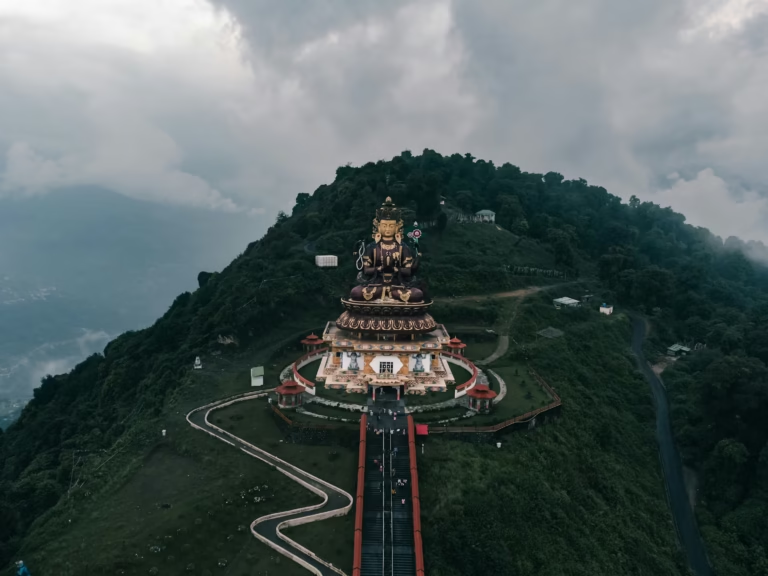
- Ravangla (Buddha Park): The towering statue of Buddha against swirling mists is a monsoon classic.
- Namchi: Visit Samdruptse (Guru Padmasambhava statue) and Siddhesvara Dham (Char Dham complex).
- Temi Tea Garden: Sikkim’s only tea estate—lush terraces, tea tasting, and photo walks between showers.
West Sikkim Highlights
- Pelling: Panoramas may be mist-veiled, but rain-fed waterfalls and forests shine. The Skywalk to Chenrezig statue is thrilling when open.
- Pemayangtse Monastery: Ancient murals and the famed wooden masterpiece “Zangdok Palri” inside.
- Khecheopalri Lake: A sacred, mirror-like lake rimmed by forests; carry an umbrella for lakeside walks.
- Singshore Bridge: Among the highest suspension bridges in India; dramatic in monsoon fog—go only if conditions are safe.
Nature Escapes and Short Hikes
- Maenam Wildlife Sanctuary (Ravangla): Opt for short, guided walks if trails are open; leech socks recommended.
- Fambong Lho Wildlife Sanctuary (near Gangtok): Birding can be rewarding between showers; check trail status.
Areas to Avoid or Check Before Visiting
- North Sikkim (Lachen, Lachung, Gurudongmar, Yumthang): Roads are landslide-prone in August; many operators suspend trips. Travel only if authorities deem routes safe.
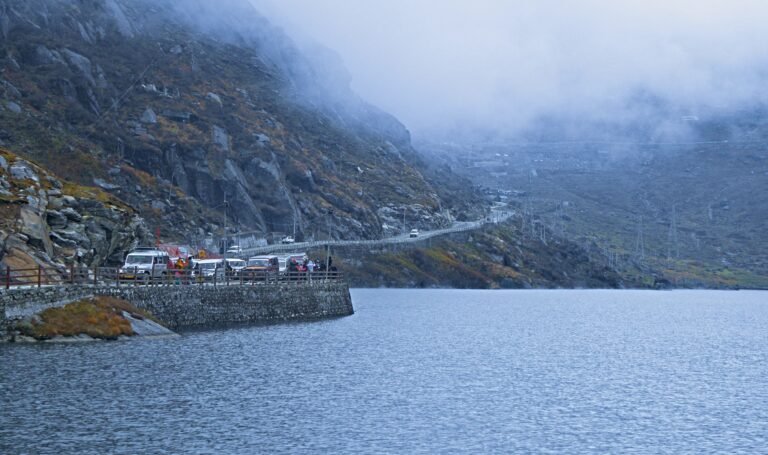
- Tsomgo (Changu) Lake and Nathula Pass: Frequently shut during heavy rains. Nathula is open only to Indian nationals on specific days and may close without notice due to weather.
Suggested 5-Day Monsoon-Friendly Itinerary
Day 1: Arrive Gangtok
- Stroll MG Marg, café-hop, visit Flower Exhibition Centre.
- Evening: Warm up with thukpa at a local eatery.
Day 2: Gangtok Heritage and Viewpoints
- Namgyal Institute of Tibetology, Do Drul Chorten.
- Ropeway (weather-permitting) and Enchey Monastery.
- Sunset at Tashi View Point if the sky clears.
Day 3: Rumtek and Temi Tea Garden
- Morning at Rumtek Monastery.
- Drive to Temi for tea tasting and estate walk; overnight in a tea bungalow or return to Gangtok.
Day 4: Ravangla and Namchi
- Visit Buddha Park, then Namchi’s Samdruptse and Char Dham.
- Stay in Ravangla or Namchi for calm mountain evenings.
Day 5: Pelling (weather-permitting)
- Pemayangtse Monastery, Khecheopalri Lake, and local waterfalls.
- Return towards Siliguri/Gangtok depending on departure plans.
Tip: Keep a buffer day for weather delays in case of landslides or road checks.
What to Pack for August in Sikkim
- Waterproof jacket/poncho, quick-dry layers, and a light fleece.
- Waterproof hiking shoes or sturdy sandals with grip; extra socks.
- Leech protection (leech socks) or salt; insect repellent.
- Compact umbrella, rain cover for backpack, dry bags for gadgets.
- Basic meds (motion sickness, cold/flu), personal prescriptions.
- Power bank, torch, copies of IDs/permits.
How to Reach and Get Around
- By Air: Bagdogra Airport (IXB) is the most reliable gateway; Pakyong Airport (PYG) near Gangtok has weather-related cancellations in monsoon.
- By Rail: Nearest major railhead is New Jalpaiguri (NJP). Shared jeeps and taxis connect to Gangtok, Namchi, Pelling.
- By Road: NH10 via Rangpo/Melli is the main route; start early to avoid afternoon showers. Avoid night travel during heavy rain.
- Local Transport: Shared jeeps are economical; private taxis offer flexibility in changing weather.
Permits and Travel Rules
- Foreign nationals: Require an Inner Line/Restricted Area Permit (RAP) to enter Sikkim, available online or at border check posts. Additional Protected Area Permits are needed for certain regions.
- Indian nationals: No entry permit for most of Sikkim, but special permits are mandatory for areas like Tsomgo, Nathula, and North Sikkim.
- Nathula Pass: Open only to Indian citizens on designated days; slots are limited and weather-dependent.
- Dzongu (Lepcha Reserve): Special permits required for all visitors.
Always carry original photo ID and multiple photocopies. Use registered tour operators for restricted zones.
Responsible Travel and Safety Tips
- Monitor weather and road advisories from Sikkim Tourism and local administration.
- Hire experienced, local drivers; avoid risky photo stops near landslide-prone slopes.
- Stay on marked trails; respect monastery etiquettes (no flash, modest clothing).
- Carry your trash back; use refillable water bottles.
- Consider travel insurance that covers weather-related disruptions.
Where to Stay and Budget Tips
- Homestays: Temi, Kewzing, Ravangla, and Yuksom offer warm hospitality, farm-fresh meals, and cultural immersion.
- Boutique stays: Gangtok and Pelling have charming hotels with valley views and cozy cafés.
- Deals: August often brings off-season discounts; book flexible, refundable rates due to weather.
Food and Drinks to Try
- Momos and thukpa: Rainy day comfort staples.
- Phagshapa, gundruk soups, chhurpi (hard cheese), and nettle soup (sisnu).
- Temi tea: Sample fresh monsoon flushes at estate cafés.
- Local ferments: Millet-based brews (served traditionally in bamboo or wooden mugs) in select homestays; ask your host.
Photography Tips for the Monsoon
- Carry lens cloths, silica gel, and rain covers; wipe condensation gently.
- Shoot waterfalls with ND filters after rain; mist adds mood to monastery shots.
- Golden breaks between showers are brief—keep your camera ready.
FAQ: Sikkim in August
Is August a good time to visit Sikkim?
Yes, if you enjoy lush landscapes, waterfalls, and peaceful monasteries, and are comfortable with rain and flexible plans. It’s less ideal for high-altitude border trips.
Will I see Kanchenjunga?
Skies are often cloudy, but clear windows happen—especially early mornings. West Sikkim and around Gangtok viewpoints can surprise you after showers.
Are roads open?
Main routes generally operate, but landslides can cause delays or closures. Start early and keep an extra day in your plan.
Can I visit Nathula or North Sikkim?
These are frequently restricted or closed in August. Check latest advisories and be ready with backup plans in East, South, or West Sikkim.
Conclusion
August in Sikkim is monsoon magic—emerald hills, temple bells echoing in mist, and tea-scented breezes between refreshing showers. Focus on Gangtok, South, and West Sikkim, sync your plans with local weather updates, and embrace slow travel. With smart packing, flexible itineraries, and a taste for culture and nature, you’ll discover a quieter, greener Sikkim that feels wonderfully your own.