Table of Contents
- Introduction
- History and Importance of Darjeeling Monasteries
- Best Time to Visit
- Top Things to Do on a Monastery Tour
- Must-Visit Monasteries in Darjeeling
- Local Culture, Food, and Shopping
- Nearby Attractions
- How to Reach
- Accommodation and Estimated Costs
- Travel Tips for Families, Honeymooners, and Friends
- FAQs
- Conclusion
Introduction
Darjeeling is often remembered for its tea gardens, toy train, and Himalayan views, but its monasteries reveal a quieter, deeply spiritual side of the hill town. A Darjeeling Monastery Tour is less about rushing from one attraction to another and more about slowing down, listening to prayer chants, watching fluttering prayer flags, and experiencing the Tibetan-Buddhist culture that has shaped the region for generations.
Whether you are a history lover, a cultural traveler, or simply looking for peaceful places in the hills, Darjeeling’s monasteries offer a meaningful journey. From colorful prayer halls and towering statues to the warm hospitality of monks, the experience blends heritage, serenity, and mountain charm in a way few destinations can.
History and Importance of Darjeeling Monasteries
Darjeeling’s monasteries are important centers of Buddhist faith, education, and community life. Many of them were established by Tibetan and Nepali Buddhist communities who settled in the region, bringing with them traditions, rituals, and sacred art forms.
Why these monasteries matter
- Spiritual centers: They are active places of prayer, meditation, and daily ritual.
- Cultural heritage: They preserve Tibetan-Buddhist architecture, murals, manuscripts, and religious artifacts.
- Community hubs: Many monasteries host festivals, teachings, and local gatherings.
- Peaceful retreats: Their calm atmosphere offers a welcome break from busy tourist spots.
Some monasteries in and around Darjeeling also play a role in preserving the identity of the Himalayan Buddhist community, especially through language, traditional art, and monastic education.
Best Time to Visit
The best time to explore monasteries in Darjeeling depends on what kind of experience you want. For comfortable sightseeing and clear mountain views, the most popular months are from March to May and October to December.
Season-wise guide
- March to May: Pleasant weather, blooming landscapes, and easier sightseeing.
- June to September: Monsoon season brings lush greenery, but roads can be slippery and visibility may drop.
- October to December: Crisp air, clear views, and a festive feel in many monasteries.
- January to February: Cold but peaceful, ideal if you prefer fewer crowds.
For travelers interested in monastery festivals, local Buddhist events and annual prayers can be especially rewarding, though dates may vary by monastery and lunar calendar.
Top Things to Do on a Monastery Tour
A monastery tour in Darjeeling is best enjoyed slowly. Each stop offers a different mood, from grand prayer halls to quiet meditation corners.
Recommended experiences
- Attend morning prayers: The chanting, cymbals, and incense create a deeply atmospheric start to the day.
- Admire the architecture: Look for colorful murals, prayer wheels, statues of Buddha, and traditional Tibetan design.
- Spin prayer wheels: A simple yet memorable way to engage respectfully with Buddhist tradition.
- Observe monk life: With permission, visitors can witness daily routines and study spaces.
- Photograph mindfully: Capture exteriors and surroundings without disturbing prayer time or sacred spaces.
- Learn local stories: Many monasteries have legends, historical ties, and unique community stories.
Must-Visit Monasteries in Darjeeling
Darjeeling has several monasteries worth including in a cultural itinerary. The following are among the most visited and well-known.
1. Ghoom Monastery
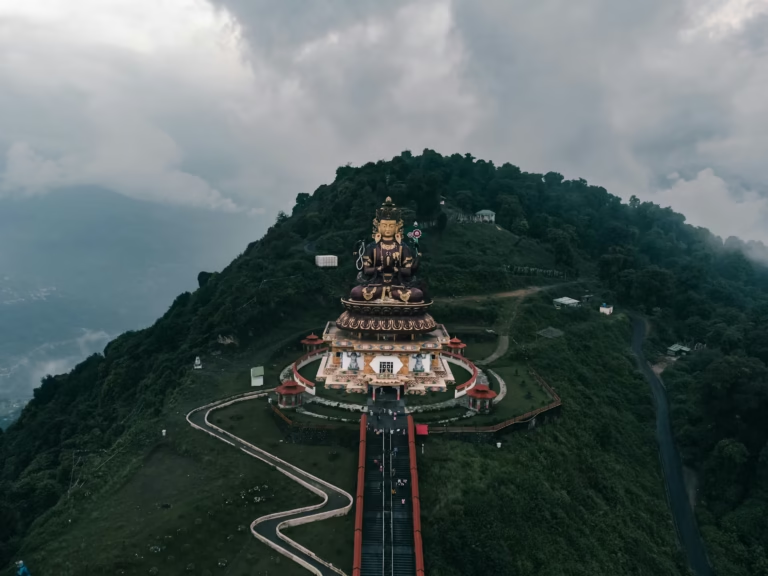
One of the most famous monasteries near Darjeeling, Ghoom Monastery is known for its large Maitreya Buddha statue and peaceful environment. It is often included in half-day sightseeing routes.
2. Bhutia Busty Monastery
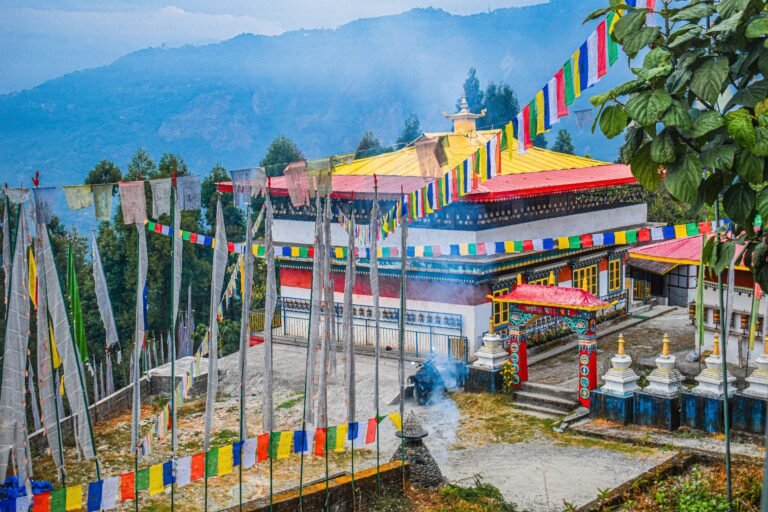
Located in a scenic part of Darjeeling, this monastery is admired for its hilltop setting and calm surroundings. It combines spiritual importance with beautiful views of the town.
3. Dali Monastery
Dali Monastery is an important center for Buddhist learning and prayer. Its architecture and monastic atmosphere make it a meaningful stop for travelers interested in Tibetan Buddhism.
4. Yiga Choeling Monastery
Often associated with Ghoom, this is among the oldest monasteries in the area and is especially valued for its religious significance and historic presence.
5. Japanese Peace Pagoda
Though not a monastery in the traditional sense, it is a major spiritual site often paired with monastery tours. It offers a serene setting and panoramic views.
Local Culture, Food, and Shopping
A monastery tour becomes richer when paired with local culture, food, and shopping. Darjeeling’s Tibetan, Nepali, and Himalayan influences are visible in everyday life.
Local culture
- Respectful dress and behavior are appreciated at religious sites.
- Prayer flags, butter lamps, and ritual instruments are part of everyday monastic life.
- Festivals may include masked dances, chanting, and community feasts.
Local food to try
- Momos: Steamed dumplings, a classic Himalayan favorite.
- Thukpa: A warm noodle soup perfect for cool weather.
- Chhurpi dishes: Local cheese-based snacks and preparations.
- Tea: Darjeeling tea remains a must-try with any food break.
Shopping ideas
- Prayer flags and Buddhist souvenirs
- Handmade woolens
- Tibetan-style jewelry
- Local tea packets
For a more authentic experience, look for small local markets rather than only souvenir shops near major viewpoints.
Nearby Attractions
Monastery visits in Darjeeling are easy to combine with the town’s most iconic sightseeing spots.
Popular nearby places
- Batasia Loop: A scenic railway loop with gardens and panoramic views.
- Darjeeling Himalayan Railway: The famous toy train route, a heritage attraction.
- Peace Pagoda: A calm spiritual site near the town center.
- Tiger Hill: Known for sunrise views over Kanchenjunga.
- Darjeeling Mall Road: A lively place for walking, shopping, and café stops.
- Tea Gardens: Beautiful estates that showcase the town’s signature landscape.
How to Reach
Darjeeling is well connected through road access from nearby transit points. The final stretch involves hill roads, so travel times can vary with weather and traffic.
By air
- Nearest airport: Bagdogra Airport
- From Bagdogra, travelers usually take a private taxi or shared vehicle to Darjeeling.
By rail
- Nearest major railheads: New Jalpaiguri (NJP) and Siliguri
- From there, road transport is the most common option to reach Darjeeling and nearby monasteries.
By road
- Regular taxis and shared vehicles operate from Siliguri, NJP, and Bagdogra.
- Local sightseeing cabs are available for half-day and full-day monastery circuits.
For monastery tours, hiring a local driver or taxi for the day is usually the easiest and most comfortable option, especially if you want to visit multiple sites.
Accommodation and Estimated Costs
Darjeeling offers a wide range of stays, from budget guesthouses to premium hotels with mountain views. Many travelers prefer staying near central Darjeeling or Ghoom for convenient sightseeing.
Accommodation options
- Budget stays: Guesthouses, homestays, and small lodges
- Mid-range hotels: Comfortable rooms with good access to sightseeing points
- Luxury stays: Boutique hotels and heritage-style properties with better views and services
Estimated travel costs
- Shared local transport: Budget-friendly for basic travel between points
- Private sightseeing cab: Usually the most practical choice for monastery tours
- Food: Local meals are generally affordable, with higher prices at premium cafés and hotels
- Entry fees: Many monasteries do not charge high fees, though donations may be welcomed
Overall, a comfortable monastery-focused day in Darjeeling can be managed on a moderate budget, while those choosing private transport and higher-end stays should plan for more.
Travel Tips for Families, Honeymooners, and Friends
Darjeeling monasteries are peaceful and welcoming, but a little planning helps make the trip smoother for every type of traveler.
For families
- Keep visits short and balanced with scenic breaks.
- Carry snacks, water, and light jackets for children.
- Choose monasteries with easy road access if traveling with elders.
For honeymooners
- Combine monastery visits with quiet viewpoints and tea estate walks.
- Morning and evening visits are best for a calm, romantic atmosphere.
- Pack warm layers, as hill weather can change quickly.
For friends and small groups
- Book a sightseeing cab to cover multiple monasteries in one route.
- Respect silence in prayer areas and avoid loud conversation.
- Plan a food stop after the tour for tea, momos, or thukpa.
General packing and safety tips
- Wear modest clothing that covers shoulders and knees.
- Carry comfortable shoes with good grip for sloped areas.
- Keep cash handy for small donations or local purchases.
- Ask before taking photographs inside prayer halls.
- Check weather forecasts, especially during monsoon and winter.
FAQs
Q: What is the best monastery to visit in Darjeeling?
A: Ghoom Monastery is one of the most popular choices, especially for first-time visitors, because of its spiritual importance and easy access.
Q: How much time do I need for a Darjeeling monastery tour?
A: A half-day is enough for 2–3 monasteries, while a full day allows you to combine spiritual sites with viewpoints and nearby attractions.
Q: Is there an entry fee for Darjeeling monasteries?
A: Many monasteries have no fixed entry fee, though visitors may be asked for donations or small contributions.
Q: Can I take photos inside the monasteries?
A: Photography rules vary by monastery. It is best to ask permission before taking pictures, especially inside prayer halls or near monks.
Q: Is a monastery tour suitable for children and senior citizens?
A: Yes, it is suitable if the itinerary is kept relaxed and transport is arranged comfortably, since some monasteries are on slopes or require short walks.
Conclusion
A Darjeeling monastery tour offers more than sightseeing; it opens a window into the region’s spiritual heritage, mountain culture, and quiet rhythms of life. With historic monasteries, peaceful prayer spaces, local food, nearby attractions, and practical travel options, the experience suits solo travelers, families, honeymooners, and groups alike. For anyone wanting to see a gentler, more reflective side of Darjeeling, the monasteries are among the most rewarding stops in the hills.