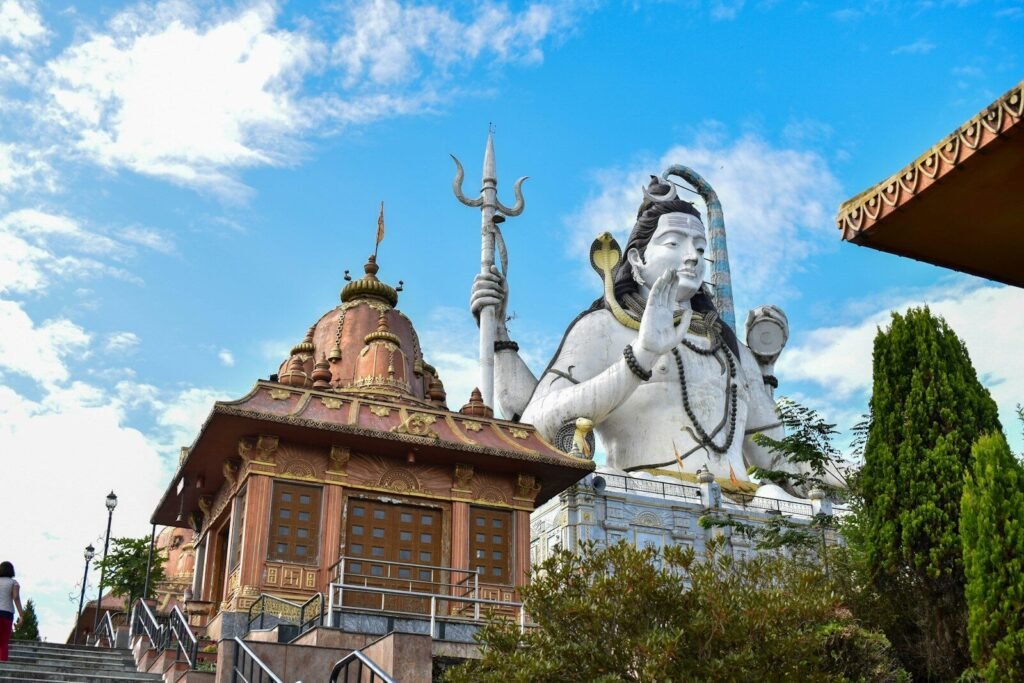
Namchi, the administrative headquarters of South Sikkim, has in recent decades moved from an unassuming hill-town to one of the state’s most important tourism hubs. Nestled on a ridge with sweeping views of terraced fields, tea plantations and the eastern Himalaya, Namchi combines religious pilgrimage sites, colonial-era tea heritage, Lepcha and Bhutia cultural memory, and modern infrastructure development. This article traces the history of Namchi in the context of tourism: how the town’s geography, faith traditions, state policy and local entrepreneurship shaped it into a destination, what attractions anchor its appeal, and what challenges and opportunities lie ahead.
Namchi occupies a strategic, elevated location in South Sikkim, roughly between the state capital Gangtok and the hill-stations of Ravangla and Pelling. The name is popularly interpreted by locals as referring to the town’s lofty position — a reflection of its vantage point over lower valleys and distant peaks. The region is a cultural crossroads where Lepcha, Bhutia and Nepali communities have lived for generations; their languages, festivals and religious institutions form the social fabric that tourism now builds upon.
Scenic vantage: clear views of the Himalayan range and terraced landscapes make Namchi a natural viewpoint and short-stay destination.
Access to pilgrimage routes and monasteries: Namchi sits near important Buddhist and Hindu pilgrimage points, enabling combined faith-heritage itineraries.
Proximity to tea plantations and forests: the nearby Temi Tea Garden and Maenam-Tendong hills offer plantation tourism, trekking and biodiversity experiences.
Namchi’s early history is tied to the broader history of the Kingdom of Sikkim. For much of the pre-modern period, the area surrounding present-day Namchi was rural, used for shifting cultivation, pastoralism and small village communities. Religious institutions — monasteries and local shrines — anchored cultural life and pilgrimage pathways that connected communities across the hills.
Unlike the Gangtok region, the south saw slower-paced infrastructural change during the British era, but the broader opening of Sikkim to trade and administrative contacts in the 19th and early 20th centuries gradually integrated Namchi’s markets and settlements into regional networks. Road building in the 20th century progressively linked Namchi to plains trade routes and the growing urban centres of Darjeeling and Siliguri, setting the stage for tourism development after Indian independence.
Following Sikkim’s integration into the Indian Union in 1975, state-led development expanded roads, public services and agricultural projects across the southern hills. Namchi’s role as a district-level administrative and commercial centre grew alongside newer investments in tea cultivation (notably the state-promoted Temi Tea Garden) and later tourism-oriented projects. Improved connectivity and government focus on heritage and pilgrimage sites produced a steady stream of visitors from within India and, to a degree, abroad.
Even before organized tourism, the Namchi area attracted pilgrims and local visitors to monasteries, hill shrines and the holy peaks nearby. The presence of Buddhist gompas and local Hindu sites meant that religious tourism provided a consistent flow of visitors, particularly during festivals and holy days.
From the late 20th century onward, both the state government and local communities began to conceive of tourism as a development strategy. Key interventions included:
Creation and promotion of pilgrimage complexes — large monuments and temple complexes were constructed or upgraded to create destination attractions with broad appeal.
Tea plantation branding — the Temi Tea Garden was promoted as a unique, high-altitude tea estate for plantation visits and tastings.
Investment in roads and hospitality that made short trips from Gangtok, Siliguri and Darjeeling feasible for weekend and cultural tourism.
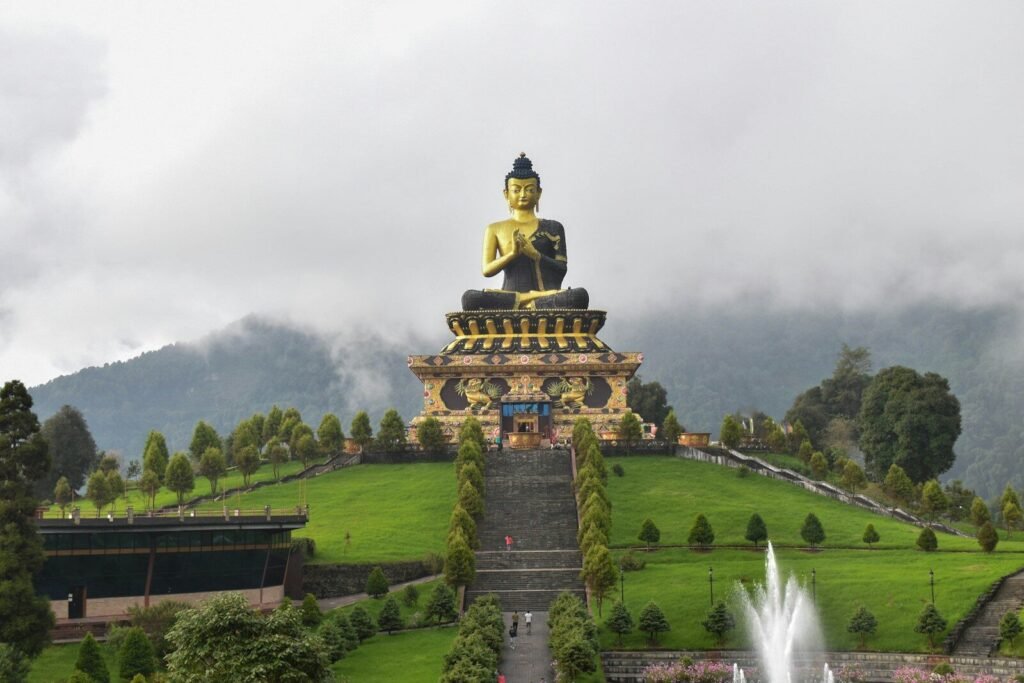
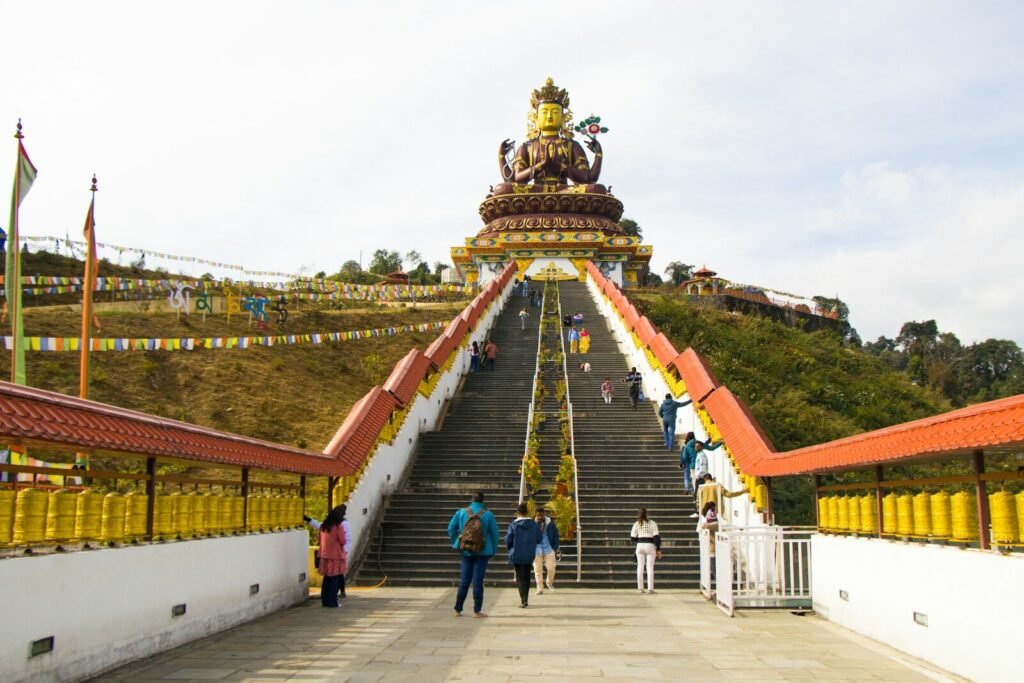
One of Namchi’s defining landmarks is the hill-top religious complex built to celebrate Guru Padmasambhava (Guru Rinpoche), who is sacred in Himalayan Buddhism. The Samdruptse hillside and the adjoining Char Dham complex (a set of replicas of India’s major pilgrimage shrines) were conceived to create a major pilgrimage-cum-tourist destination in South Sikkim. These projects combined religious function, monumental architecture and landscaping to attract pilgrims, domestic tourists and bus-tour circuits from the plains. The result was a noticeable increase in visitor numbers and the creation of new livelihoods in hospitality and retail.
Temi is Sikkim’s signature tea estate and one of the few large-scale plantations in the state. Developed under state oversight to diversify the local economy, Temi’s rolling, manicured slopes contrast with surrounding mixed-farming plots. Tea tourism — estate walks, factory visits, tasting sessions and photography — has become central to Namchi’s tourism identity, creating an alternative to the more common pilgrimage and trekking draws.
The Maenam and Tendong ranges above Namchi are important for biodiversity, trekking and folklore. The Maenam trek is promoted as a relatively accessible alpine walk offering fine views of Kanchenjunga. Tendong is steeped in Lepcha legend — notably the story of a flood from which people were saved by taking refuge on Tendong — and it hosts seasonal rituals and festivals that attract cultural tourists and researchers alike.
Ralang Monastery and several smaller gompas and Hindu shrines around Namchi represent the living religious culture of the area. Their histories range from older monastic foundations to newer centres built or renovated as part of post-Indian-integration religious revival and tourism promotion. These institutions continue to draw both devotees and visitors interested in Himalayan religious art, ritual and architecture.
Namchi’s market area, local crafts, and community festivals have become tourism assets in their own right. Street-level commerce — tea shops, handicraft stalls, small cafes and homestays — provides visitors with direct engagement with local life, generating income and encouraging small-scale entrepreneurship.
Pilgrimage and spiritual tourism: visits to Samdruptse, Char Dham replicas, local gompas and temples.
Tea tourism: guided walks and tastings at Temi Tea Garden; learning about high-altitude tea cultivation.
Trekking and nature walks: Maenam and Tendong treks, birdwatching and guided forest walks.
Cultural festivals and homestays: participation in local festivals and stays with families for authentic cultural encounters.
Photography and scenic viewing: panoramic viewpoints catering to short-stay visitors and day-trippers from Gangtok and the plains.
As tourism expanded, Namchi — like other Himalayan towns — faced twin challenges: ensuring that economic benefits reached local communities, and safeguarding fragile ecosystems and cultural heritage from overuse. Several themes have emerged:
Community participation: homestays, local guides and cooperative handicraft ventures help distribute tourism income.
Environmental management: waste management, regulated trekking routes and limits on insensitive construction are ongoing concerns.
Cultural preservation: balancing commodified cultural displays with authentic, community-led practices is important for long-term viability.
Access: Namchi is accessible by road from Gangtok and from Siliguri/Siliguri–Bagdogra airport. The nearest major railhead is New Jalpaiguri (Siliguri) and the nearest commercial airport is Bagdogra (near Siliguri). Regular buses, shared taxis and private vehicles connect Namchi to regional transport nodes.
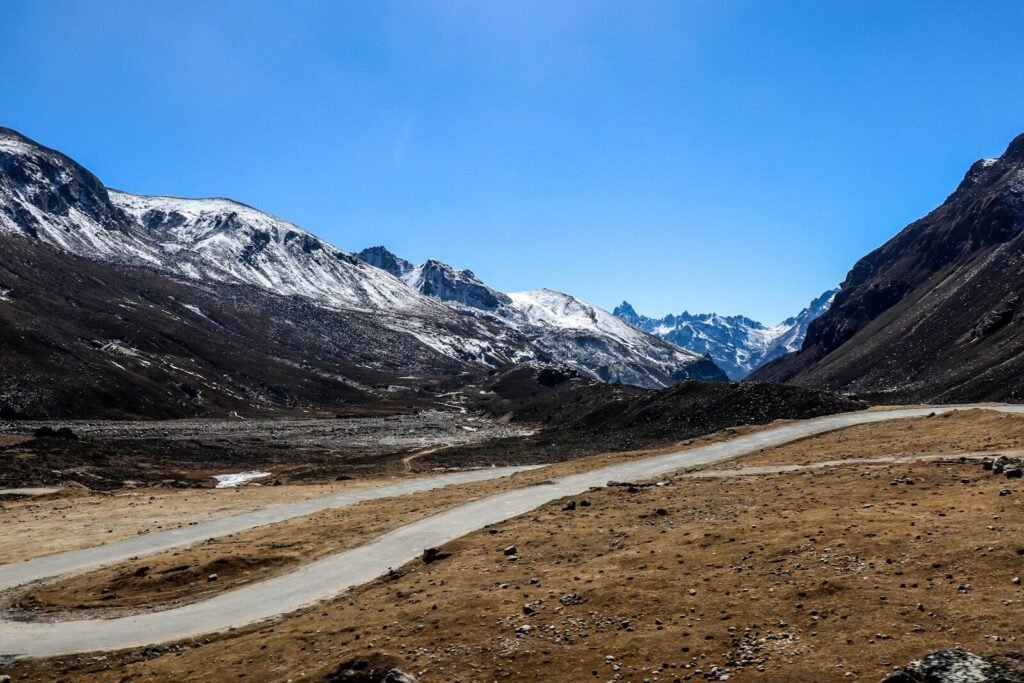
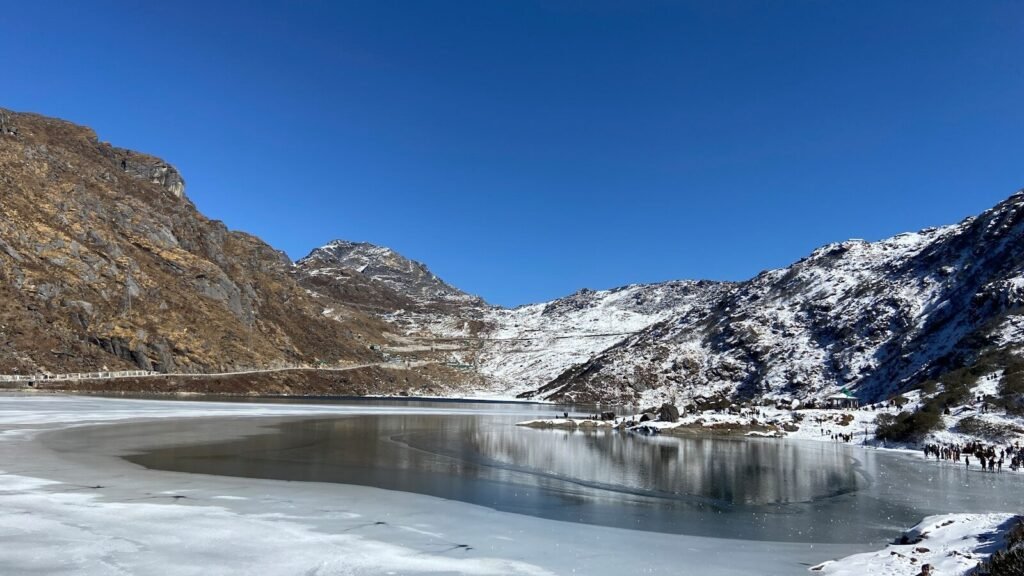
Best time to visit: spring to autumn offers clear views and comfortable trekking weather; monsoon brings heavy rains and potential landslips, while winter is cool and quiet, with occasional snow at higher elevations.
Permits and regulations: Sikkim has historically had sensitive-area regulations for foreign visitors. Travelers should check the latest entry and permit requirements (including Protected Area Permit or other formalities) with official tourist offices before planning travel.
Namchi illustrates how a small Himalayan town can evolve into a multi-faceted tourist destination by combining spiritual heritage, natural beauty and niche products such as high-altitude tea. Its development reflects state planning, religious patronage, local entrepreneurship and community adaptation. Looking forward, the town’s challenge is to manage growth in ways that preserve its landscapes, support local livelihoods and maintain the authenticity that draws visitors. For travelers, Namchi offers a compact experience of Sikkimese culture: a mix of faith, tea-scented hills and mountain views that together tell a larger story of Himalayan change.
Official Sikkim tourism websites and district information — for permits, events and practical updates.
Local guides and homestay networks — for community-led cultural experiences and ethical tourism arrangements.
Regional histories of Sikkim — for deeper context on the kingdom’s transformations and the role of southern towns like Namchi.
What makes us different from other tour package companies
Our travel experts have core and intense knowledge about Sikkim sector with over 10 years of experience that will help you choose the best possible itinerary as per your requirements.
Our travel experts are just one call away during your tour to help you with any kind of immediate assistance so that your tour is a more enjoyable and hassle-free tour.
eSikkimTourPackages ensures best rates to all our esteemed guests since we have our own hotels and fleet of vehicles and drivers and there is no third-party involvement. This ensures personalized service and best rates.























Kindly enter the details below for your Sikkim Tour Package