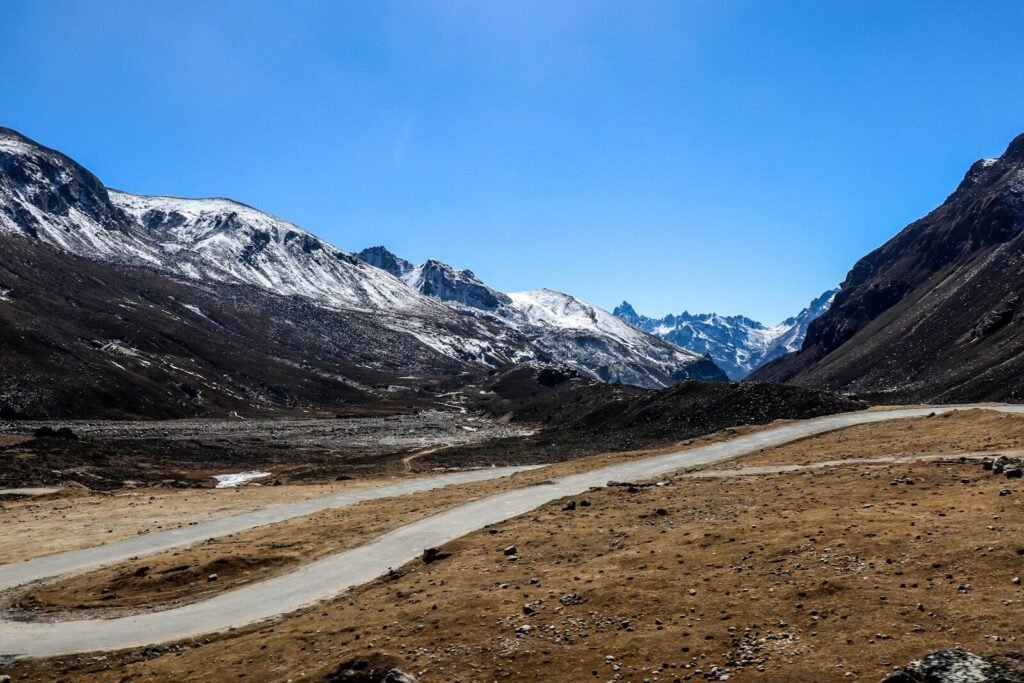
Lachung is a high-altitude mountain village in North Sikkim, India, perched amid steep valleys and rhododendron forests. Famous today as the gateway to the Yumthang Valley and as a stop on journeys toward Zero Point and other alpine meadows, Lachung has evolved from a small yak-herding and trade settlement into one of Sikkim’s most visited tourist destinations. This article traces the history of Lachung in the context of tourism, showing how geography, trade, politics and modern infrastructure together shaped its transformation into an iconic mountain destination.
Located in the northern reaches of the former Kingdom of Sikkim, Lachung sits at an elevation of approximately 2,600–2,700 metres. The village is set at the confluence of mountain streams and surrounded by high ridges that open into alpine valleys. Its inhabitants traditionally belong to the Bhutia and Lepcha communities, with local culture and religious life centered on Tibetan Buddhism, mountain ecology, trans-Himalayan pastoralism and small-scale agriculture.
Historically, Lachung functioned as a compact mountain settlement where households combined subsistence farming, yak and sheep herding, and limited trade. Seasonal movement of flocks and cultivation on terraced slopes shaped the local economy and landscape. The village’s stone-and-timber architecture, mani walls and small gompas (monasteries) reflect a deep cultural continuity with other high Himalayan communities.
Before the modern road era, high mountain villages like Lachung were nodes in a patchwork of local and long-distance exchange. Though not a major caravan hub like some lower passes, Lachung occupied a strategic position on routes connecting Sikkim’s northern valleys with Tibetan plateaus and trans-Himalayan grazing grounds.
Trade in salt, wool, tea and local produce flowed seasonally. The social and economic ties forged by these exchanges shaped Lachung’s identity: contact with Tibetan traders and pilgrims introduced cultural elements, religious texts and material goods, while intermarriage and shared pasture rights linked Lachung communities to neighboring valleys.
Under the Sikkimese monarchy (Chogyal) and during the era of British political influence in the region, Lachung remained a small, mostly self-sufficient mountain village. The British interest in Himalayan frontiers and cartography led to greater mapping and administrative attention to northern Sikkim, but large-scale infrastructural development remained limited until the mid-20th century.
Local governance continued to be informed by traditional chiefs and monastery authorities. The gompa (local monastery) played an important civic and spiritual role—organizing festivals, mediating disputes and acting as repository of manuscripts and rituals that reinforced community cohesion.
After Indian independence and especially after the 1950s and 1960s, the geopolitical sensitivity of Sikkim’s northern frontier became more pronounced. Lachung’s proximity to the international boundary with Tibet/China imparted strategic significance. This had several implications:
Tourism in Lachung is a relatively recent phenomenon in historical terms. It accelerated from the late 20th century onward as road connectivity improved, interest in Himalayan eco- and cultural tourism grew, and attractions such as Yumthang Valley and Zero Point became better known to domestic and international travelers.
Tourism diversified household incomes beyond agriculture and herding. New livelihoods emerged: guesthouse operation, guiding, transport services, handicraft sales and small restaurants. This generated both material benefits and social changes—modern amenities, more regular cash flow, and increased exposure to outside cultures. At the same time there were pressures on traditional lifestyles, land use, and local ecology, prompting discussion of sustainable approaches.
A short distance from Lachung, Yumthang is a high-altitude valley famed for springtime blooms of rhododendrons and alpine flora. Historically a grazing meadow, it retains significance for pastoral cycles and seasonal migrations. Tourism has turned it into a must-visit destination; managing visitor impact on fragile alpine ecology is an ongoing concern.
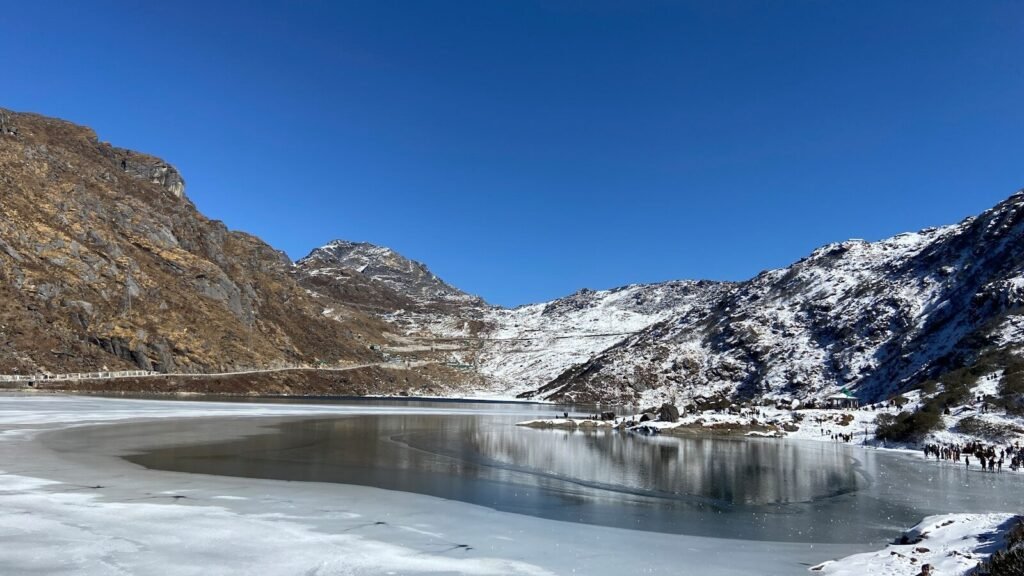
Higher up from Yumthang, Zero Point represents one of the last accessible alpine reaches toward the high plateau. Traditionally used for summer pastures, it now draws tourists for snow experiences and panoramic views. Its proximity to the international frontier underscores the need for regulated access and conservation awareness.
The local monastery (Gompa) anchors religious life and cultural identity. It hosts ritual ceremonies and festivals that visitors may observe, underlining the importance of respectful cultural tourism that preserves ritual sanctity while offering interpretive experiences to outsiders.
Festivals such as Losar (Tibetan New Year), and local rites connected to the agricultural and pastoral calendar offer vivid cultural experiences. Tourism has created opportunities to showcase traditional music, dances and crafts, but it also raises questions about authenticity, commodification and community control over cultural representation.
Modern roads from lower Sikkim and Gangtok provide access to Lachung, though mountain travel remains subject to seasonal closures, landslides and weather. Development of guesthouses, homestays and basic tourism services expanded in step with road improvements.
Because northern Sikkim lies near an international border, entry to areas such as Lachung and its nearby valleys is regulated. Visitors should note:
Always check up-to-date travel advisories, road conditions, permit procedures and weather forecasts before planning a trip to Lachung.
The rapid rise of visitation to fragile alpine ecosystems around Lachung has highlighted environmental and social sensitivities:
In response, local authorities, NGOs and community groups have promoted measures such as regulated visitor numbers, eco-friendly accommodations, waste segregation and community-run homestays that distribute benefits more evenly and maintain cultural integrity.
Lachung’s future as a sustainable tourist destination depends on addressing several interlinked challenges:
With careful planning and community involvement, Lachung can evolve as a model for high-altitude sustainable tourism. Opportunities include:
Lachung’s journey from a remote mountain hamlet to a key node in Sikkim’s tourism map reflects broader patterns seen across the Himalaya: geographic advantage and cultural richness meet modern mobility, strategic considerations and tourist demand. The village’s history—rooted in pastoral life, religious practice and trans-Himalayan exchange—continues to inform how tourism grows there. The central challenge for Lachung and similar mountain communities is to steward tourism development so it sustains local culture, protects fragile ecosystems and shares benefits fairly among residents. For travelers, Lachung offers both spectacular natural beauty and an opportunity to witness a living mountain culture—provided visits are planned with respect, sensitivity and attention to conservation and local regulations.
Further reading and practical resources: Check official Sikkim tourism websites, local government portals for permit procedures and registered local tour operators for the most current information before planning a visit.
What makes us different from other tour package companies
Our travel experts have core and intense knowledge about Sikkim sector with over 10 years of experience that will help you choose the best possible itinerary as per your requirements.
Our travel experts are just one call away during your tour to help you with any kind of immediate assistance so that your tour is a more enjoyable and hassle-free tour.
eSikkimTourPackages ensures best rates to all our esteemed guests since we have our own hotels and fleet of vehicles and drivers and there is no third-party involvement. This ensures personalized service and best rates.





















Kindly enter the details below for your Sikkim Tour Package