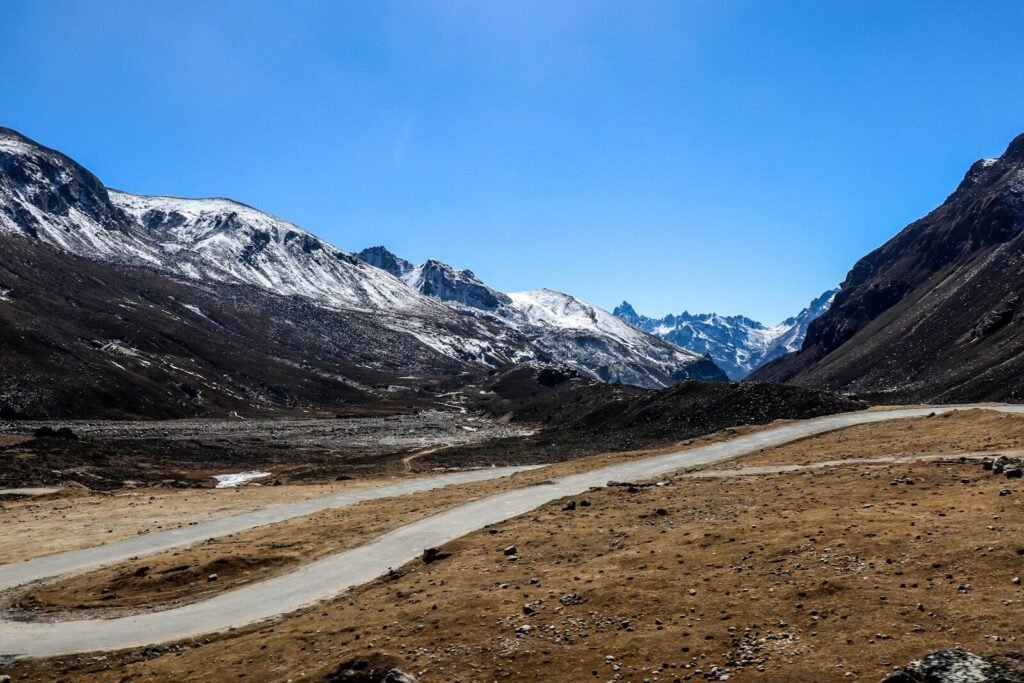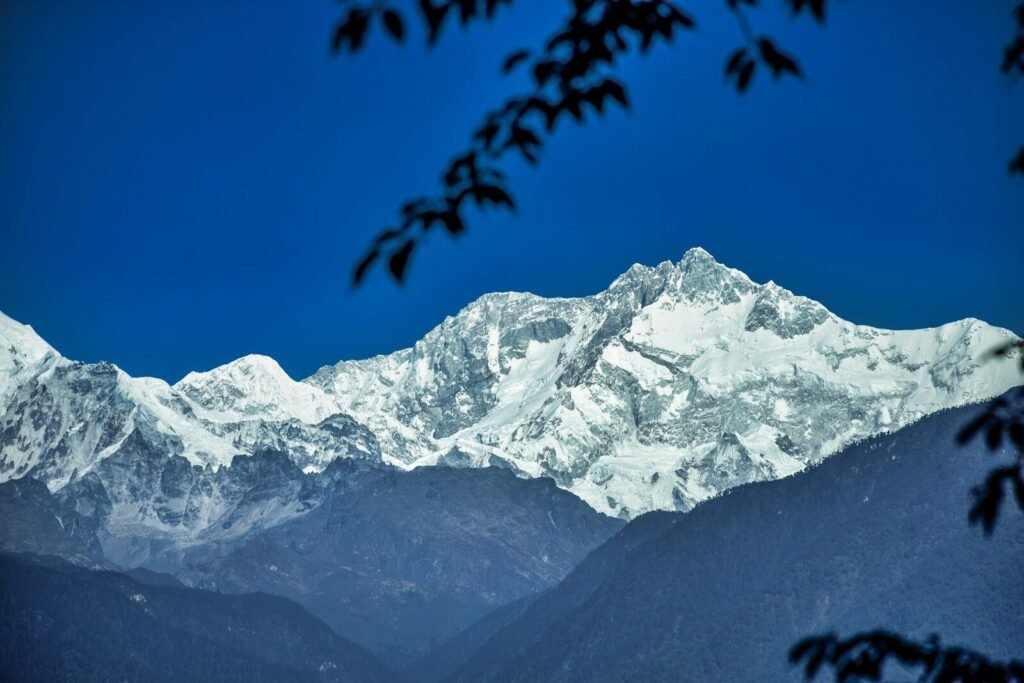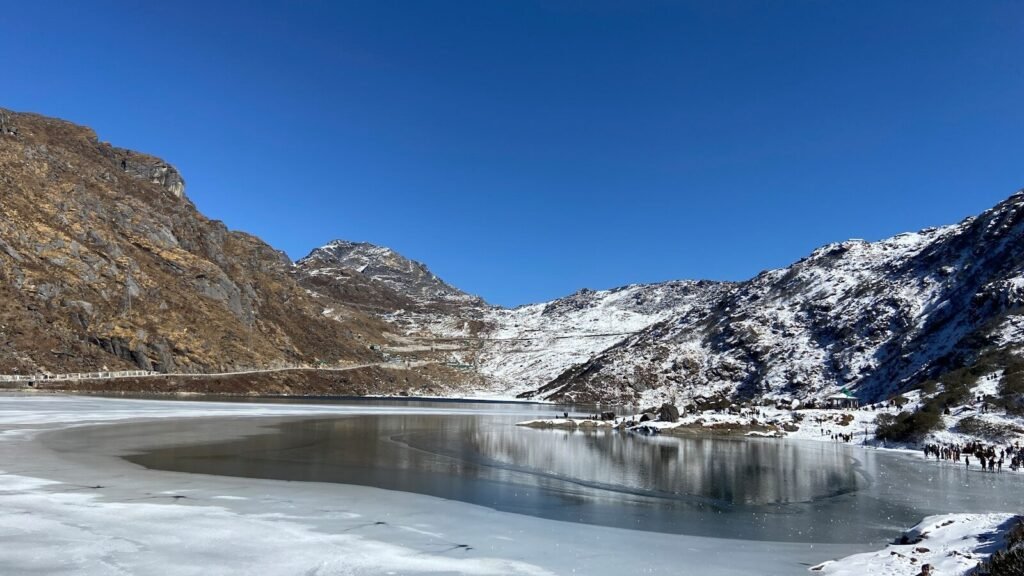
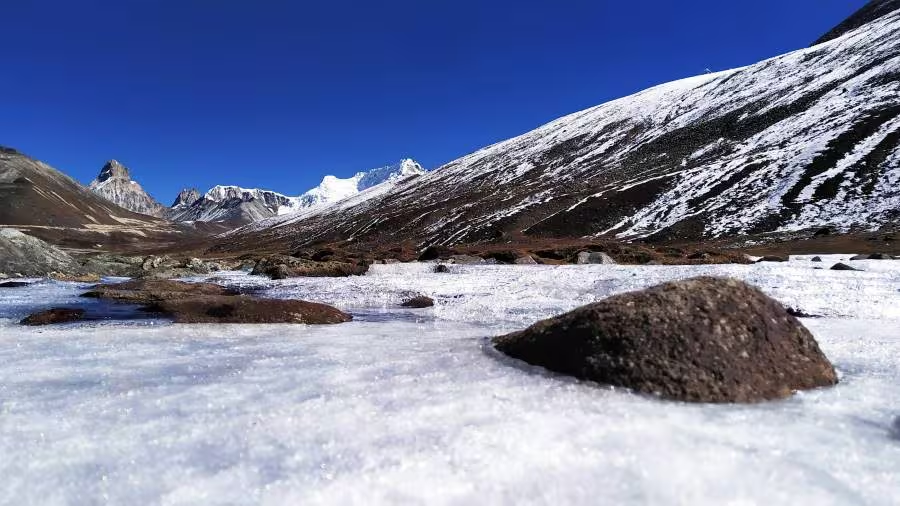
Zero Point, located near the mountain town of Lachung in North Sikkim, India, occupies a special place in the imagination of travelers: a high-altitude plateau and snowbound landscape that feels like the edge of the world. Beyond its postcard vistas, Zero Point’s story intertwines indigenous culture, strategic geography, ecological value, and the steady evolution of tourism in one of India’s most fragile mountain regions.
Zero Point lies north of Lachung and the well-known Yumthang Valley. It is reached by a mountain road that climbs through alpine meadows, rhododendron forests and increasingly barren, high-altitude terrain. The area is close to the high mountain passes that historically marked routes between Sikkim and neighbouring valleys beyond the Himalayan watershed.
Long before tourist buses arrived, the high valleys around Lachung and beyond were part of the traditional sphere of the Lepcha and Bhutia peoples. These communities used upland meadows for summer grazing of yaks and cattle, and mountain paths for trade and pilgrimage. The flows of people and goods were seasonal and adapted to the harsh climate.
The greater North Sikkim region sits close to sensitive international frontiers. Historically, the high passes were of local strategic significance and later acquired greater attention from state authorities because of border management. This factor has influenced access controls and infrastructure development in the 20th and 21st centuries.
Zero Point’s recognition as a tourist destination grew gradually with the broader opening of Sikkim to domestic and international visitors in the late 20th century. Initially, tourists went to Lachung and Yumthang for their meadows and rhododendron blooms; Zero Point, further up the road and often snowbound, became an added attraction as road access and organized tours expanded.
Typical itineraries base visitors in Gangtok or travel via rail/air hubs and then proceed by road to Lachung. From Lachung, vehicles climb to Yumthang and then on towards Zero Point. Road conditions, permits and weather all influence accessibility.
Because of the region’s ecological sensitivity and strategic location, travel to North Sikkim commonly requires official permits. Indian citizens often obtain Inner Line Permits; foreign nationals typically need a Protected Area Permit or equivalent clearance. Authorities periodically regulate access further — especially beyond Yumthang toward Zero Point — depending on security and environmental concerns. Visitors should always check current requirements before travel.
The rise of tourism has created alternative incomes for residents of Lachung and nearby villages. Households supplement traditional agriculture and animal husbandry with guesthouse earnings, guiding, transport services and handicraft sales. This shift has improved incomes but also introduced dependency on seasonal tourist flows.
Tourism has encouraged the commodification of some cultural elements — local festivals, traditional dress and handicrafts — while also providing opportunities for cultural exchange. Responsible tourism efforts emphasize respectful engagement and benefit-sharing with local communities.
Zero Point and its approaches are ecologically fragile: high-altitude flora recover slowly from trampling, and waste management is a persistent challenge. Increased footfall, vehicular emissions and litter threaten water quality and alpine habitats.
Historically, human movement in the high valleys followed seasonal windows when snow receded. Today, the safest and most rewarding visiting windows are the warmer months when roads are open and wildflowers and rhododendrons are in bloom. Winter visits can deliver spectacular snow scenery, but travel is more difficult and sometimes restricted.
Zero Point’s future as a tourist attraction will depend on balancing two imperatives: preserving its fragile environment and supporting the livelihoods of local people. Continued emphasis on managed access, community-based tourism, stringent waste management and visitor education is likely to shape how Zero Point is experienced in the years ahead.
Zero Point near Lachung is more than a scenic high-altitude stop: it represents the layered history of mountain peoples, seasonal movement, strategic geography and the recent surge of nature-based tourism. Understanding its past — how communities used the land, how access was shaped by topography and borders, and how tourism has altered local economies — helps visitors appreciate the fragility and value of this place. Responsible visitation, informed by the region’s history, offers a path to sustain Zero Point’s landscapes and the communities that depend on them.
Prospective visitors should consult up-to-date local government advisories, obtain necessary permits in advance, and seek operators who practice sustainable tourism. Engaging with local guides and communities will provide the richest and most respectful experience of Zero Point’s unique landscape and history.
What makes us different from other tour package companies
Our travel experts have core and intense knowledge about Sikkim sector with over 10 years of experience that will help you choose the best possible itinerary as per your requirements.
Our travel experts are just one call away during your tour to help you with any kind of immediate assistance so that your tour is a more enjoyable and hassle-free tour.
eSikkimTourPackages ensures best rates to all our esteemed guests since we have our own hotels and fleet of vehicles and drivers and there is no third-party involvement. This ensures personalized service and best rates.
















Kindly enter the details below for your Sikkim Tour Package