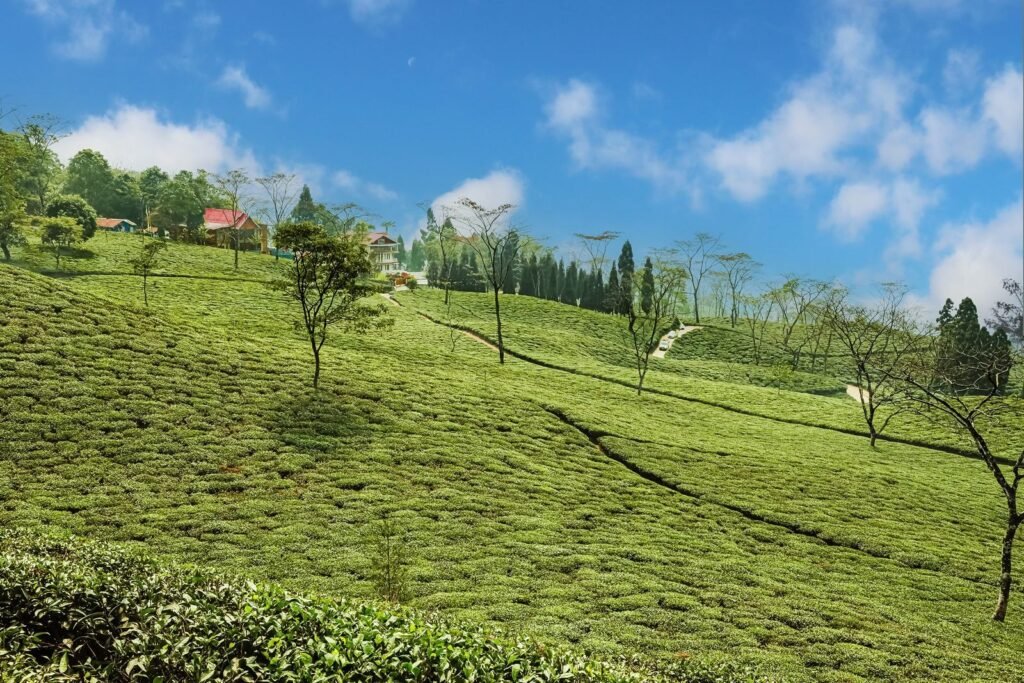
Temi Tea Garden—often referred to simply as Temi—is Sikkim’s most celebrated plantation and the state’s only large-scale tea estate. Nestled in the hills near Ravangla in South Sikkim, Temi occupies a special place in the history and economy of modern Sikkim and has grown into an important destination for visitors seeking both natural beauty and cultural experiences centered on tea.
The idea to develop a tea plantation in this part of Sikkim dates to the late 1960s, when Sikkim’s administration sought agricultural diversification and employment opportunities for local communities. The estate was officially developed under government initiative to take advantage of the region’s cool climate, ample rainfall and well-drained slopes—conditions suitable for orthodox black tea production.
The creation of the garden represented a significant shift from subsistence agriculture and smallholder farming toward a cash-crop enterprise with structured processing facilities. Over the subsequent decades, Temi expanded planting, built a factory for processing orthodox tea, and established infrastructure that linked the garden with wider markets in India and beyond.
Through the 1970s, 1980s and 1990s Temi consolidated its reputation for high-quality teas. Investment in processing, quality control and estate management gradually transformed the garden into a recognizable Sikkim brand. The estate played an important role in local employment and helped catalyze complementary services—transport, small trade and hospitality—around Ravangla and nearby settlements.
As tourism in Sikkim expanded from the 1990s onward, Temi capitalized on growing visitor interest in experiential travel. The garden’s scenic terraces, the factory complex, and the cultural backdrop of South Sikkim made it a natural stop for travelers en route to or based in Ravangla. Temi’s transition into a tourism asset evolved organically as day-trippers and longer-stay visitors sought tea-related activities—walks, plucking demonstrations and tastings—that connect agriculture to culture.
Sikkim’s state-level push toward organic agriculture has reshaped how the region’s produce—including tea—is perceived. While plantation management and certification details have evolved over time, Temi benefits from Sikkim’s overall reputation as an environmentally conscious and low-input agricultural state. This policy context has boosted Temi’s appeal among travelers who value sustainability and provenance in food and drink.
Today Temi is more than a producer of fine orthodox teas; it is an experiential attraction that blends history, landscape and craft. Visitors come for scenic walks, to learn about tea processing, and to participate in tasting sessions that highlight the garden’s distinctive flavor profiles.
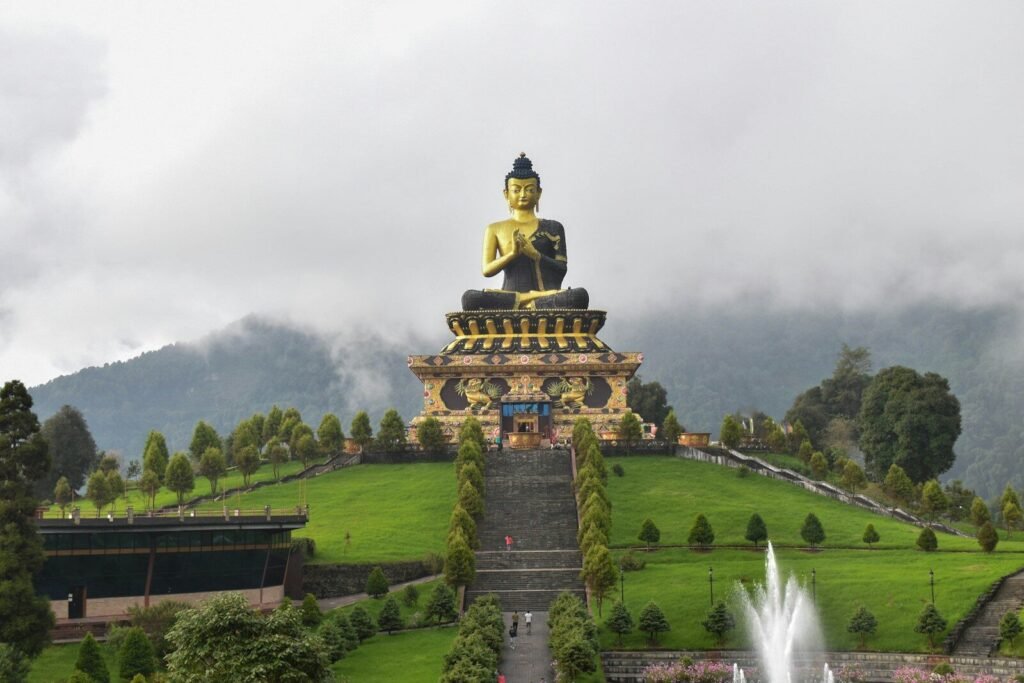
Temi works well as a half-day to full-day excursion from Ravangla. It pairs naturally with visits to nearby attractions such as the Tathagata Tsal (Buddha Park), local monasteries, and short treks on Maenam Hill. The proximity of guesthouses and small hotels in Ravangla allows visitors to base themselves close to both cultural sites and the tea garden.
From its inception Temi has been an engine for local employment—fieldwork, factory jobs, and seasonal opportunities. Its presence encouraged road improvements and supported ancillary businesses: tea shops, local handicraft stalls, guiding services and hospitality establishments.
Tea culture at Temi is embedded in the living heritage of the local communities. Oral histories, labor traditions and seasonal rhythms of plucking have become part of the garden’s identity. As tourism interest in “authentic” rural experiences grows, Temi provides a platform where visitors can engage respectfully with local livelihoods and learn about everyday practices shaped by landscape and climate.
Like many hill plantations, Temi faces challenges: maintaining sustainable land management, ensuring fair livelihoods for workers, and balancing visitor access with agricultural operations. Responsible tourism practices help preserve the garden’s integrity:
Temi has the potential to be a model for tea-based rural tourism: combining high-quality production with interpretive visitor experiences, community-led enterprises, and conservation-minded estate management. Initiatives that promote certification, traceability and cultural interpretation can enhance both market value and tourism appeal.
Temi is best reached by road via Ravangla. Travelers typically arrive through Gangtok or from Siliguri/Bagdogra (road links and rail/air hubs). Local taxis, shared jeeps and organized tours operate between Ravangla and Temi.
Temi Tea Garden is both a living chapter in Sikkim’s modern history and a dynamic tourism resource. Its evolution from a government-initiated agricultural project into a multifaceted attraction reflects broader changes in the region—economic diversification, environmental awareness and growth in experiential tourism. For travelers seeking a blend of landscape beauty, cultural insight and the chance to taste single-estate teas with a story, Temi offers a uniquely Sikkimese experience.
Visitors interested in deeper engagement should inquire locally about guided plantation walks, scheduled factory tours and any seasonal events that explore Temi’s heritage and the role of tea in Sikkim’s contemporary life.
What makes us different from other tour package companies
Our travel experts have core and intense knowledge about Sikkim sector with over 10 years of experience that will help you choose the best possible itinerary as per your requirements.
Our travel experts are just one call away during your tour to help you with any kind of immediate assistance so that your tour is a more enjoyable and hassle-free tour.
eSikkimTourPackages ensures best rates to all our esteemed guests since we have our own hotels and fleet of vehicles and drivers and there is no third-party involvement. This ensures personalized service and best rates.





















Kindly enter the details below for your Sikkim Tour Package