Ngadak Monastery is one of the lesser-known yet culturally rich monastic sites in the Namchi region of South Sikkim. Situated amid terraced fields and rhododendron-clad hills, the monastery represents both the enduring Buddhist spiritual traditions of the state and the gradual emergence of heritage tourism in this part of the Himalaya. This article traces the monastery’s history, architectural character, ritual life and its evolving role in local tourism, offering practical insights for visitors and stakeholders alike.
Namchi, the district headquarters of South Sikkim, is best known for large pilgrimage complexes and panoramic viewpoints. Within this landscape, Ngadak Monastery performs a quieter but important function: it conserves local monastic practices, serves as a center for community gatherings, and provides a cultural stop for travelers seeking authentic spiritual experiences beyond the major tourist circuits.
The precise origins of Ngadak Monastery are preserved more in local memory and oral tradition than in detailed written chronicles. Local accounts suggest that the site became a place of religious practice several generations ago and was gradually built up by monks and benefactors from surrounding villages. Like many Himalayan monasteries, Ngadak grew organically as a place for meditation, teaching and ritual observance.
Over decades, the monastery has experienced phases of construction, repair and modest expansion. These changes reflect broader social and economic shifts in Sikkim: increasing connectivity with urban centers, rising interest from domestic tourists, and renewed attention to heritage conservation. As a smaller monastery, Ngadak has retained much of its intimate, community-oriented character even as visitors began to arrive more frequently.
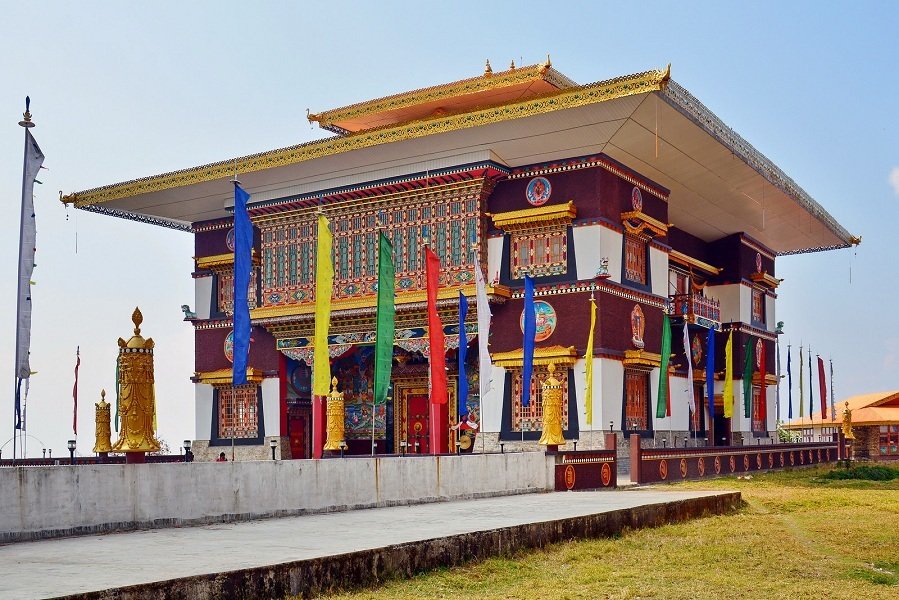
The architecture of Ngadak Monastery is characteristic of Himalayan gompas adapted to local materials and climate. Visitors will note a pragmatic combination of wood, stone and painted surfaces, with focused attention on ritual space and iconography.
The monastery’s decorative programs often involve local artisans—painters, woodcarvers and textile workers—whose skills connect religious practice with living craft traditions. For tourists interested in material culture, observing these techniques provides insight into continuity and adaptation in Himalayan arts.
Ngadak Monastery maintains a calendar of rituals that binds the monastic community with nearby villages. Key activities include daily pujas, periodic empowerment ceremonies, and seasonal rituals that mark agricultural cycles and communal well-being.
While Ngadak is not a mass-tourism site, it occupies an important niche in experiential and cultural tourism in South Sikkim. Its appeal lies in authenticity, accessibility from Namchi and the opportunity to observe living religious practice without the crowds found at major pilgrimage complexes.
Tourism has both positive and challenging impacts:
Visitors should approach Ngadak Monastery with sensitivity and preparation. The following practical guidance will enhance the experience for both guests and the monastic community.
Ngadak is accessible from Namchi town by a short drive or an uphill walk depending on the visitor’s preference. It commonly features on day-trip itineraries that include nearby religious and scenic attractions.
As tourism interest grows, sustainable management becomes essential. Stakeholders—monastic authorities, local government and community groups—can collaborate to protect the site’s cultural integrity while enabling meaningful visitor experiences.
Visitors to Ngadak typically combine their visit with other Namchi highlights:
Ngadak Monastery stands as a modest but meaningful repository of Sikkim’s monastic life, offering visitors an opportunity to witness devotional practice, local artistry and community cohesion away from mass-tourism routes. For responsible travelers, a visit to Ngadak can deepen appreciation of Himalayan religious culture while contributing to small-scale local livelihoods. As with any cultural site, respectful behavior, curiosity tempered with humility, and support for local conservation efforts will ensure that Ngadak retains its spiritual vitality for generations to come.
Note: Visitors who wish to attend specific rituals or meet resident lamas are advised to check locally for schedules and permissions, since small monasteries often vary their activities seasonally and according to monastic needs.
What makes us different from other tour package companies
Our travel experts have core and intense knowledge about Sikkim sector with over 10 years of experience that will help you choose the best possible itinerary as per your requirements.
Our travel experts are just one call away during your tour to help you with any kind of immediate assistance so that your tour is a more enjoyable and hassle-free tour.
eSikkimTourPackages ensures best rates to all our esteemed guests since we have our own hotels and fleet of vehicles and drivers and there is no third-party involvement. This ensures personalized service and best rates.












Kindly enter the details below for your Sikkim Tour Package