Gurudongmar Lake

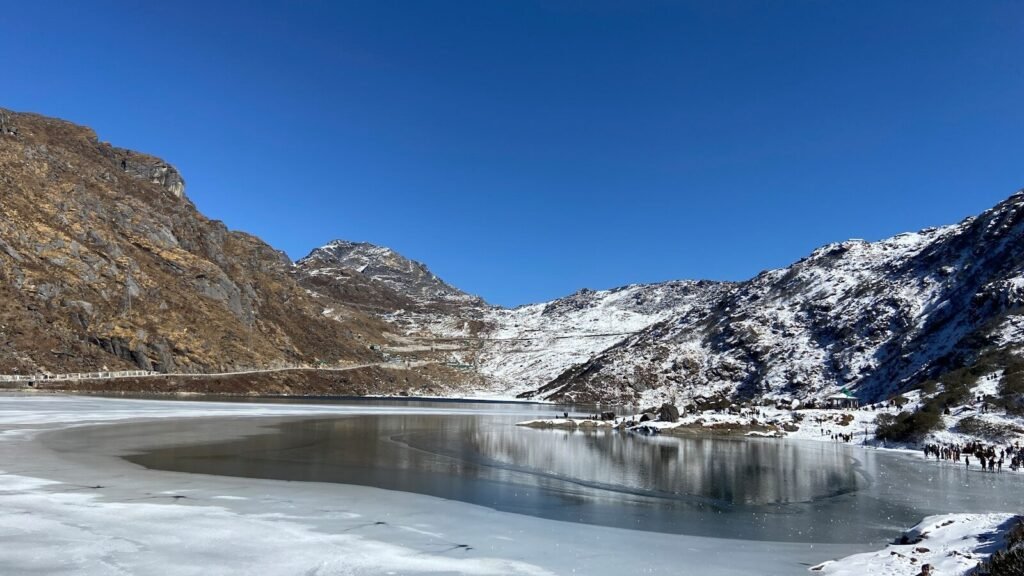
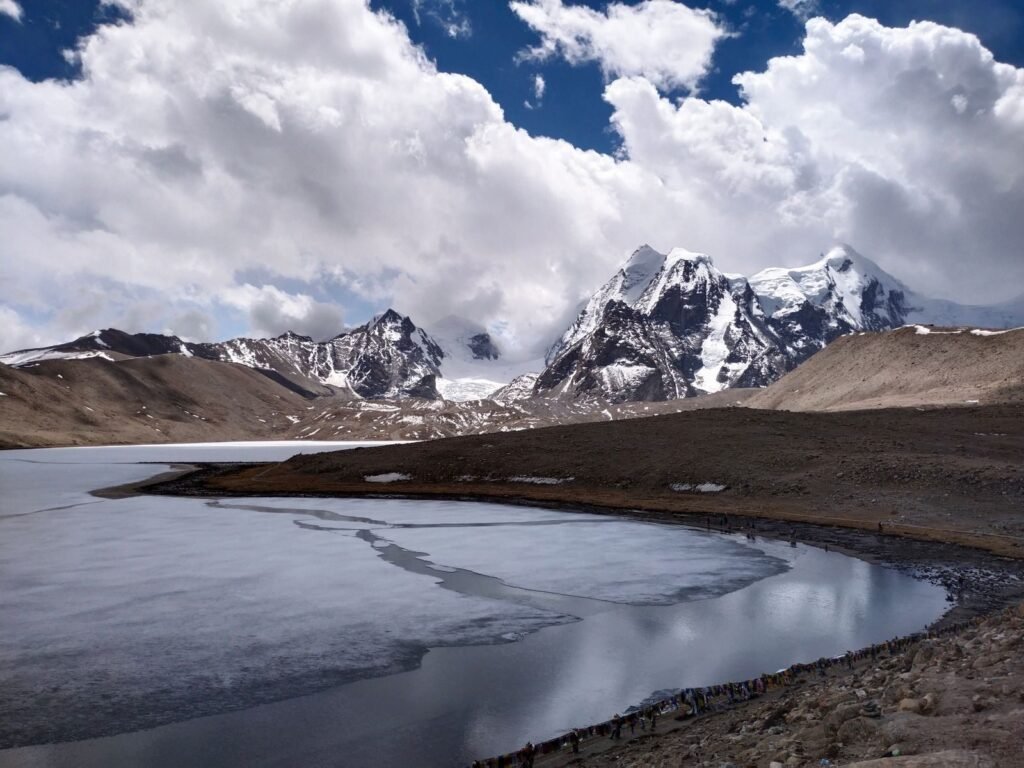
Scenic view of the snow-capped Gurudongmar Lake with mountains and clouds in Sikkim, India.

History

Gurudongmar Lake, Lachen — A Historical and Touristic Overview

Gurudongmar Lake (also Gurudongmar Tso) is one of the highest and most revered lakes in India. Nestled in North Sikkim in the high Himalaya, the lake sits at an altitude of approximately 5,430 metres (about 17,800 feet) and lies close to the international border with the Tibetan Plateau. Its dramatic setting, spiritual associations, and fragile high‑altitude ecology have made it both a sacred site and a sought‑after destination for adventurous travelers.

Historical and Cultural Significance

Local legends and religious connections

The lake carries deep spiritual significance for several faith communities:

  • Sikh tradition: Local lore holds that Guru Nanak (the founder of Sikhism) visited the area during his travels. One popular legend recounts that when the lake was frozen, the Guru touched it (or threw his rosary), causing a patch of water to remain unfrozen for drinking—hence the name associated with a “Guru.”
  • Buddhist reverence: The site is also sacred to Buddhists; it is associated with local monasteries and lamaic traditions. The people of Lachen and surrounding villages (primarily of Bhutia and Lepcha heritage) consider the lake a gift from the mountains and hold it in reverence.

Strategic and administrative history

Because of its proximity to the India–China (Tibet) border, Gurudongmar has been an area of strategic importance in the modern era. Movement around the lake and surrounding valleys has often involved military oversight, with certain zones restricted to civilians. Over recent decades, changes in road access and security arrangements have affected how and when tourists can visit.

Geography and Ecology

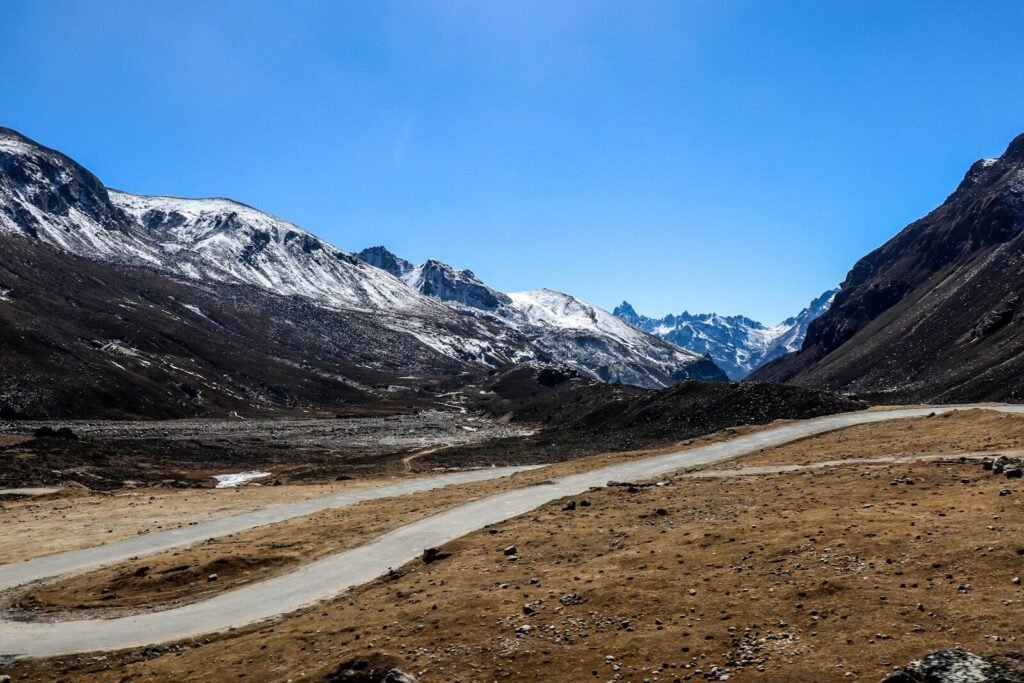
Gurudongmar is a high‑altitude oligotrophic lake—meaning it has low nutrient levels and limited biological productivity. The landscape around the lake is stark and alpine: bare rocks, scree, patches of hardy grass and moss, and sparse shrubs adapted to low oxygen, cold temperatures, and strong UV radiation.

  • Hydrology: The lake is fed by glacial melt and springs and contributes to the headwaters of important river systems in Sikkim.
  • Flora and fauna: Vegetation is limited to high‑altitude species such as lichens, mosses, and dwarf shrubs. Wildlife is scarce but may include high‑altitude birds and, rarely, sightings of species adapted to alpine environments. The fragile ecology is highly sensitive to disturbance and climate change.

Opening to Tourism — How the Lake Became Accessible

For much of its history, access to Gurudongmar was possible only to local pilgrims, traders, and shepherds. Over the late 20th and early 21st centuries, improvements in mountain roads, the growth of organized tour operators, and a rise in adventure tourism saw the lake becoming a more common destination for domestic and international visitors.

However, because the area is close to an international border and ecologically fragile, authorities regulate visitation. Opening times are seasonal and contingent on road conditions, weather, and security considerations.

Travel and Tourism Practicalities

How visitors reach Gurudongmar

The usual travel sequence for tourists is to reach North Sikkim via Gangtok and proceed to Lachen (one of the main bases for visiting the lake). From Lachen, visitors set out early in the morning on a high‑altitude road that leads north toward Gurudongmar. The road is mountainous and can be challenging; travel duration varies with weather and surface conditions.

Permits and regulations

  • Permits: Because Gurudongmar lies in a sensitive border region, visitors must obtain the necessary permits. Requirements differ by nationality: foreign nationals generally require a Protected Area Permit (PAP) or equivalent authorization, while Indian citizens need route permits or clearances from local authorities. Permits are typically obtained in Gangtok or through designated state authorities. Rules change periodically—always confirm current requirements before travel.
  • Security and photography: Parts of the area may be under military control. Photographs of certain installations or restricted zones may be prohibited. Always follow the instructions of security personnel and guides.

Best time to visit

  • Suggested season: The most favorable months are generally late spring to early autumn—roughly April/May through September/October—when passes are more likely to be open and roads clearer.
  • Closed season: The high passes and the road to the lake can be blocked by snow in winter and early spring; the lake and approach may be inaccessible for long stretches during the coldest months.

Visitor Experience and Itineraries

A typical tourist plan that includes Gurudongmar often runs as follows:

  • Travel from Gangtok to Lachen and spend a night to allow basic acclimatization.
  • Depart very early from Lachen to reach Gurudongmar in the morning when the lake is often clearest and there are fewer clouds.
  • Return to Lachen and continue to other nearby high valleys (Chopta Valley, Thangu) or to Lachung and the Yumthang Valley if the itinerary allows.

Accommodation and services

Lachen offers simple guesthouses, government tourist lodges, and homestays. Facilities at the lake itself are minimal; there are no developed tourism amenities at the shoreline. Travelers should be self‑sufficient in terms of clothing, warm layers, water, and medication.

Health, Safety and Responsible Tourism

Altitude and medical precautions

  • Altitude sickness risk: The lake lies at very high altitude. Acute Mountain Sickness (AMS) is a real risk. Allow time to acclimatize (stay a night at Lachen or lower altitude before ascending), ascend slowly, avoid strenuous exertion, stay hydrated, and avoid alcohol.
  • Symptoms: Headache, nausea, dizziness, lethargy, and shortness of breath can indicate AMS. If symptoms worsen, descend immediately and seek medical help.
  • Preparedness: Carry necessary medications (including those for altitude if prescribed), warm clothing, sunscreen, and sunglasses to protect against increased UV exposure.

Environmental and cultural responsibility

  • Leave no trace: The high‑altitude environment is extremely sensitive. Do not litter, collect stones, or disturb the fragile vegetation.
  • Respect sacred sites: The lake is sacred to local communities. Follow local customs—maintain silence, dress modestly, and ask before photographing people or religious rituals.
  • Follow local rules: Comply with restrictions imposed by authorities for security or conservation reasons.

Photography and Interpretation

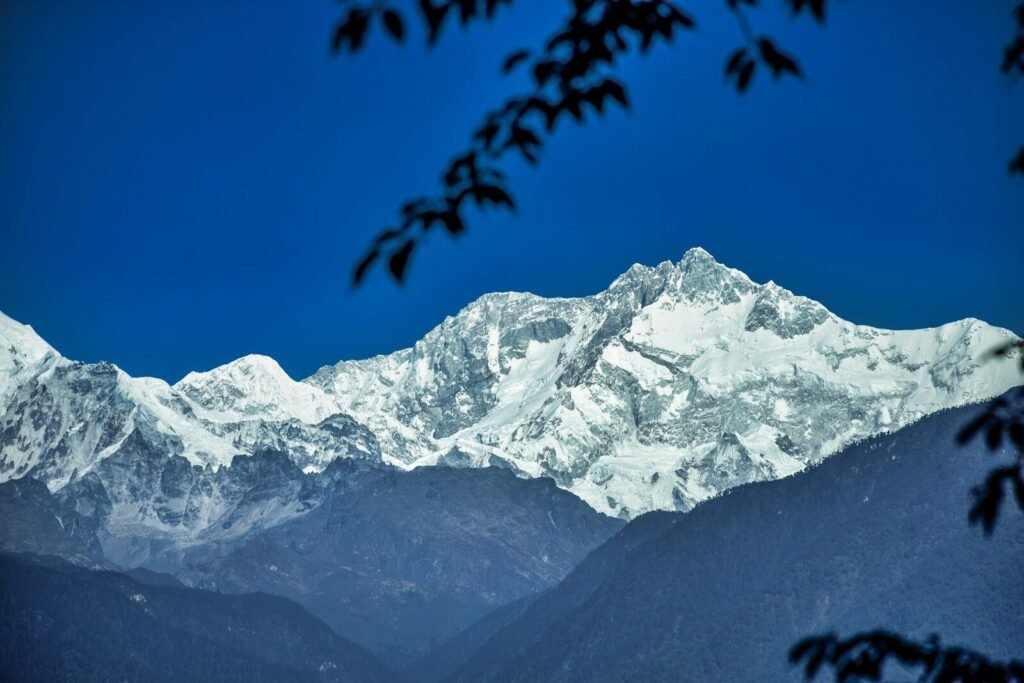
Gurudongmar offers stunning photographic opportunities—crystalline high‑altitude water, ringed by snow‑capped ridges and stark alpine terrain. To get the best light and clearer skies, many guides recommend an early morning visit. At the same time, be mindful of mirror‑like reflections, rapidly changing weather, and restricted zones near any military presence.

Nearby Attractions to Combine with a Visit

  • Lachen village: Traditional homestays, local culture, and monasteries.
  • Thangu and Chopta valleys: High meadows, yak pastures, and scenic landscapes often included in the same North Sikkim circuit.
  • Lachung and Yumthang Valley: On the way to or from northern Sikkim, depending on your route and permits.

Conservation Challenges and the Future

Gurudongmar faces several pressures: climate change and glacial retreat, increased visitor numbers during open seasons, and the difficulty of managing waste and human impact in such a remote zone. Sustainable tourism practices—limiting visitor numbers, enforcing strict waste rules, and promoting local benefits from tourism—are essential to preserve the lake’s environment and cultural sanctity.

Practical Checklist for Travelers

  • Obtain necessary permits well before travel and carry original ID.
  • Plan acclimatization days; avoid rapid ascent.
  • Pack warm layers, waterproof clothing, good boots, sunglasses, and strong sunscreen.
  • Carry water and snacks; do not rely on facilities at the lake.
  • Follow local guidance and military/security directions.
  • Respect cultural norms and the fragile environment—pack out all waste.

Conclusion

Gurudongmar Lake is at once a place of deep spiritual significance and a dramatic natural spectacle. Its high‑altitude beauty attracts travelers seeking remote, majestic landscapes and cultural encounters. At the same time, the lake’s proximity to international borders, its fragile ecology, and the health risks of extreme altitude mean that visits must be planned responsibly—with appropriate permits, acclimatization, and respect for local peoples and regulations. For those who take these precautions, a visit to Gurudongmar is an unforgettable experience: an encounter with the vastness of the high Himalaya, the quiet of sacred water, and the enduring cultures of North Sikkim.

Get Instant Call Back​

Which places do you want to explore in North-East?
Kindly share your above details to get Travel Plan PDF within 30 seconds on your mobile
Please wait while we are preparing customized quotes as per your requirement.

Why Choose us ?

What makes us different from other tour package companies

Best Travel Experts

Our travel experts have core and intense knowledge about Sikkim sector with over 10 years of experience that will help you choose the best possible itinerary as per your requirements.

24 X 7 On-Trip Assistance

Our travel experts are just one call away during your tour to help you with any kind of immediate assistance so that your tour is a more enjoyable and hassle-free tour.

Best Rate Guarantee

eSikkimTourPackages ensures best rates to all our esteemed guests since we have our own hotels and fleet of vehicles and drivers and there is no third-party involvement. This ensures personalized service and best rates.


Sikkim Tour Packages by Theme

Sikkim Tour From Popular Cities

Limited period offer – Sikkim tour packages at flat 50% discount. Inquire now!

Kindly enter the details below for your Sikkim Tour Package
Loading, please wait . .. ... ....