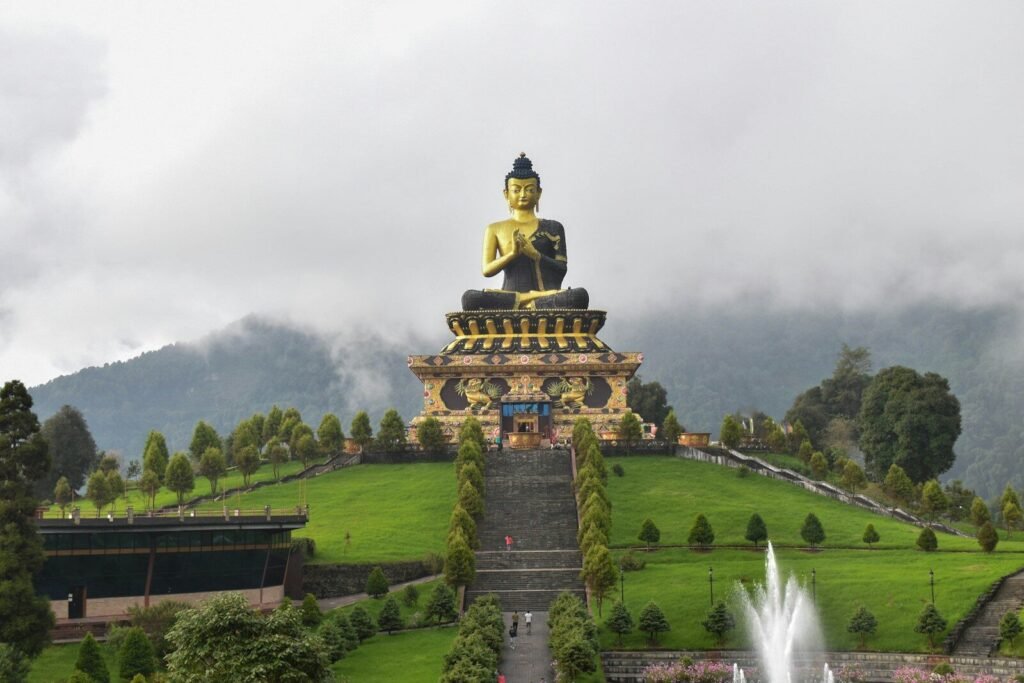
The Buddha Park at Ravangla (commonly called Tathagata Tsal) is one of Sikkim’s most visible symbols of contemporary Buddhist devotion and a growing pillar of regional tourism. Perched in South Sikkim, the park combines modern monumental sculpture, traditional Buddhist iconography and a spectacular Himalayan setting. This article traces the park’s history, its cultural and spiritual significance, and its role in shaping tourism and local livelihoods.
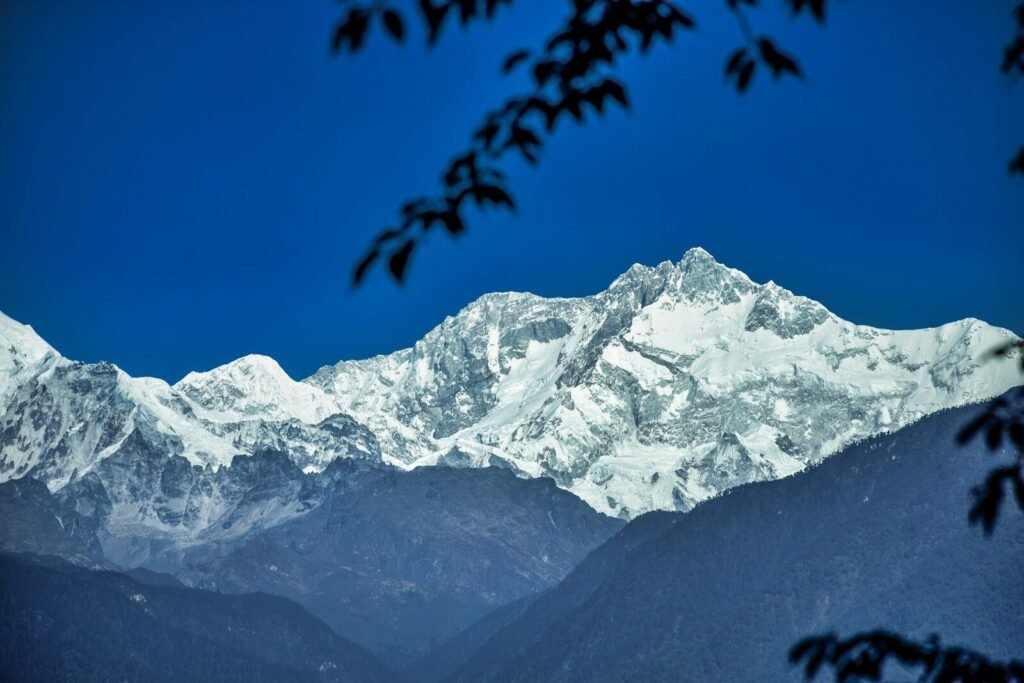
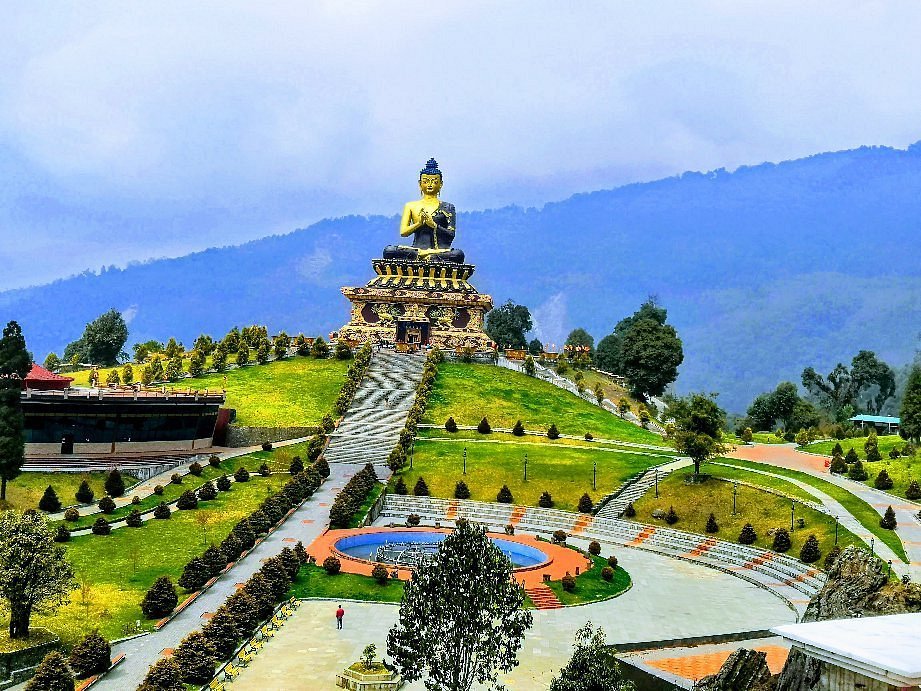
Buddha Park has rapidly become a popular destination for both pilgrims and leisure visitors. The complex centers on a large seated statue of the Buddha and a landscaped sanctuary that invites quiet contemplation, photography and panoramic viewing of the surrounding ridges and the mighty Kanchenjunga range. The site exemplifies how religious commemoration and nature-based tourism can be developed in tandem.
The idea behind creating a prominent Buddha monument at Ravangla emerged from a mix of religious, cultural and tourism-oriented motives. Sikkim has a long Buddhist heritage that dates back centuries; monasteries, prayer flags and chortens (stupas) are woven into the cultural landscape. In the late 20th and early 21st centuries, local leaders and Buddhist organizations sought to renew that visible heritage with a large, accessible devotional complex that would serve both spiritual needs and the growing tourism industry.
The project at Ravangla was conceived as a modern expression of that continuity: a place where large-scale Buddhist art, ritual practice and public access meet. The centerpiece statue and park were developed with government support, local stakeholders, and Buddhist practitioners collaborating to create a site that is simultaneously sacred and civic.
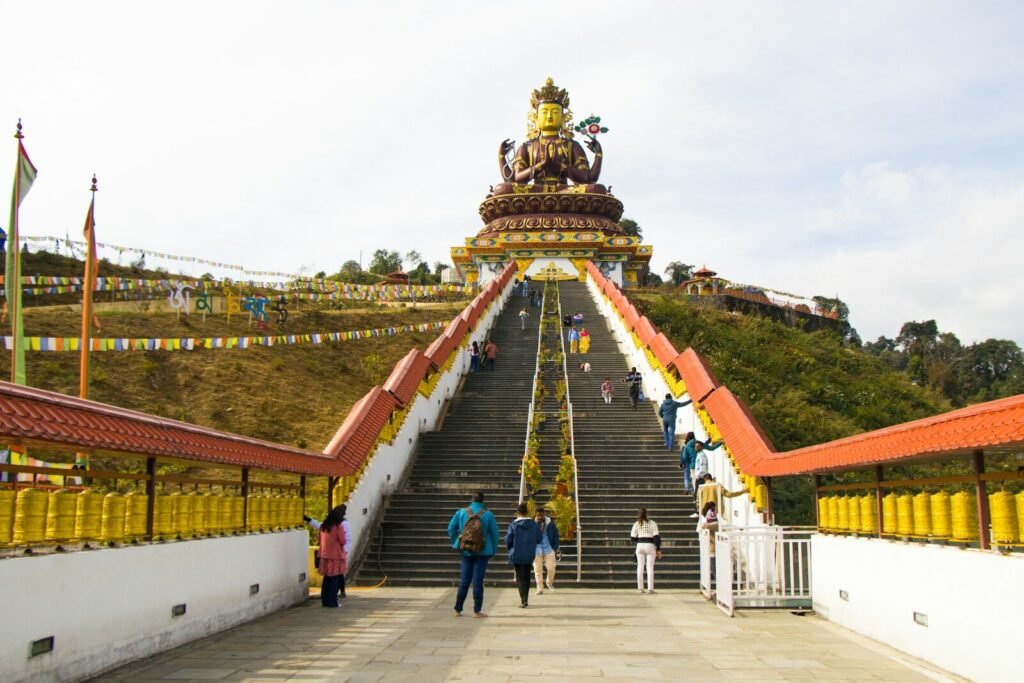
The Buddha Park is dominated by a tall seated statue of Shakyamuni Buddha, executed in a contemporary yet reverent style. The statue’s scale—imposing in the context of the mountain valley—was chosen so that it could be seen from surrounding villages and act as a focal landmark for the region. Around the main statue, the complex includes smaller statues, prayer wheels, landscaped lawns and paved walkways designed for visitors and devotees.
The park was completed and consecrated in the early 2010s. The consecration ceremony was conducted by prominent Buddhist leaders and drew pilgrims, officials and international visitors. The formal consecration established the site as an active place of worship and a center for Buddhist events and festivals.
For local Buddhists and Tibetan Buddhist practitioners across the region, the Buddha Park is more than a tourist attraction: it is a living religious site. Devotees visit to offer prayers, perform circumambulation (kora) around the statue and spin prayer wheels. The park also hosts public rituals and observances on major Buddhist dates, providing opportunities for ritual learning and community participation.
At the same time, the park plays a cultural role. It is a visible reaffirmation of Sikkim’s Buddhist identity and serves educational functions for visitors unfamiliar with Himalayan Buddhist traditions. The blend of devotional activity with scenic landscape allows visitors to experience religious practice in an accessible way.
The park’s architecture reflects a mix of traditional Buddhist motifs and modern construction techniques:
The overall design emphasizes approachability: paved paths, open lawns and clearly defined vantage points make it easy for visitors of varying mobility and backgrounds to move through the site.
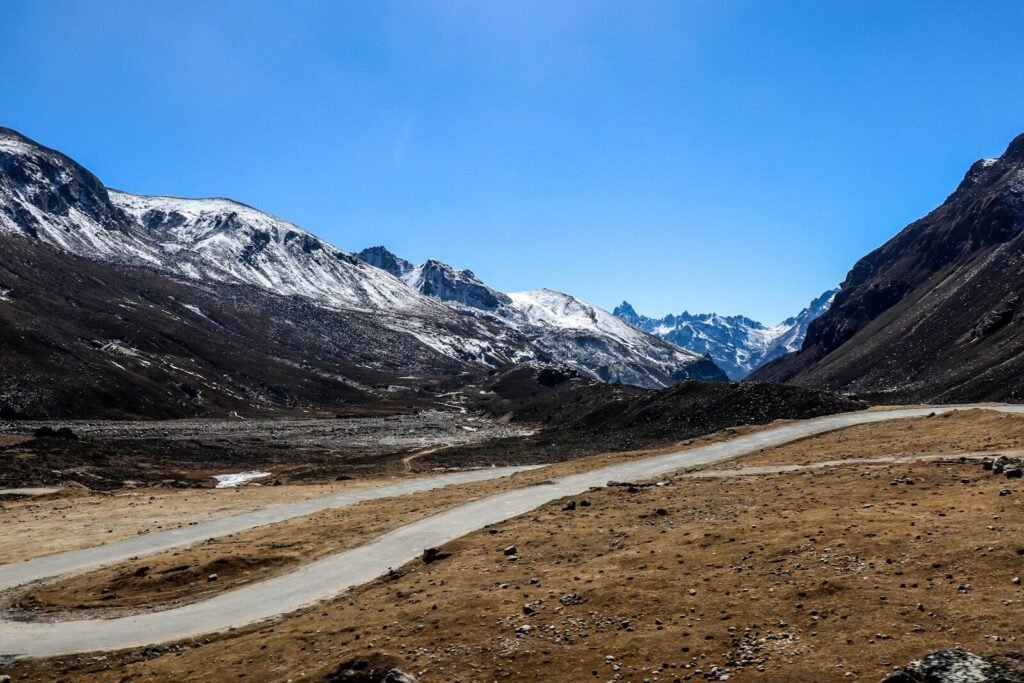
One of the park’s most compelling assets is its setting. Located on a hillside above the town of Ravangla, the park affords sweeping views across mountain ridges and, on clear days, a dramatic panorama of snow-capped peaks including parts of the Kanchenjunga massif. The elevation and climate also support rich rhododendron forests, seasonal wildflowers and an active birdlife—features that add ecological and aesthetic value to the visitor experience.
Buddha Park has been an important catalyst for tourism in and around Ravangla. Its accessibility makes it an attractive half-day destination for travelers exploring Sikkim, and it often appears in regional itineraries alongside monasteries, nature trails and cultural sites.
Ravangla is accessible by road from Gangtok (the state capital) and from Siliguri/Bagdogra in West Bengal. Travel typically involves:
Maintaining a balance between devotional use, tourism and ecological conservation is an ongoing task. Park management, local government and community organizations work to:
Visitors are encouraged to be respectful of the park’s religious nature. Useful guidelines include:
Buddha Park at Ravangla stands as a contemporary expression of Sikkim’s Buddhist heritage and a well-conceived tourism asset. Combining spiritual atmosphere, monumental art and outstanding mountain vistas, it draws visitors for reasons ranging from pilgrimage to photography and nature appreciation. When visited with cultural sensitivity and environmental awareness, the park provides a memorable window into Himalayan religious life while contributing to the socio-economic vitality of the Ravangla region.
For those planning a visit, consult local tourism offices, community-run homestays and current online travel updates to confirm accessibility, festival dates and best travel routes. Engaging with local guides will enrich your understanding of the park’s history, rituals and natural environment.
What makes us different from other tour package companies
Our travel experts have core and intense knowledge about Sikkim sector with over 10 years of experience that will help you choose the best possible itinerary as per your requirements.
Our travel experts are just one call away during your tour to help you with any kind of immediate assistance so that your tour is a more enjoyable and hassle-free tour.
eSikkimTourPackages ensures best rates to all our esteemed guests since we have our own hotels and fleet of vehicles and drivers and there is no third-party involvement. This ensures personalized service and best rates.













Kindly enter the details below for your Sikkim Tour Package