Batasia Loop is one of the most recognisable landmarks of the Darjeeling Hills. Most famous for the graceful spiral of the Darjeeling Himalayan Railway (DHR), an attractive terraced garden and a solemn war memorial, Batasia Loop combines engineering ingenuity, colonial-era railway heritage and contemporary hill tourism. This article traces its history, explains its role in heritage tourism, and outlines practical and conservation issues for visitors and planners.
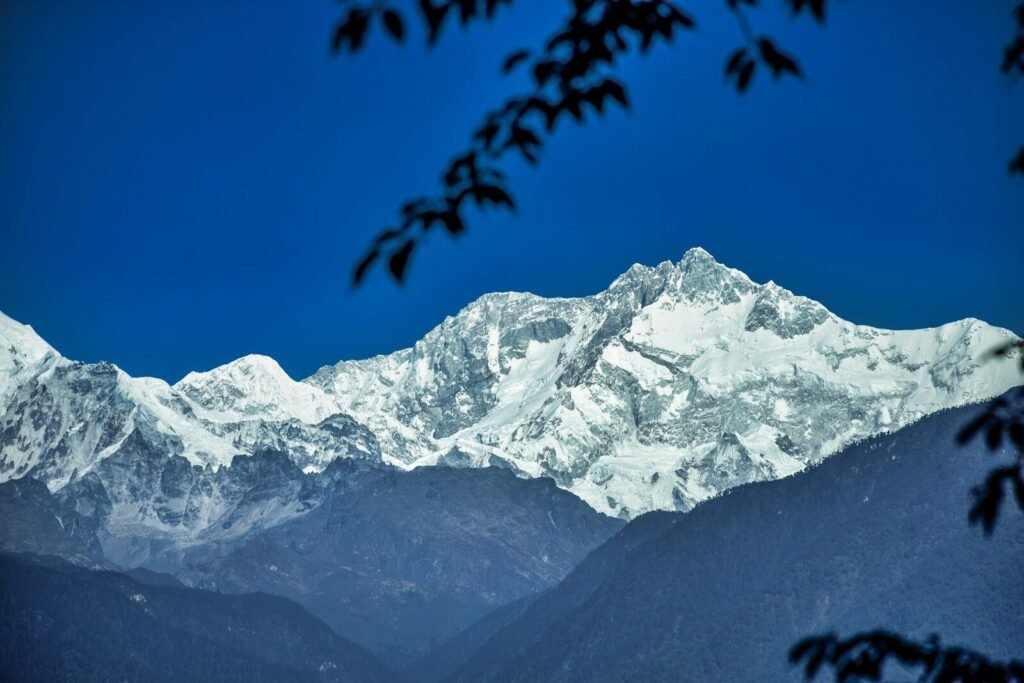
Batasia Loop lies a short distance from Darjeeling town, carved into the slopes a little below Ghum — the highest railway station on the DHR. The site offers sweeping views of the surrounding valleys and, on clear days, magnificent panoramas of the Himalayan ranges including the silhouette of Kanchenjunga. Its combination of scenic outlook, engineering interest and a memorial to fallen soldiers makes it an important stop for tourists visiting the region.
The Batasia Loop cannot be understood apart from the Darjeeling Himalayan Railway. The DHR, developed under British colonial administration in the late 19th century, was intended to link the plains at New Jalpaiguri (later Siliguri) with the hill station of Darjeeling. The railway’s narrow-gauge route negotiates very steep terrain using clever engineering—zigzags, loops, and steep gradients—allowing locomotives to gain or lose height gradually. The DHR is widely recognised as a pioneering example of mountain railway engineering and is part of the broader “Mountain Railways of India” heritage inventory.
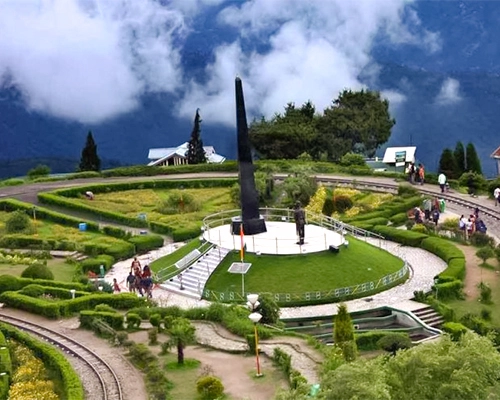
Batasia Loop was planned and constructed as part of the DHR alignment to manage the steep gradient between Ghum and lower sections toward Darjeeling. By introducing a 360-degree spiral, the loop lengthens the running distance and reduces the climb/descent gradient that locomotives must tackle. The result is a graceful curve in the tracks that also carved out a vantage point for scenic viewing. The loop became a practical necessity for safe and efficient railway operation in this challenging topography and, over time, evolved into a visitor attraction in its own right.
In addition to its railway function, the site was developed into a landscaped garden and a war memorial in the post-independence era. The memorial commemorates the Gorkha soldiers from the region who served and sacrificed their lives in the Indian armed forces. The garden and memorial transformed the loop from merely an engineering feature to a place of remembrance and public recreation, enhancing its appeal for both domestic and international tourists.
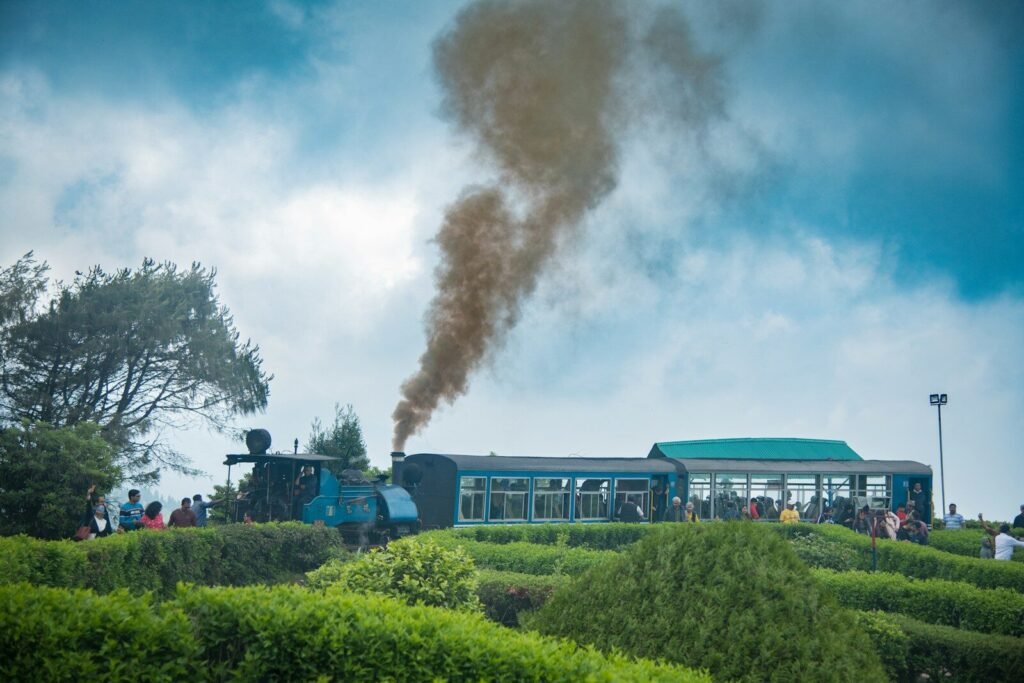
The DHR’s “Toy Train” runs through Batasia Loop and is a major tourist draw. For many visitors, the loop offers one of the most dramatic and photographically rewarding moments of the Toy Train journey: the train emerging from the spiral, often with the backdrop of misty valleys or snow-capped peaks. As part of the DHR—a railway celebrated for its historical and technical value—Batasia Loop plays a key role in heritage tourism for the region.
Batasia Loop is especially popular for:
The war memorial adds a solemn cultural layer to visits. Many tourists — including families of servicemen, veterans and school groups — come to pay respects. The site combines leisure, remembrance and local identity: it is an important civic space for the hill communities and the Gorkha regiments connected to the region.
Because Batasia Loop is integrated with the Darjeeling Himalayan Railway—an important heritage railway—its physical maintenance is both a matter of operational safety and heritage conservation. Track upkeep, structural safety of the retaining works, and the garden and memorial landscaping require coordinated effort between the railways, local civic bodies and community stakeholders.
The Darjeeling Hills face multiple stresses that influence sites such as Batasia Loop:
Effective stewardship of Batasia Loop involves:
Batasia Loop is more than an engineering solution to a steep gradient: it is an evocative place where colonial-era railway heritage, natural beauty and contemporary hill-culture meet. For tourists, it provides a memorable combination of scenic vistas, the charm of the Toy Train and the reflective atmosphere of the war memorial. For planners and conservationists, it poses an ongoing challenge to balance operational safety, heritage preservation and sustainable tourism development. When visited respectfully, Batasia Loop remains one of Darjeeling’s finest single experiences—an accessible window into the region’s history, landscape and living culture.
What makes us different from other tour package companies
Our travel experts have core and intense knowledge about Sikkim sector with over 10 years of experience that will help you choose the best possible itinerary as per your requirements.
Our travel experts are just one call away during your tour to help you with any kind of immediate assistance so that your tour is a more enjoyable and hassle-free tour.
eSikkimTourPackages ensures best rates to all our esteemed guests since we have our own hotels and fleet of vehicles and drivers and there is no third-party involvement. This ensures personalized service and best rates.

















Kindly enter the details below for your Sikkim Tour Package