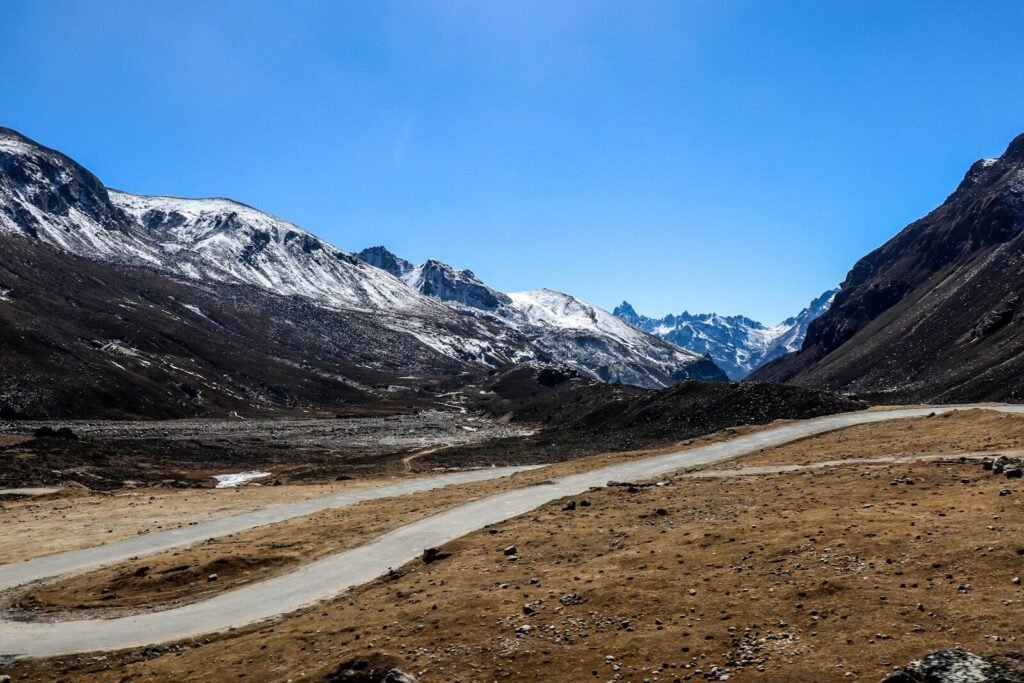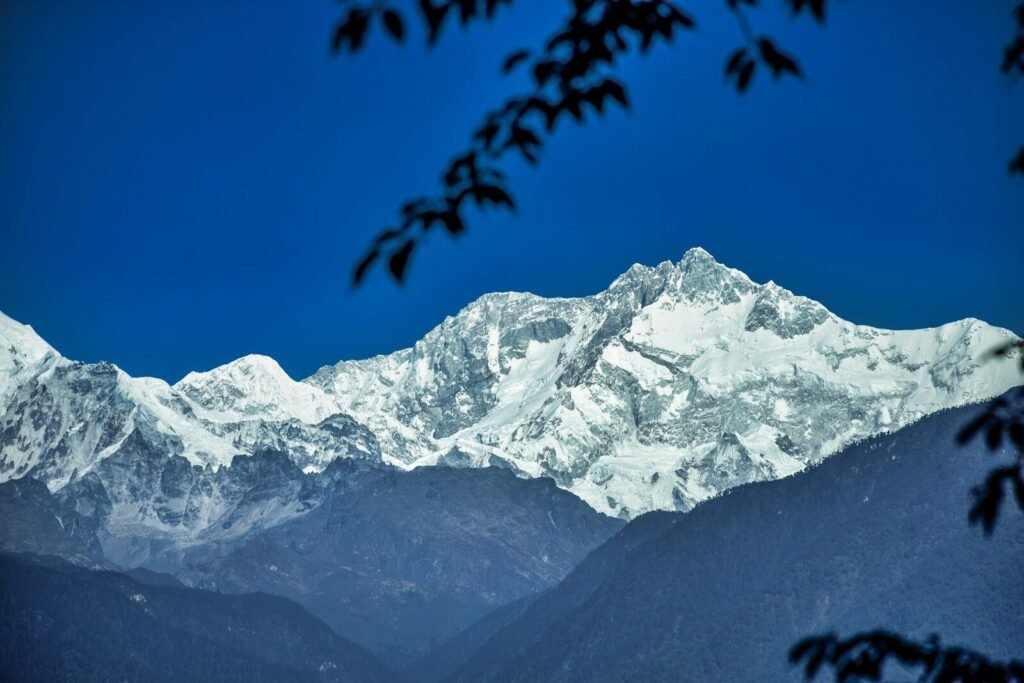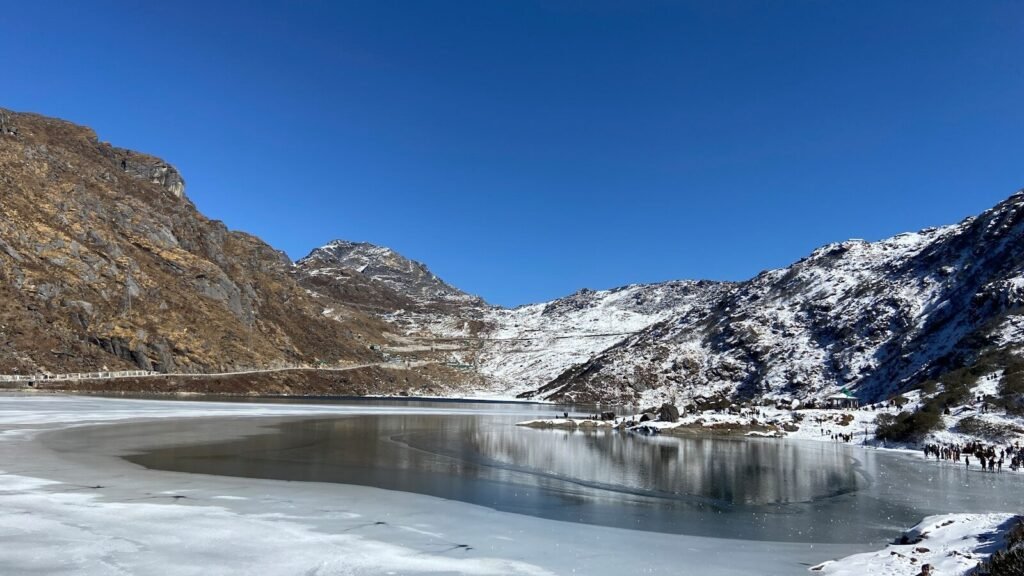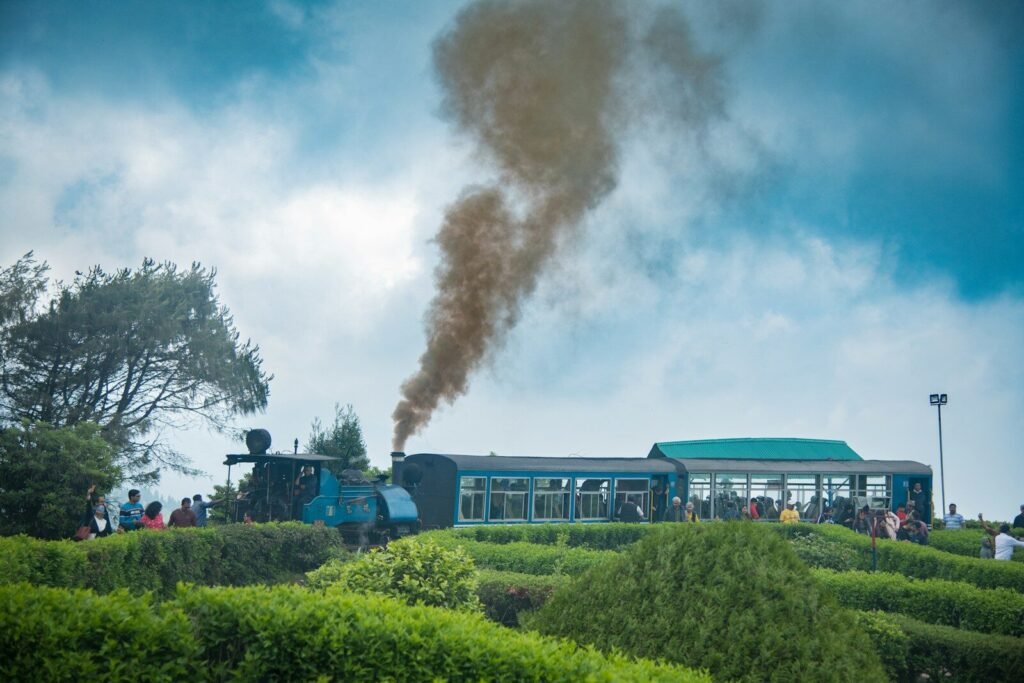
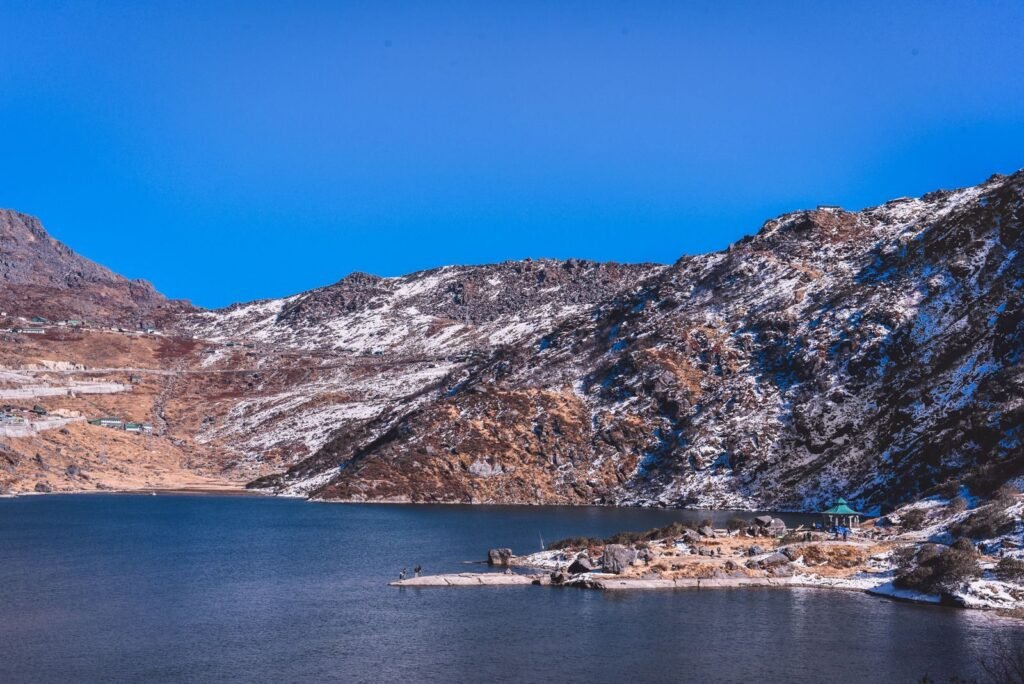
Tsomgo Lake (also spelled Tsongmo and commonly known as Changu Lake) is one of Sikkim’s most famous high‑altitude lakes. Perched in the eastern Himalaya at an altitude of roughly 3,750–3,800 metres (about 12,300 ft) and located approximately 40 km from Gangtok along the road to Nathu La, the lake has long been an attraction for its scenic beauty, spiritual associations and strategic location. This article traces Tsomgo’s history and places that history in the context of changing patterns of tourism from pre‑modern times to the present day.
Tsomgo is a glacial lake formed by the accumulation of meltwater and snow in a high alpine basin. Its seasonal character—often frozen in winter and filled by spring and summer melt—has shaped local use and cultural responses to the lake for centuries.
Long before organized “tourism,” Tsomgo held significance for the indigenous Lepcha and Bhutia communities and for Tibetan Buddhist pilgrims. High Himalayan lakes in Sikkim are often seen as sacred or as abodes of deities and spirits; Tsomgo figures in local rituals, seasonal pastoral calendars and oral stories. Pilgrimage, pilgrimage‑linked trade and pastoral movements between Sikkim and nearby Tibetan plateaus shaped human visits to the area.
The nineteenth century’s expanding British interest in the Himalaya—for strategic, cartographic and administrative reasons—brought greater external attention to Sikkim and its passes. While Tsomgo itself was a local feature, surveyors, naturalists and administrative parties travelling the gangtok–Nathu La corridor recorded and mapped the lake and surrounding high roads. Colonial reports and early travellers’ accounts introduced Tsomgo into wider printed narratives about the region’s landscapes and peoples.
Tsomgo sits on the route that connects Gangtok with the historic Nathu La pass toward Tibet. That strategic position meant the lake and its approaches were periodically used and observed by military and administrative parties, particularly as imperial and later national borders became more contested in the twentieth century.
After India’s independence and Sikkim’s eventual accession to India (1975), infrastructure improvements—principally road building—made access to high‑altitude sites like Tsomgo easier for Indian tourists. At the same time, the Sino‑Indian border in the region and the closure of passes such as Nathu La following 1962 (and the 1967 skirmishes) limited cross‑border movement and changed the character of the corridor.
The partial reopening of Nathu La for trade and limited tourism in the mid‑2000s (formal reopening agreements were signed and trade resumed in 2006) put the Gangtok–Nathu La corridor back on the map. Tsomgo benefited from increased visitor numbers as part of day‑trip itineraries from Gangtok: travellers could enjoy the lake’s scenery, take yak rides, and visit nearby cultural sites.
Rising numbers of visitors brought economic benefits to local communities but also environmental and cultural pressures. Sikkimese authorities, the Indian Army and conservationists have since introduced measures to manage visitation and minimize damage.
Tourism at Tsomgo is not only about landscape viewing; it is also a means of encountering Sikkim’s cultural history. Local guides explain Buddhist and Lepcha associations with the lake, the historical role of high passes in trade and how border geopolitics affected regional livelihoods. For many visitors the lake offers a compact lesson in how environment, religion and history intersect in the eastern Himalaya.
Tsomgo’s future as a tourist destination will depend on balancing accessibility with conservation and the well‑being of local communities. Important ongoing issues include:
From a glacial basin of local ritual importance to a well‑known stop on Sikkim’s tourist circuit, Tsomgo Lake embodies the layered history of the eastern Himalaya: geological time, indigenous culture, colonial mapping, post‑colonial infrastructure and contemporary geopolitics. Tourism has brought economic opportunity and wider recognition, but it has also required deliberate management to preserve the lake’s ecological and cultural integrity. For responsible travellers and planners alike, Tsomgo remains a valuable case study in how high‑altitude natural heritage can be shared sustainably.
Travelers planning a visit should check current permit rules and weather conditions with local authorities in Gangtok, respect restrictions set by the Army and state administration, avoid littering, and follow guidance from local guides to minimize ecological and cultural impacts.
What makes us different from other tour package companies
Our travel experts have core and intense knowledge about Sikkim sector with over 10 years of experience that will help you choose the best possible itinerary as per your requirements.
Our travel experts are just one call away during your tour to help you with any kind of immediate assistance so that your tour is a more enjoyable and hassle-free tour.
eSikkimTourPackages ensures best rates to all our esteemed guests since we have our own hotels and fleet of vehicles and drivers and there is no third-party involvement. This ensures personalized service and best rates.





















Kindly enter the details below for your Sikkim Tour Package