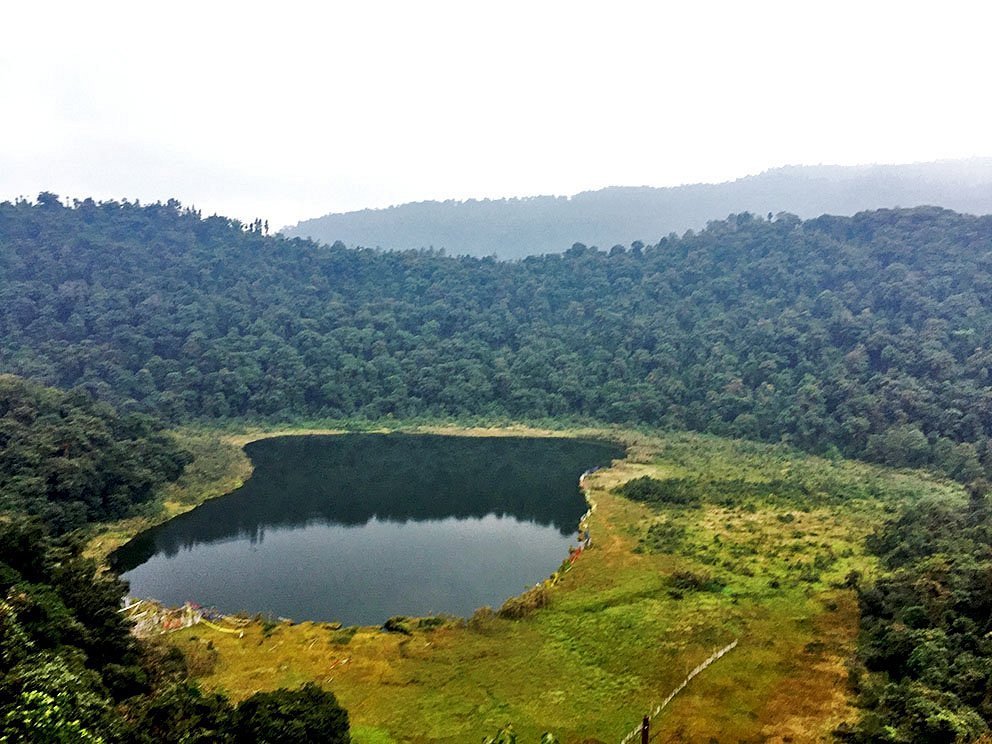
Khecheopalri Lake, often called Khecheo Palri or simply Khecheopalri, is a small but culturally and ecologically significant waterbody near the hill-station of Pelling in West Sikkim, India. Revered by both Buddhists and Hindus, the lake combines sacred tradition, scenic charm and accessible nature experiences, making it one of the region’s most important destinations for tourists interested in religion, ecology and culture.
The lake is set in a quiet, forested hollow above the surrounding valleys. Surrounded by mixed broadleaf and coniferous forests, it is fringed by prayer flags, old-growth trees and a gentle footpath that allows visitors to circumambulate the shore. The surface of the water is famously calm, and local stories about its unusual behavior and protective spiritual aura are integral to the lake’s identity.
Khecheopalri’s history is inseparable from local legend and faith. According to oral traditions and local belief, the lake is the heavenly abode of a goddess—often associated with the Buddhist female deity Tara or an indigenous protective spirit. It is widely described as a wish-fulfilling lake whose surface refuses to be sullied by falling leaves, an attribute interpreted as a sign of its sanctity.
The site is valued by both the Buddhist and Hindu communities of Sikkim. Monks and pilgrims perform rituals and leave offerings; prayer flags and small shrines mark the spiritual use of the place. This shared veneration has long made Khecheopalri a focal point for interwoven religious practice in the region.
The exact date when the lake became sacred in local memory is not documented in a single written source; its sanctity is principally preserved through oral tradition, monastery records and the continuous practice of pilgrimage. Historically it was a local pilgrimage site long before modern tourism reached Sikkim. Over the 20th century, as roads improved and Pelling grew as a hill-station, Khecheopalri began to receive an increasing number of visitors from beyond the immediate region.
Today Khecheopalri functions at the intersection of pilgrimage tourism, nature-based tourism and cultural tourism. Its relatively small size does not diminish its draw; rather, the blend of spiritual atmosphere and forested tranquility provides a distinctive experience that complements nearby attractions around Pelling.
Pilgrims visit to perform circumambulation (kora), tie prayer flags, light butter lamps and make offerings. Religious tours often combine the lake with nearby monasteries and sacred sites, allowing visitors to experience the devotional rhythms of Sikkimese Buddhist practice.
For nature-minded tourists, Khecheopalri offers easy walking routes, birdwatching opportunities and close contact with Himalayan flora. Its setting makes it suitable for short nature walks rather than strenuous trekking, so it appeals to a wide range of visitors including families and older travelers.
The flow of tourists has supported local livelihoods: small shops, guiding services, homestays and transport operators benefit from visitors who come to see the lake. Local artisans also sell religious souvenirs and handicrafts, linking cultural heritage to economic sustenance.
The increase in visitor numbers has forced a balance between access and protection. The lake’s sacred status has helped preserve it from some kinds of exploitation, but modern pressures — litter, unmanaged footfall, and infrastructure demands — require coordinated management.
While tourism has created livelihood opportunities, it also carries risks: seasonal congestion, pressure on fragile forest margins, and challenges in waste management. Addressing these impacts requires ongoing cooperation between government bodies, local communities, monastic institutions and tourism operators.
Visitors come to Khecheopalri both as pilgrims and as part of broader itineraries around Pelling. A responsible visit enhances the experience and helps preserve the site for future generations.
Khecheopalri Lake near Pelling is more than a scenic stop: it is a living cultural landscape where spirituality, community stewardship and nature appreciation come together. Its history — rooted in local legend, monastic practice and communal reverence — shapes how the site is used and protected today. For tourists, a visit to Khecheopalri offers a compact but profound encounter with Sikkim’s spiritual geography and natural beauty, provided that respect for local customs and conservation imperatives guides the experience.
What makes us different from other tour package companies
Our travel experts have core and intense knowledge about Sikkim sector with over 10 years of experience that will help you choose the best possible itinerary as per your requirements.
Our travel experts are just one call away during your tour to help you with any kind of immediate assistance so that your tour is a more enjoyable and hassle-free tour.
eSikkimTourPackages ensures best rates to all our esteemed guests since we have our own hotels and fleet of vehicles and drivers and there is no third-party involvement. This ensures personalized service and best rates.























Kindly enter the details below for your Sikkim Tour Package