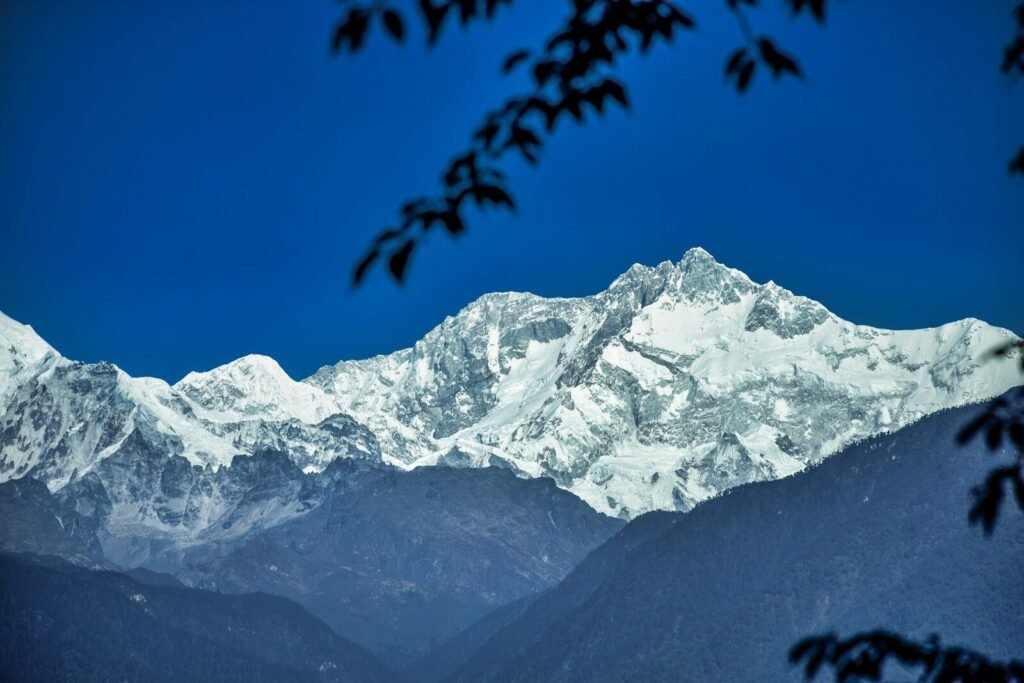
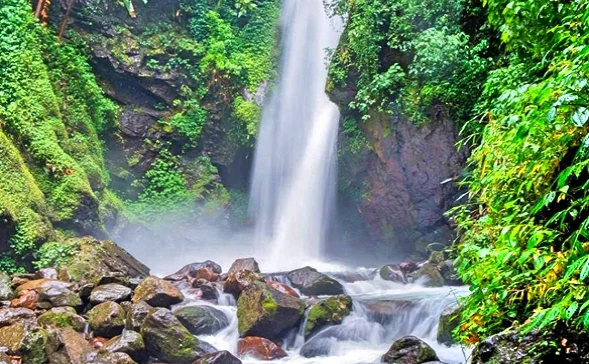
Nestled in the lush hills of West Sikkim near the popular hill-station of Pelling, Kanchenjunga Falls is one of the region’s scenic water features that links natural beauty, local belief systems, and the evolving tourism landscape. Although the waterfall is not as large or as famed as some Himalayan cascades, its proximity to panoramic views of Kanchenjunga (the world’s third-highest peak) and to cultural sites makes it an integral part of Pelling’s visitor circuit.
The falls are the product of the young, tectonically active Himalaya where steep gradients and high rainfall create many short but dramatic streams. Like many waterfalls in the Sikkim hills, Kanchenjunga Falls forms where a mountain stream descends over resistant rock layers and steep terrain before joining larger tributaries that feed the river systems of the region.
The flow of the falls varies seasonally. Monsoon months bring a heavy, roaring cascade, while the cooler, drier winter months reduce volumes and expose rock ledges and pools. This seasonal variability shapes both the visitor experience and the local ecology around the falls.
Water features across Sikkim commonly carry religious and cultural meanings. Local communities have long regarded waterfalls and mountain streams as sites of spiritual purity and natural power. Kanchenjunga Falls is often associated with reverence for the greater Kanchenjunga massif — an object of worship and deep cultural significance to the people of Sikkim. Pilgrims and villagers have historically used such sites for ritual cleansing and offerings, linking landscape and belief.
The earliest structured records of the area around Pelling date from the 19th and early 20th centuries with colonial-era explorers, surveyors, and later Indian travelers noting the panoramic views of the Kanchenjunga range and the nearby monasteries and ruins. While many travelogues concentrated on the high peaks and monasteries, local oral histories and maps included waterfalls and streams as essential landscape features that guided movement and settlement in the hills.
For many decades Kanchenjunga Falls functioned primarily as a local landmark — part of villagers’ everyday environment and seasonal routines. With improved road access to Pelling in the latter half of the 20th century and the growth of Sikkim as a tourist destination after its political integration with India, the waterfall began to appear on tourist itineraries alongside the Pemayangtse Monastery, Rabdentse ruins, and viewpoints for the Kanchenjunga range.
The growth of guesthouses, viewpoints, and guided sightseeing in Pelling made it easier for day-trippers and longer-stay visitors to include the falls on their lists. Small pathways, signage, and viewing areas were developed informally and later more systematically as tourism authorities and local entrepreneurs recognized the waterfall’s potential to attract visitors seeking nature, photography spots, and tranquil settings near Pelling.
As with many fragile hill environments, increased visitation brings challenges: littering, path erosion, pressure on watercourses, and disturbance to native vegetation. Construction without appropriate planning can exacerbate soil instability on steep slopes and reduce the natural appeal that draws visitors.
Local communities, nongovernmental organizations, and tourism stakeholders have been exploring measures to protect scenic spots like Kanchenjunga Falls. Sustainable approaches include:
Responsible tourism emphasizes minimal impact and cultural sensitivity. Visitors are encouraged to respect local customs, avoid disturbing ritual sites, and support local guides and enterprises. By approaching the falls as both a natural feature and a cultural landscape, tourists can contribute to the preservation of the site and the livelihoods of nearby communities.
Kanchenjunga Falls near Pelling is more than a scenic cascade: it is part of a living landscape where geology, ecology, culture, and tourism intersect. Its history is woven from local tradition and the slow development of hill tourism in Sikkim. With mindful stewardship and sustainable practices, the falls can continue to offer restorative experiences for visitors while remaining an integral part of local life.
What makes us different from other tour package companies
Our travel experts have core and intense knowledge about Sikkim sector with over 10 years of experience that will help you choose the best possible itinerary as per your requirements.
Our travel experts are just one call away during your tour to help you with any kind of immediate assistance so that your tour is a more enjoyable and hassle-free tour.
eSikkimTourPackages ensures best rates to all our esteemed guests since we have our own hotels and fleet of vehicles and drivers and there is no third-party involvement. This ensures personalized service and best rates.























Kindly enter the details below for your Sikkim Tour Package