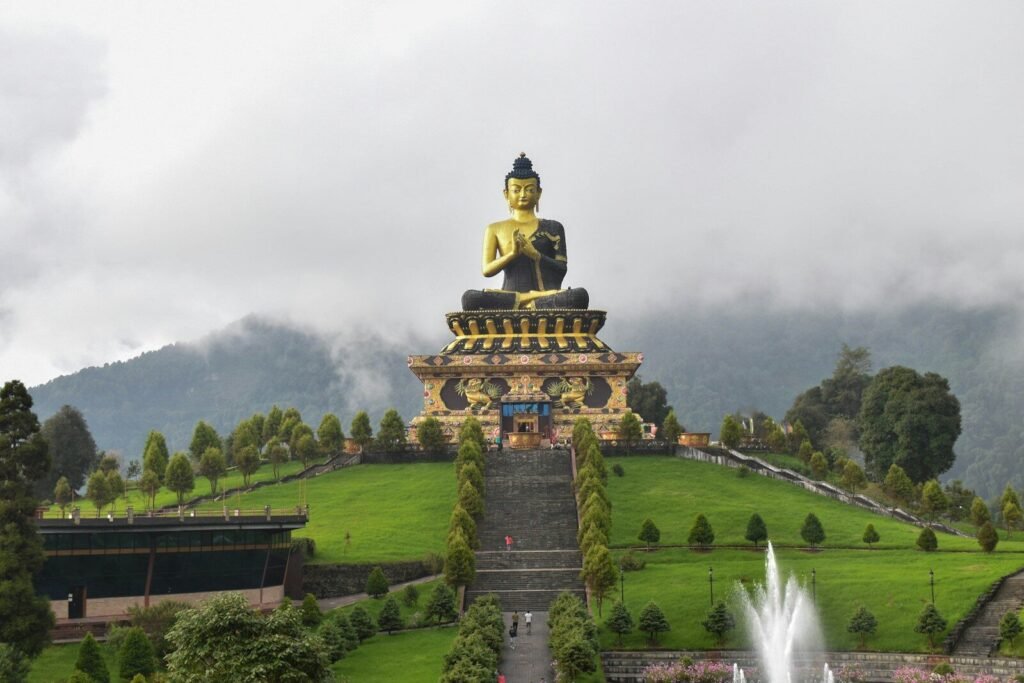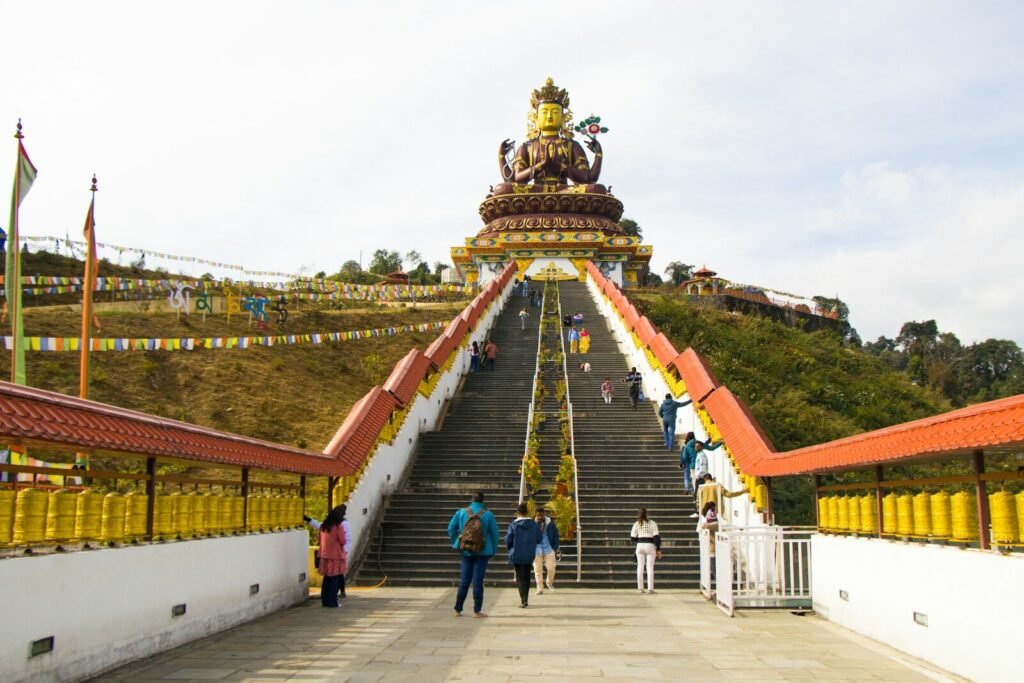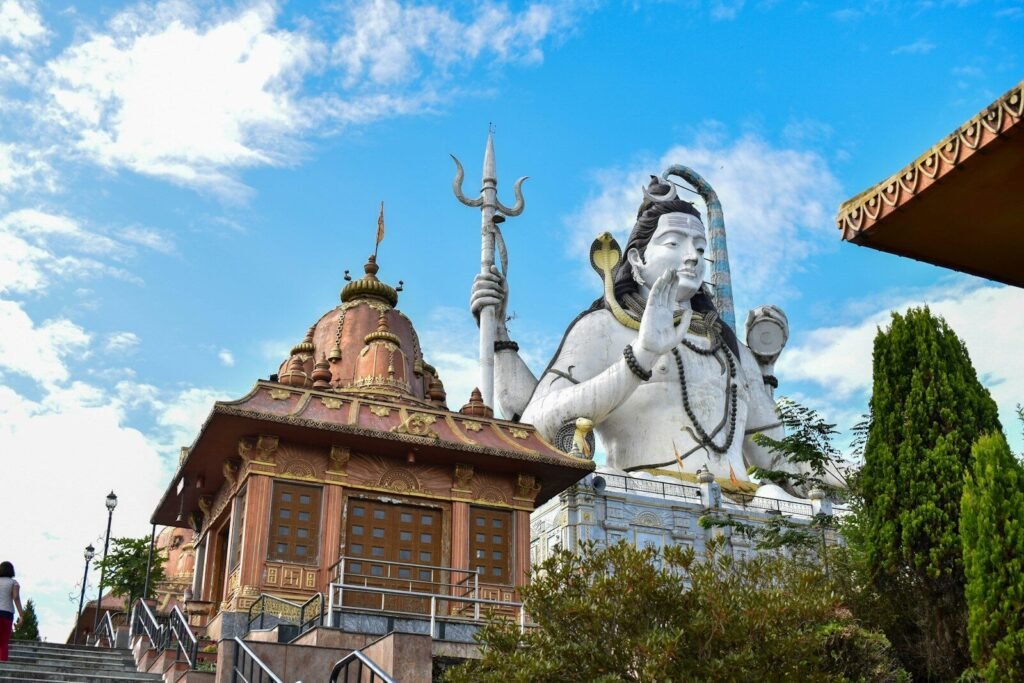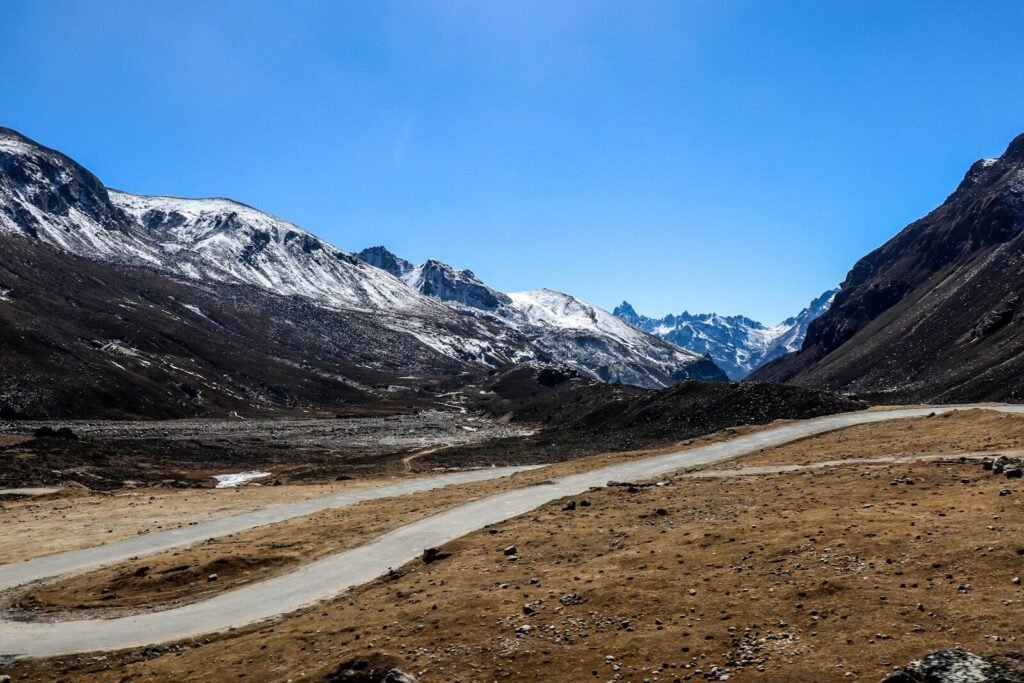
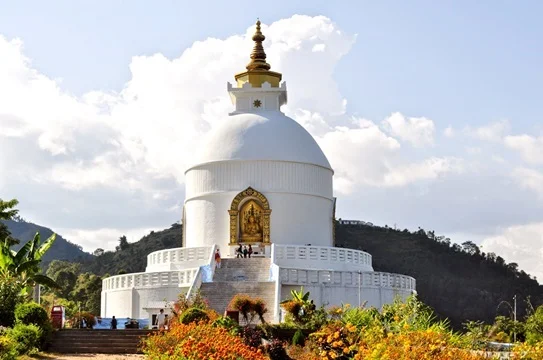
The Japanese Temple in Darjeeling — commonly referred to as the Darjeeling Peace Pagoda — is one of the town’s serene landmarks. Perched on a hillside overlooking the town and the eastern Himalaya, it blends religious purpose, international goodwill and scenic appeal. The site attracts pilgrims, local worshippers and tourists who seek both spiritual quiet and panoramic views of the mountains and valleys below.
The idea of building Peace Pagodas (stupas) originated in Japan in the mid-20th century as part of a non‑sectarian movement for peace. The Nipponzan Myohoji organization, founded by Nichidatsu Fujii, led the construction of many such pagodas worldwide. The structure in Darjeeling was established by representatives of this movement in the later 20th century with the twin aims of fostering world peace and providing a quiet place for reflection.
While Darjeeling’s Buddhist history stretches back centuries through Tibetan, Bhutanese and Nepali influences in the eastern Himalaya, the Japanese Temple is a more recent addition that represents international Buddhist connections. Its establishment reflects post‑war efforts by Japanese Buddhist activists to promote non‑violence and intercultural exchange, and it forms part of a global network of Peace Pagodas.
The Darjeeling pagoda follows the canonical stupa form adapted to the Peace Pagoda concept. Typical features visitors notice include:
Landscaped grounds, trees and stone pathways surround the pagoda. The siting is intentional — elevated to provide unobstructed views of the Himalayan skyline, including distant peaks that reward visitors at sunrise and sunset. The combination of clean architectural lines and natural surroundings creates a contemplative atmosphere distinct from Darjeeling’s bustling bazaar streets.
The Japanese Temple serves multiple roles:
The Japanese Temple is an important component of Darjeeling’s tourism circuit. Its appeal is multifaceted:
The temple is often visited in combination with nearby sites such as the Mall Road, the Himalayan Mountaineering Institute, local monasteries, tea gardens and viewpoints like Tiger Hill and Batasia Loop. Its location and quiet charm offer a contrast to the more crowded, commercialized tourist spots.
Visitors should observe simple courtesies: remove shoes where required, maintain silence in prayer areas, dress modestly and follow any photography restrictions. Donations may be welcomed to support maintenance.
As tourism to Darjeeling has grown, sites like the Japanese Temple face challenges and opportunities:
The Japanese Temple (Peace Pagoda) in Darjeeling stands at the intersection of spirituality, history and tourism. As a modern emblem of the global Peace Pagoda movement, it complements Darjeeling’s older Himalayan Buddhist traditions while offering visitors a place of calm and reflection amid spectacular mountain scenery. Thoughtful visitation and sensitive site management can ensure that this peaceful landmark continues to inspire both local communities and visitors from around the world.
What makes us different from other tour package companies
Our travel experts have core and intense knowledge about Sikkim sector with over 10 years of experience that will help you choose the best possible itinerary as per your requirements.
Our travel experts are just one call away during your tour to help you with any kind of immediate assistance so that your tour is a more enjoyable and hassle-free tour.
eSikkimTourPackages ensures best rates to all our esteemed guests since we have our own hotels and fleet of vehicles and drivers and there is no third-party involvement. This ensures personalized service and best rates.
























Kindly enter the details below for your Sikkim Tour Package