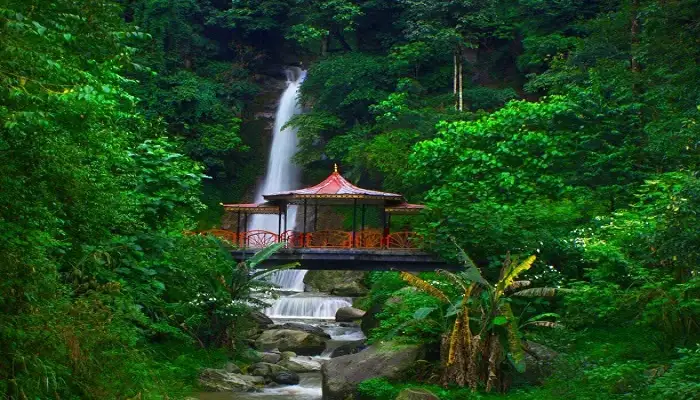
Banjhakri Falls is a compact, scenic waterfall and cultural park located a short drive from Gangtok. The best time to visit depends on what you want: peak waterfall flow and lush greenery in the monsoon, crisp clear views and comfortable weather in spring and autumn, or a quieter, misty winter experience. For most travellers seeking easy access, pleasant weather and good photography conditions, March–May (spring) and September–November (autumn) are the ideal windows.
Banjhakri Falls is not just a waterfall but a landscaped energy park that celebrates Sikkimese shamanic tradition (the “ban jhakri” or forest shaman). The falls are surrounded by well-maintained gardens, interpretive sculptures, winding paths and small viewpoints. The site is popular for short excursions from Gangtok, family outings, and photography.
Why visit: Mild, pleasant temperatures; rhododendrons and other flowers begin to bloom; clear skies for views and photography. Trails are dry and comfortable.
Why visit: The waterfall is often at its fullest and the park looks lush and dramatic. However, heavy rains are common and can make roads slippery or cause landslips in the region.
Why visit: Post-monsoon freshness with clear skies and excellent visibility. Comfortable temperatures and festive energy in Gangtok make this an excellent time for sightseeing.
Why visit: Winters are quiet and atmospheric — misty mornings and a tranquil park. It can be chilly and fog may limit views. If you enjoy peacefulness and don’t mind cold, winter can be rewarding.
Banjhakri Falls is a short drive from central Gangtok. Typical travel arrangements include taxis, private cars or local tour operators. If you are arriving from further afield, the nearest major transport hubs are:
Plan for 1–2 hours at the site to enjoy the waterfall, walk the park, take photos and read the interpretive displays. Example half-day plan:
Accessibility: The park has terraced paths and steps; uneven surfaces mean it is not fully wheelchair-friendly. Those with mobility issues should take care and consider short, assisted visits.
Safety: During heavy rains, avoid standing directly near fast-flowing water and be cautious on slippery surfaces. Follow park rules and local guidance. Carry essentials and inform someone of your plans if you head out on rainy days.
For most travellers the best time to visit Banjhakri Falls is during spring (March–May) and autumn (September–November) when weather, visibility and access are at their best. Monsoon offers dramatic water flow and lush scenery but requires extra caution for travel; winter is tranquil and low-key. Plan your visit according to the experience you want — whether that is dramatic waterfalls, clear Himalayan views, or a peaceful local park — and you’ll enjoy one of Gangtok’s most charming short excursions.
What makes us different from other tour package companies
Our travel experts have core and intense knowledge about Sikkim sector with over 10 years of experience that will help you choose the best possible itinerary as per your requirements.
Our travel experts are just one call away during your tour to help you with any kind of immediate assistance so that your tour is a more enjoyable and hassle-free tour.
eSikkimTourPackages ensures best rates to all our esteemed guests since we have our own hotels and fleet of vehicles and drivers and there is no third-party involvement. This ensures personalized service and best rates.
























Kindly enter the details below for your Sikkim Tour Package