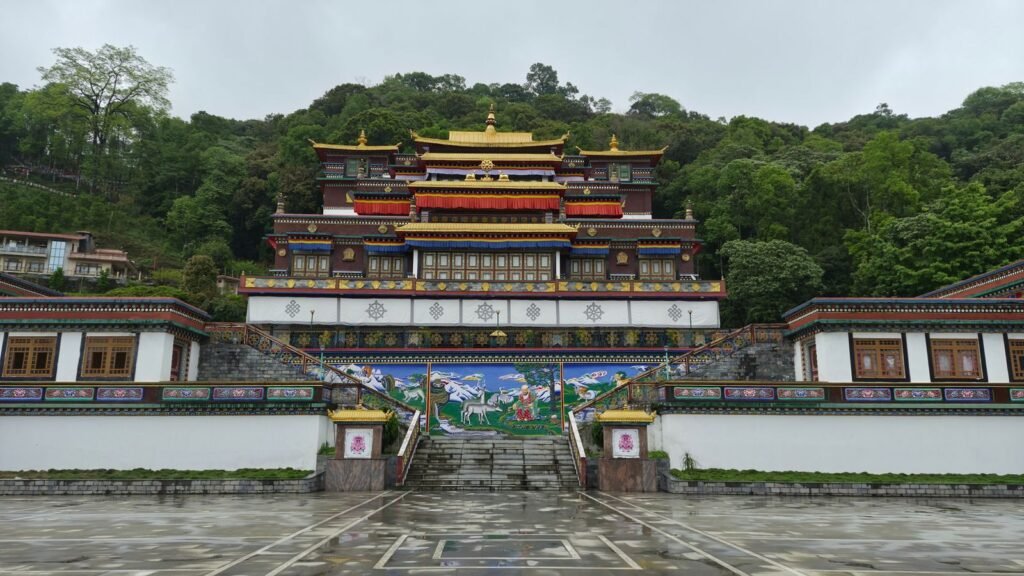
Rumtek Monastery — also known as the Dharma Chakra Centre — is one of Sikkim’s most important Tibetan Buddhist monasteries and a major attraction for visitors to Gangtok. Built in the 20th century as the exiled seat of the Karma Kagyu lineage, Rumtek combines religious importance, striking Tibetan-style architecture, and rich cultural life, making it an essential stop for visitors interested in history, spirituality, and Himalayan culture.
Origins and re-establishment
The present Rumtek Monastery was founded in the 1960s by the 16th Gyalwa Karmapa, Rangjung Rigpe Dorje, who sought to recreate the spiritual and institutional center of the Karma Kagyu tradition in exile after the Chinese occupation of Tibet. The monastery was established as the Dharma Chakra Centre to function as the seat-in-exile of the Karmapa and as a cultural repository for artifacts, thangkas, scriptures, and relics brought from Tibet.
Religious significance
Rumtek is the principal monastery of the Karma Kagyu school outside Tibet. The Karmapa is the head of this lineage, one of the major schools of Tibetan Buddhism, and Rumtek was intended to preserve the teaching, monastic training, and artistic heritage of this tradition. The monastery has served as a center for study, ritual, and the arts, hosting monks, scholars, and pilgrims from across the Himalayan region and beyond.
Late-20th and early-21st century controversies
Following the death of the 16th Karmapa in 1981, disputes emerged over the recognition of his reincarnation (the 17th Karmapa). Competing claimants and factional disagreements led to legal and administrative conflicts that involved the monastery, its administration, and its treasures. These disputes affected access and management of Rumtek at various times. Visitors should note that, historically, portions of the complex and some of its collections were subject to legal protection and administrative restrictions.
Rumtek’s architecture follows traditional Tibetan monastic design adapted to its Himalayan setting. Key elements include:
The interior walls are often covered with vibrant murals depicting Buddhas, Bodhisattvas, and episodes from Karma Kagyu history. Intricately carved and painted woodwork, gilded statues, and ritual fabrics are prominent. These artistic elements not only serve devotional purposes but also preserve stylistic traditions of Tibetan Buddhist art.
Rumtek is a living monastery with daily rituals, prayer sessions, and occasional teachings by senior lamas. Visitors can often observe chanting, butter-lamp offerings, and the turning of prayer wheels.
Rumtek is located in Sikkim, northeast India, and is commonly visited as a day trip from Gangtok. The monastery is situated in a hill setting offering views of surrounding valleys and the landscape typical of the region.
Typical access details:
Spring and autumn (March to May and September to November) are generally the most pleasant for travel in Sikkim, offering clearer skies and comfortable temperatures. During major festivals the monastery can be especially lively, but also more crowded.
Rumtek fits well within a cultural day around Gangtok. A typical visit might include:
Rumtek is both a religious institution and a repository of fragile cultural artifacts. Tourism brings economic benefits but also responsibilities. Visitors can help by:
Ongoing challenges: Rumtek’s collections and the monastery’s administrative history have sometimes been affected by disputes and legal actions. Conservation of textiles, thangkas, and ritual objects requires resources and specialized care; supporting responsible tourism and local conservation efforts helps preserve this heritage.
Rumtek Monastery is a key cultural and spiritual landmark near Gangtok that offers visitors a concentrated glimpse into the Karma Kagyu tradition of Tibetan Buddhism. Its historical role as a seat-in-exile, its rich artistic interiors, and its living monastic life make it a compelling destination for travelers interested in religion, history, and Himalayan culture. When visiting, plan ahead, respect religious protocols, and allocate time to absorb both the architectural beauty and the contemplative atmosphere that Rumtek provides.
What makes us different from other tour package companies
Our travel experts have core and intense knowledge about Sikkim sector with over 10 years of experience that will help you choose the best possible itinerary as per your requirements.
Our travel experts are just one call away during your tour to help you with any kind of immediate assistance so that your tour is a more enjoyable and hassle-free tour.
eSikkimTourPackages ensures best rates to all our esteemed guests since we have our own hotels and fleet of vehicles and drivers and there is no third-party involvement. This ensures personalized service and best rates.









Kindly enter the details below for your Sikkim Tour Package