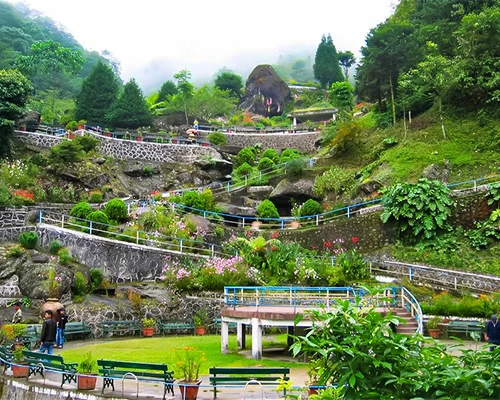
The Rock Garden near Darjeeling is one of the region’s compact but evocative green spaces that blend natural rock formations, landscaped terraces, streams and viewpoint platforms. Located within a short drive from Darjeeling town, it has long attracted both domestic and international visitors looking for accessible nature, gentle walks and photographic vantage points. This article traces the Rock Garden’s history and situates it within the wider development of tourism in Darjeeling.
Before human intervention, the site that became the Rock Garden was shaped by the same geological processes that created the Darjeeling Himalayan region: tectonic uplift, weathering and stream erosion. The exposed rock outcrops, rivulets and steep slopes provided a natural framework that lent itself to becoming a formal garden and rest spot.
To understand the Rock Garden’s history, it is important to place it within the broader narrative of Darjeeling’s transformation into a hill station. From the colonial era onward, Darjeeling was developed as a cooler retreat and a center of colonial administration, education and leisure. This wave of development established patterns — construction of roads, parks and viewpoints — that later facilitated smaller landscaped attractions like the Rock Garden.
The British and other settlers favored structured public gardens, promenades and lookout points. Even after the colonial period, those aesthetic and functional priorities—combining accessible green spaces with views—continued to shape municipal planning. The Rock Garden can be seen as a local expression of that landscape tradition: designed to be experienced by casual visitors, families and carriage or motor parties.
The formalization of the Rock Garden as a dedicated recreational spot was the result of local civic initiatives and tourism planning carried out over decades. While details about a single founding moment vary by source, the development process commonly followed several stages:
Municipal authorities, local tourism departments and community groups have typically collaborated to maintain and promote the Rock Garden. These stakeholders balance the need to preserve natural features with the desire to expand visitor amenities and revenue-generating opportunities such as small stalls and guided walks.
The Rock Garden is characterized by a compact, layered layout that maximizes scenic variety within a limited area. Its design emphasizes short, easy walks, photographic viewpoints and restful pockets of green.
Beyond scenic appeal, the Rock Garden serves as a communal leisure space. Local residents use it for morning walks, informal gatherings and for offering visitors a gentle encounter with the hill environment. It also forms part of the social landscape through which Darjeeling presents itself to outsiders—an accessible, well-maintained corner of the larger Himalayan town.
The Rock Garden contributes to Darjeeling’s tourism economy in several ways: as a convenient attraction for short-stay visitors, as an added item on walking tours, and as a low-cost recreational facility that supports small vendors and guides. Its proximity to other attractions means it often forms part of a cluster of sites that tourists visit in a single outing.
As with many small tourist sites, the Rock Garden faces management challenges that reflect broader pressures on Himalayan towns: visitor wear, waste management, watercourse protection and balancing commercial use with ecological preservation.
To address these issues, local authorities and communities have adopted measures such as routine maintenance, regulated vendor zones, interpretation signage to encourage responsible behavior, and modest entry or parking management practices. Successful stewardship typically requires continuous attention and community buy-in.
For travelers who wish to include the Rock Garden in their Darjeeling visit, the following practical points are useful:
The Rock Garden near Darjeeling exemplifies how a modest natural site can be shaped into an accessible attraction that supports both local leisure and tourism. Its history is interwoven with Darjeeling’s wider evolution as a hill station and tourist destination: a legacy of landscape appreciation, civic improvement and community use. As tourism continues to change, ongoing conservation and sensitive management will be essential if the Rock Garden is to retain its character as a restful, scenic stop for future generations.
Visitors interested in the Rock Garden’s place within Darjeeling’s history may also explore local museums, heritage walks and oral histories that document the town’s transformation and the communities who have cared for its gardens and viewpoints.
What makes us different from other tour package companies
Our travel experts have core and intense knowledge about Sikkim sector with over 10 years of experience that will help you choose the best possible itinerary as per your requirements.
Our travel experts are just one call away during your tour to help you with any kind of immediate assistance so that your tour is a more enjoyable and hassle-free tour.
eSikkimTourPackages ensures best rates to all our esteemed guests since we have our own hotels and fleet of vehicles and drivers and there is no third-party involvement. This ensures personalized service and best rates.
























Kindly enter the details below for your Sikkim Tour Package