The Namgyal Institute of Tibetology (NIT) in Gangtok is one of the most important repositories of Tibetan culture, Buddhist scholarship, and Himalayan art in South Asia. Situated in the heart of Sikkim’s capital, it attracts scholars, pilgrims and tourists who come to explore its collections, attend lectures, and experience an authentic link between Sikkim’s past and the wider Tibetan cultural world. This article traces the institute’s historical roots and examines its role in tourism today.
The Namgyal Institute of Tibetology was created in the mid-20th century under the patronage of the Sikkimese monarchy (the Namgyal dynasty) as part of an effort to preserve and systematize the Buddhist and Tibetan cultural heritage that had long been integral to Sikkim’s identity. From its earliest days the institute combined several functions: a museum for art and artifacts, a library and archive for manuscripts and rare books, and a centre for scholarly research into Tibetan language, history, religion and culture.
Sikkim’s historical links with Tibet—religious, linguistic and political—meant that the preservation of Tibetan manuscripts, thankas (religious scroll paintings), ritual objects and texts was both a cultural necessity and a statement of regional identity. The institute emerged at a time when the upheavals in Tibet generated an urgent need to safeguard materials and knowledge that might otherwise have been scattered or lost. Over the decades, NIT evolved from a royal initiative into a formal research and cultural institution supported by the state, offering continuity and custodianship of an extensive corpus of Himalayan Buddhist heritage.
As the institute matured it developed three complementary strands of activity:
The institute’s collections comprise a wide range of materials central to Tibetan Buddhism and Himalayan culture. Visitors encounter carefully displayed thankas, statues of Buddhist deities, ritual implements, old printed books and handwritten manuscripts. The library and archive are a resource for scholars, containing texts used in monastic education and academic research.
Over the years, the institute has published research, translations and periodical work that contribute to the international study of Tibetan and Himalayan Buddhism. These publications have helped disseminate scholarship beyond Sikkim and have positioned the institute as a recognized centre for Tibetology in the region.
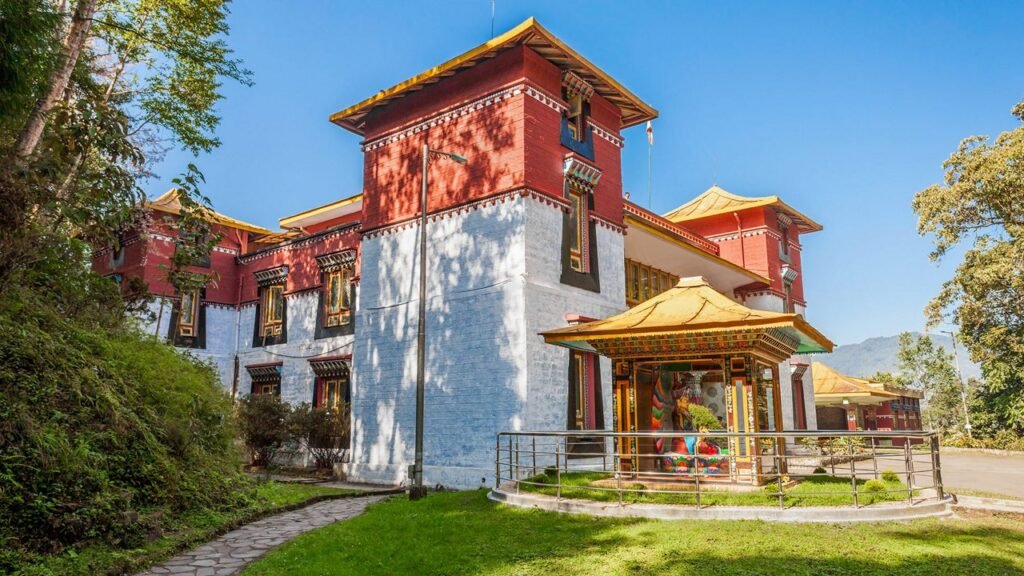
Set amid landscaped gardens and prayer wheels, the Namgyal Institute reflects Himalayan and Tibetan architectural aesthetics. The museum galleries are arranged to guide visitors through religious and historical themes, while quieter reading rooms and research facilities are reserved for scholars and students. The serene setting and traditional detailing give the site a contemplative atmosphere that appeals to tourists seeking cultural depth as well as spiritual ambience.
The institute is not an isolated museum; it exists within a living religious and cultural environment. Nearby monasteries and prayer sites make the institute part of a pilgrimage circuit for devotees and an integrated cultural itinerary for visitors. Special exhibitions and events are frequently linked to religious calendars and local festivals, giving tourists a chance to witness rituals and communal observances.
In the context of tourism, the Namgyal Institute of Tibetology functions on several levels:
A typical visitor can expect guided or self-guided tours through curated galleries, explanatory labels and some interpretive panels. Temporary exhibitions occasionally highlight particular themes—artistic styles, monastic traditions, or conservation projects—adding variety and incentive for repeat visits. The institute often complements visits with lectures, film screenings and cultural programs that enhance understanding and enrich the tourist experience.
Beyond its tourist appeal, the Namgyal Institute plays an active role in conservation and educational outreach. It engages in the cataloguing and preservation of fragile manuscripts, trains local conservators, and fosters public awareness of intangible heritage—rituals, oral histories and performing arts—that complement the physical collections. Community programs and collaborations with scholars encourage local participation and help sustain cultural transmission across generations.
Like many cultural institutions in mountain regions, NIT faces challenges such as climate-related preservation issues, limited resources for conservation, and the need to balance scholarly access with public display. At the same time, there are opportunities: sustainable cultural tourism, digital cataloguing projects, and international partnerships can expand its reach while ensuring that the collections are preserved and interpreted responsibly for future visitors and researchers.
The Namgyal Institute of Tibetology in Gangtok is both a guardian of Tibetan and Himalayan heritage and a vibrant destination for culturally minded tourists. Its history—rooted in regional patronage and scholarly ambition—has produced an institution that serves multiple roles: museum, archive, research centre and cultural forum. For tourists, visiting the institute offers an intimate encounter with the art, religion and history that shape life in Sikkim and the broader Himalayan world. For scholars and custodians, it remains an indispensable centre for the preservation and study of Tibetology.
What makes us different from other tour package companies
Our travel experts have core and intense knowledge about Sikkim sector with over 10 years of experience that will help you choose the best possible itinerary as per your requirements.
Our travel experts are just one call away during your tour to help you with any kind of immediate assistance so that your tour is a more enjoyable and hassle-free tour.
eSikkimTourPackages ensures best rates to all our esteemed guests since we have our own hotels and fleet of vehicles and drivers and there is no third-party involvement. This ensures personalized service and best rates.













Kindly enter the details below for your Sikkim Tour Package