MG Marg, officially known as Mahatma Gandhi Marg, is the central promenade and civic heart of Gangtok, the capital city of Sikkim. Beyond being a convenient thoroughfare, MG Marg functions as a social, cultural and commercial focal point — a compact public space where the city’s history, local culture and tourism intersect. This article traces the historical development of MG Marg and examines its role in shaping Gangtok’s tourist experience.
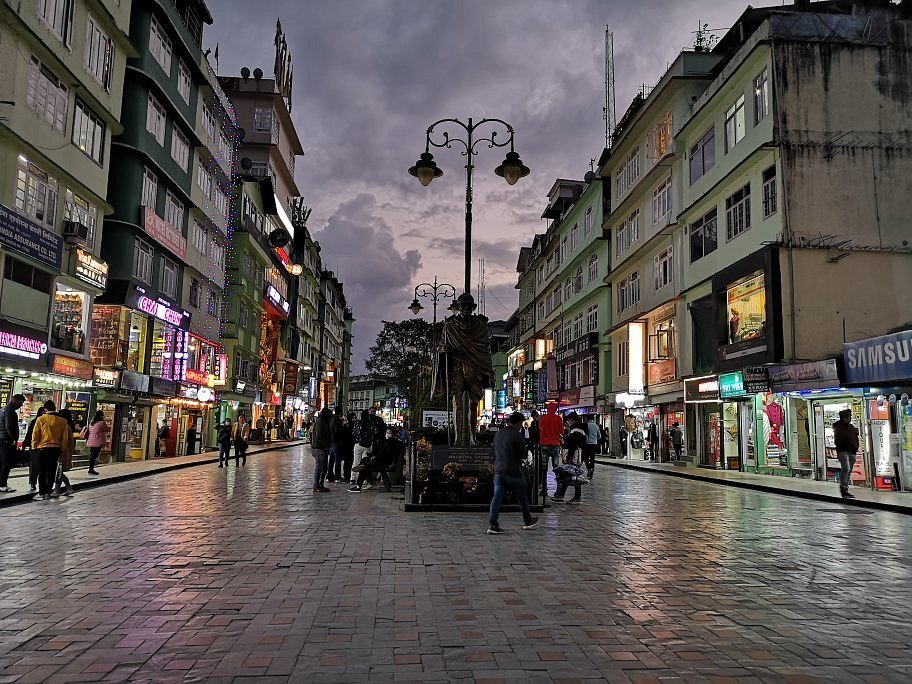
Situated in the core of Gangtok, MG Marg occupies a gently sloping ridge with panoramic views of the surrounding hills. The street is primarily pedestrianized and lined with shops, restaurants, hotels and municipal amenities. Its compact, walkable layout makes it the first place many visitors encounter upon arriving in Gangtok, contributing to its identity as the city’s public living room.
MG Marg is embedded within a matrix of monasteries, parks and civic buildings. The promenade provides easy access to a range of cultural and spiritual sites, handicraft centers, and tourist information facilities, which together create a concentrated circuit attractive to short-stay visitors and long-term travelers alike.
Long before modern urban planning, the route that became MG Marg linked local hamlets and marketplace nodes along ridgelines. Indigenous trade, pilgrimage routes and seasonal movement shaped early settlement in the Gangtok area. The ridge-top alignment offered defensible ground and good drainage, encouraging the gradual emergence of a town center.
As Gangtok expanded from a small administrative center into the capital of Sikkim, the central street evolved into a primary public space. Municipal and commercial activity started concentrating along the marginal road, which functioned as both a marketplace and civic spine. The emergence of hotels, tea houses and small shops reflected the growing flow of visitors and administrators.
With the post‑mid‑20th century expansion of domestic and international travel in the Indian Himalayan region, Gangtok became a focal point for hill tourism. MG Marg responded to this trend through incremental modernization: widening of footpaths, introduction of municipal lighting and installation of urban furnishings. The promenade gradually transformed from a traffic-dominated lane into a more pedestrian-friendly zone, accommodating walkers, vendors and street-level cultural activities.
Over recent decades, municipal efforts prioritized MG Marg as a showcase for sustainable urban tourism. The partial or full pedestrianization of the central promenade — accompanied by landscaping, seating, and public art — reinforced its function as a leisure destination. For tourists, this pedestrian character provides a safe, accessible and convivial environment for exploring Gangtok’s cultural offerings.
The Marg is distinguished by a mix of traditional Himalayan vernacular and contemporary shopfronts. Key design elements that enhance its appeal include paved walkways, benches, ornamental lighting and small fountains or planters. These elements create a pleasant micro‑environment for strolling, window-shopping and informal gathering.
The street hosts a variety of establishments important to tourism: handicraft and souvenir shops, tea and coffee houses, bakeries, travel agencies, and small restaurants serving local and pan‑Indian cuisine. Municipal information kiosks and tourism offices are often placed near the Marg to assist visitors with permits, guides and local advice.
While MG Marg itself is secular and civic, it provides convenient access to Gangtok’s spiritual and cultural attractions. Within a short walk are important monasteries, museums and public parks that enrich a visitor’s understanding of Sikkimese history, Buddhist practice and Himalayan art.
For many visitors, MG Marg forms their first impression of Gangtok. Its compact, lively atmosphere helps travelers orient themselves — both physically, as a hub from which to reach sights, and culturally, as a place to sample local food, crafts and hospitality. The street’s concentration of services makes it convenient for last‑minute shopping or arranging onward travel.
MG Marg functions as a venue for civic ceremonies, cultural performances and festival-related gatherings. During important local festivals and public holidays, the promenade often features traditional dances, music performances and seasonal markets that attract both residents and tourists.
The pedestrianized nature of the Marg fosters an evening economy of cafes, tea stalls and restaurants where travelers and locals mingle. This night-time activity adds to the destination appeal by extending visitor engagement beyond daytime sightseeing.
As tourism demand grows, MG Marg faces the common challenge of balancing economic opportunity with cultural preservation. Ensuring that new commercial developments respect local aesthetics and do not erode traditional forms of living culture is central to sustainable management.
High visitor numbers create pressure on waste management, water supply and traffic in surrounding streets. Municipal authorities have increasingly focused on waste segregation, improved drainage, and the careful siting of tourist facilities to maintain the Marg’s cleanliness and public appeal.
Enhancing accessibility for elderly and mobility‑restricted visitors, and improving climate resilience against landslides and heavy monsoon rains, are ongoing priorities to ensure MG Marg remains a safe, welcoming space year‑round.
Gangtok is visited year-round, but the clearest views and most pleasant walking conditions typically occur in spring and autumn. Monsoon months can be wet and muddy in outlying areas, while winter brings crisp air and occasional frost in the town. Regardless of season, MG Marg’s sheltered, urban setting makes it accessible for strolling.
MG Marg is more than a street — it is Gangtok’s social and touristic nucleus. Its historical trajectory from a local ridge path to a pedestrianised civic promenade mirrors wider changes in the city: administrative centralization, expansion of tourism, and a growing emphasis on sustainable urban public space. For visitors, MG Marg offers an accessible, concentrated way to experience Sikkimese hospitality, crafts and culture, while for residents it remains a daily forum for social life and civic expression. Preserving the Marg’s character while managing contemporary pressures will be key to ensuring it continues to delight tourists and preserve local identity for generations to come.
What makes us different from other tour package companies
Our travel experts have core and intense knowledge about Sikkim sector with over 10 years of experience that will help you choose the best possible itinerary as per your requirements.
Our travel experts are just one call away during your tour to help you with any kind of immediate assistance so that your tour is a more enjoyable and hassle-free tour.
eSikkimTourPackages ensures best rates to all our esteemed guests since we have our own hotels and fleet of vehicles and drivers and there is no third-party involvement. This ensures personalized service and best rates.








Kindly enter the details below for your Sikkim Tour Package