Table of Contents
- Introduction
- Best Time to Visit
- 3-Day Gangtok Itinerary
- Must-Visit Places in Gangtok
- Local Experiences: Food, Shopping, Culture
- Nearby Getaways from Gangtok
- How to Reach Gangtok
- Permits & Regulations
- Where to Stay in Gangtok
- Estimated Trip Costs (3 Days)
- Travel Tips for Gangtok
- Tips by Traveler Type
- FAQs
- Conclusion
Introduction
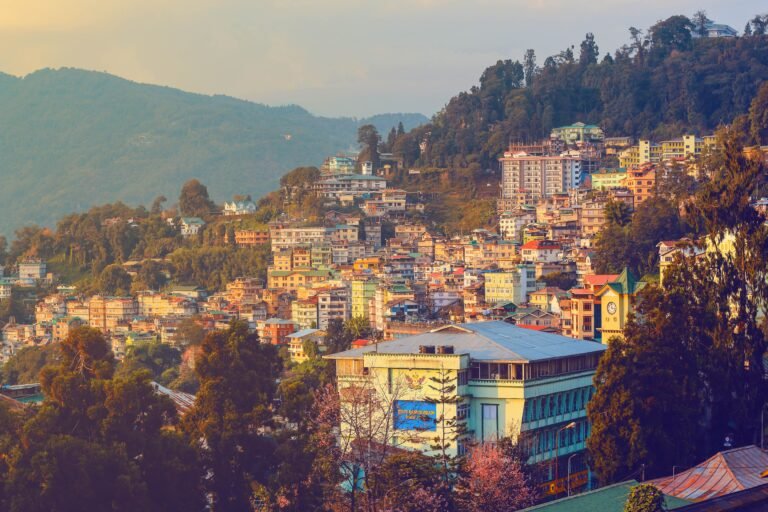
Set in the Eastern Himalayas, Gangtok blends mountain panoramas with monasteries, café culture, and scenic day trips. This 3-day Gangtok itinerary balances city highlights, a high-altitude excursion to Tsomgo Lake and Baba Mandir (with optional Nathula Pass), and serene viewpoints and waterfalls—ideal for a first-time Sikkim getaway.
Best Time to Visit
- October–November: Crisp skies, best mountain views.
- March–May: Pleasant weather, rhododendrons in bloom.
- December–February: Cold in city; snow likely around Tsomgo/Nathula (roads may close after snowfall).
- June–September (Monsoon): Lush but wet; occasional landslides and road disruptions—keep buffer time.
3-Day Gangtok Itinerary
Day 1: City Highlights & Heritage
Ease in, explore central sights, and enjoy MG Marg’s pedestrian buzz.
- Morning: Arrive and check in near MG Marg. Start at Namgyal Institute of Tibetology (Tibetan art, manuscripts) and nearby Do Drul Chorten.
- Midday: Walk to the Flower Exhibition Centre and Ridge Park for seasonal orchids and views.
- Afternoon: Ride the Gangtok Ropeway for aerial cityscapes. Visit Enchey Monastery (tranquil 200-year-old gompa).
- Evening: Stroll MG Marg—traffic-free promenade, cafés, momos, and local bakeries. Shop for prayer flags, tea, and handicrafts.
Optional add-ons (time/energy permitting): Sikkim Handloom & Handicrafts Emporium for curated souvenirs.
Day 2: Tsomgo Lake, Baba Mandir & Nathula (Optional)
A classic high-altitude excursion east of Gangtok (start early, permits via licensed operator).
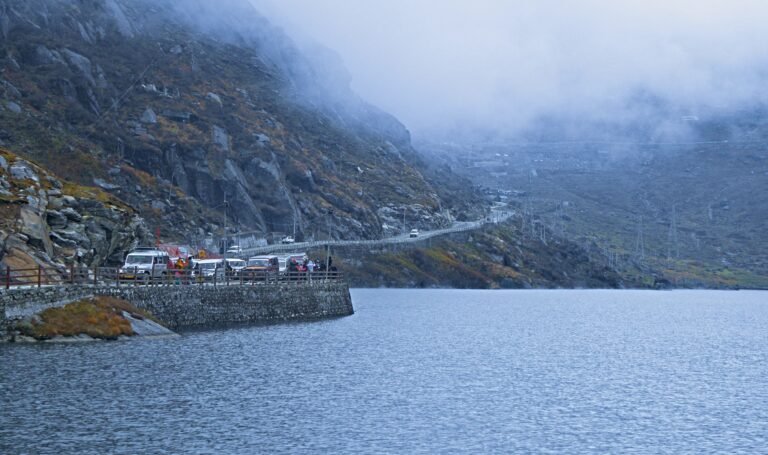
- Tsomgo (Changu) Lake (~3,753 m): Glacial lake with changing hues; yak rides available in season.
- Baba Harbhajan Singh Mandir: Revered memorial-temple amid stark landscapes.
- Nathula Pass (optional) (~4,310 m): On the Indo–China border; Indian nationals only; usually closed Mon–Tue and during bad weather. Expect thin air and cold winds.
- Return to Gangtok by late afternoon; warm up with thukpa or chai on MG Marg.
Notes: Carry warm layers, sun protection, water, and light snacks. Avoid heavy exertion; those with respiratory or cardiac issues should consult a doctor.
Day 3: Viewpoints, Waterfalls & Monasteries
- Early: Sunrise at Tashi View Point (Khangchendzonga views on clear days).
- Morning: Ganesh Tok and Hanuman Tok—shrines with sweeping vistas.
- Midday: Ban Jhakri Falls Park—easy nature walk, landscaped cascades.
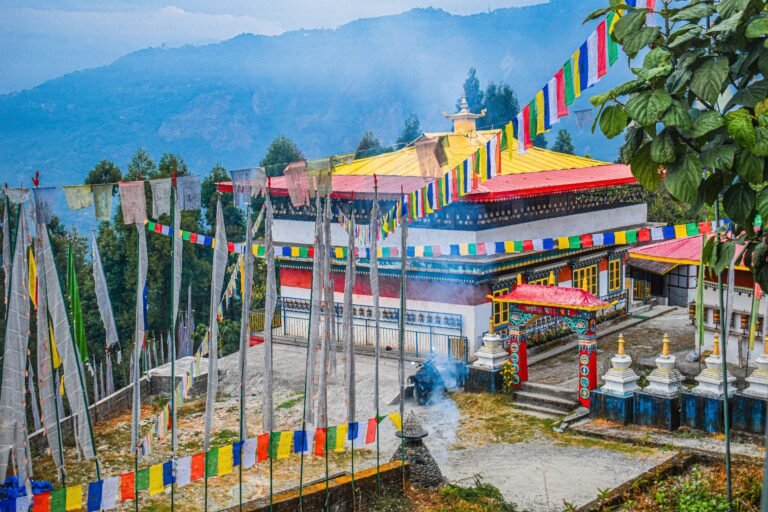
- Afternoon: Drive to Rumtek Monastery (largest in Sikkim; golden stupa, serene courtyards). En route back, stop at the Sikkim Himalayan Zoological Park (optional) for red panda spotting.
- Evening: Farewell dinner—try local gundruk, phagshapa, or a cozy café on Tibet Road.
Rainy-Day/Permit-Not-Granted Alternatives
- Ranka (Lingdum) Monastery: Photogenic, less crowded than Rumtek.
- Lal Bazaar (especially Sundays): Produce, cardamom, textiles.
- Art & Culture: Heritage Museum at Namgyal Institute area; local art cafés along MG Marg.
Must-Visit Places in Gangtok
- MG Marg: Car-free heart of the city with cafés and shops.
- Enchey Monastery: Historic gompa amid conifers.
- Namgyal Institute of Tibetology & Do Drul Chorten: Culture and spirituality combined.
- Flower Exhibition Centre & Ridge Park: Seasonal blooms and ridge-top strolls.
- Gangtok Ropeway: Short, scenic cable-car ride.
- Tashi View Point, Ganesh Tok, Hanuman Tok: Panoramic viewpoints.
- Ban Jhakri Falls Park: Family-friendly nature park.
- Rumtek Monastery: Grand Kagyu seat with ornate murals.
- Tsomgo Lake, Baba Mandir, Nathula Pass: Signature day trip from Gangtok.
Local Experiences: Food, Shopping, Culture
Food to Try
- Momos (veg/chicken/pork), thukpa, sha phaley (fried meat pies).
- Phagshapa (pork with radish), gundruk (fermented greens), kinema (fermented soybeans).
- Warm beverages: butter tea, chhaang or tongba (millet-based; check availability/season).
Where to Eat
- MG Marg & Tibet Road: Cluster of cafés, bakeries, and multi-cuisine restaurants.
- Try a local mess/home-kitchen for authentic Sikkimese thalis.
Shopping
- Prayer flags, thangkas (verify authenticity), handwoven shawls, Sikkim tea, bamboo crafts.
- Buy from government emporiums for fair prices and quality.
Cultural Etiquette & Festivals
- Dress modestly at monasteries; ask before photographing monks or prayer halls.
- Walk clockwise around chortens/prayer wheels.
- Key festivals: Losar (Tibetan New Year), Saga Dawa, and mask-dance Cham rituals (dates vary).
Nearby Getaways from Gangtok
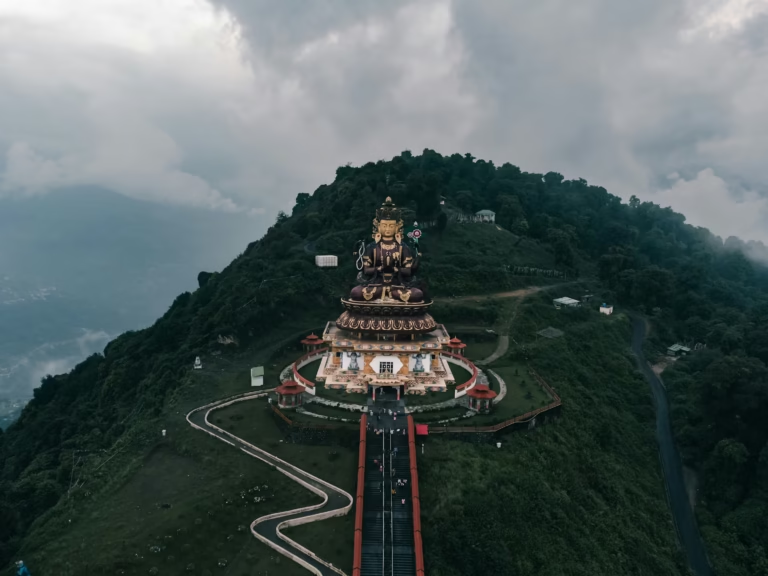
- Ravangla & Namchi (1–3 days): Buddha Park, Samdruptse, Char Dham complex.
- Pelling (2–3 days): Skywalk, Pemayangtse Monastery, Rabdentse ruins.
- North Sikkim (2–4 days, permits): Lachung–Yumthang Valley (Valley of Flowers), Lachen–Gurudongmar Lake.
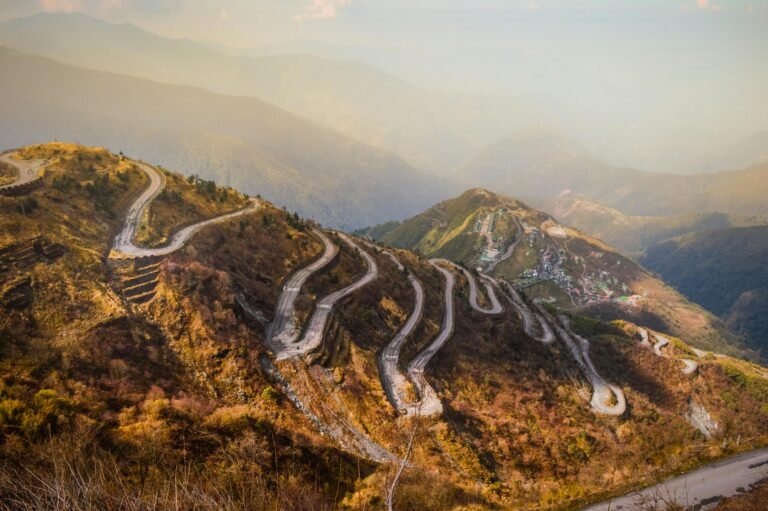
- Old Silk Route (Zuluk) (2–3 days): Hairpin loops, sunrise at Thambi View Point.
How to Reach Gangtok
- By Air: Pakyong Airport (PYG) (~1–1.5 hr from city; limited flights). Major alternative: Bagdogra (IXB) in West Bengal (~4–5 hrs by road).
- By Train: New Jalpaiguri (NJP) or Siliguri; then shared jeep or private taxi to Gangtok.
- By Road: Regular shared cabs and SNT buses from Siliguri. Roads are mountainous; motion-sickness tablets help.
Permits & Regulations
- Entry to Sikkim: Indian nationals do not need a permit for Gangtok. Foreign nationals require a Restricted/Protected Area Permit (available at check posts or Sikkim Tourism offices; carry passport, Indian visa, and photos).
- Tsomgo Lake, Nathula, North Sikkim: Special permits needed. For Indians, arrange via a registered operator with valid ID and 2 passport photos. Nathula is not open to foreign nationals.
- Closures: Nathula typically closed Mon–Tue; all routes are weather-dependent.
- Always carry original ID and multiple photocopies.
Where to Stay in Gangtok
- MG Marg/Tibet Road: Best for first-timers; walkable to cafés and shops.
- Development Area: Quieter stays with city views.
- Rumtek-side retreats: Nature-forward boutique stays (longer commutes).
Average nightly rates (indicative, per room):
- Budget hostels/guesthouses: INR 800–1,500
- Mid-range hotels: INR 2,500–5,000
- Premium/boutique: INR 7,000–15,000+
Estimated Trip Costs (3 Days)
Per person, excluding flights/trains; based on twin-sharing:
- Budget: INR 7,000–12,000
- Mid-range: INR 15,000–25,000
- Premium: INR 35,000+
Typical breakdown:
- Stay (2 nights): INR 1,600–10,000+
- Food: INR 900–2,400
- Local sightseeing taxi (city day): INR 2,500–3,500 per car
- Tsomgo–Baba Mandir trip: INR 4,500–6,500 per car; shared options ~INR 1,000–1,800 pp
- Nathula add-on permit/supplement: ~INR 200–500 pp
- Ropeway/entries: INR 300–800 total
Travel Tips for Gangtok
- Altitude & Health: Tsomgo/Nathula are high; hydrate, avoid alcohol, ascend gradually. Pack personal meds.
- Layers: Weather swings quickly—carry fleece, windproof jacket, gloves, and beanie for day 2.
- Cash & Connectivity: ATMs and UPI work in town; carry cash for permits/remote kiosks. Network is patchy at high altitude.
- Road Conditions: Monsoon can cause delays; keep buffer time and flexible plans.
- Eco-ethics: Sikkim champions sustainability—avoid single-use plastic; don’t litter; respect wildlife.
- Transport: Book permitted trips via licensed operators a day in advance; keep copies of IDs.
Tips by Traveler Type
Families
- Choose central hotels near MG Marg for easy meals and stroller-friendly walks.
- Carry snacks, thermals for kids; limit time at very high altitudes.
Honeymooners
- Pick view rooms in the Development Area or boutique stays near Rumtek.
- Time ropeway or Tashi View Point around golden hour; reserve a cozy dinner spot.
Friends/Backpackers
- Use shared jeeps for budget travel; try hostels for social vibes.
- Add sunrise missions and café-hopping; pack a compact rain jacket year-round.
FAQs
Q: Is 3 days enough for Gangtok?
A: Yes. Three days cover city highlights, the Tsomgo–Baba Mandir day trip (with optional Nathula), and signature viewpoints/monasteries. Add extra days for North Sikkim or Pelling.
Q: Do I need a permit for Tsomgo Lake and Nathula?
A: Yes. Indian nationals need special permits arranged via registered tour operators; foreign nationals cannot visit Nathula. Carry original ID and photos.
Q: What should I wear in Gangtok in winter?
A: Layer up with thermal base, fleece, insulated jacket, gloves, warm hat, and waterproof shoes—especially for Tsomgo/Nathula.
Q: Are there vegetarian food options?
A: Abundant. Most restaurants serve veg momos, thukpa, fried rice, noodles, and North/South Indian staples. Many cafés offer vegan-friendly items.
Q: Is Gangtok safe for solo travelers?
A: Generally yes. The city is traveler-friendly; use licensed taxis, avoid isolated areas late at night, and monitor weather/road advisories.
Conclusion
In three days, Gangtok offers a compact blend of Himalayan views, monastery calm, and lively MG Marg evenings. With an early start for the high-altitude lake run, relaxed city walks, and a few strategic viewpoints, this itinerary delivers a balanced Sikkim introduction—scenic, cultural, and comfortably paced.