Table of Contents
- Introduction
- History and Importance
- Best Time to Visit
- How to Reach Sandakphu Trek
- Top Things to Do
- Local Experiences: Food, Shopping, Culture
- Nearby Attractions
- Accommodation Options and Estimated Costs
- Travel Tips for Different Travelers
- FAQs
- Conclusion
Introduction
Sandakphu Trek from Darjeeling is one of the most rewarding Himalayan journeys in India. It is famous for its sweeping ridge walks, charming mountain villages, rhododendron forests, and the rare chance to see four of the world’s highest peaks in a single panorama: Everest, Kanchenjunga, Lhotse, and Makalu.
What makes this trek special is its balance of adventure and accessibility. You do not need technical climbing skills to enjoy it, but you still get a true high-altitude trekking experience. From the tea-scented slopes near Darjeeling to the quiet trails of Singalila, Sandakphu feels like a slow, beautiful unfolding of the Eastern Himalayas.
History and Importance
Sandakphu is the highest point in West Bengal, standing at about 11,930 feet. It lies on the Singalila Ridge, close to the India-Nepal border, which gives the trek its unique cross-border landscape and cultural mix.
The route gained popularity because of its exceptional mountain views and the traditional trails used by local communities for travel and trade. Today, it is known as a classic trekking route in the Darjeeling region and one of the best viewpoints in the Indian Himalayas.
Why Sandakphu matters
- It offers one of the clearest Himalayan ridge walks in India.
- The trek passes through rich biodiversity, including rhododendrons, magnolias, and alpine forests.
- It supports local livelihoods through homestays, guides, porters, and tea-house style stays.
- It is a major draw for trekkers who want scenery, culture, and moderate adventure in one trip.
Best Time to Visit
The best time for the Sandakphu Trek depends on what you want to see. Weather can change quickly in the mountains, so choosing the right season makes a big difference.
Spring: March to May
- Best for blooming rhododendrons and fresh greenery.
- Clear, pleasant trekking weather in many stretches.
- A great choice for first-time trekkers and photographers.
Autumn: October to early December
- Usually the best season for mountain views.
- Skies are clearer after the monsoon.
- Ideal for seeing the Everest and Kanchenjunga ranges.
Winter: December to February
- Cold but beautiful, with snow possible at higher points.
- Best for experienced trekkers who can handle freezing temperatures.
- Some stretches may become difficult due to icy trails.
Monsoon: June to September
- Not recommended because of rain, fog, landslides, and poor visibility.
- Trails can be slippery and transport may be disrupted.
How to Reach Sandakphu Trek
The trek usually begins from the Darjeeling region, with trailheads such as Manebhanjan commonly used as the starting point.
By air
- The nearest airport is Bagdogra Airport.
- From Bagdogra, you can hire a taxi or take shared transport to Darjeeling or Manebhanjan.
By train
- The nearest major railheads are New Jalpaiguri (NJP) and Siliguri.
- From NJP, travelers usually continue by road to Darjeeling or directly toward the trek base.
By road
- Darjeeling is connected by road to Siliguri, Kurseong, and nearby hill towns.
- From Darjeeling, Manebhanjan is the key gateway for the Sandakphu route.
Local transport notes
- Jeep services are often used to reach the trailhead.
- For the trek itself, walking is the main mode of travel.
- Some parts of the route can also be covered by local vehicles, depending on road conditions and permissions.
Top Things to Do
1. Trek the Singalila Ridge
The ridge walk is the highlight of the journey. It offers long views, changing forest cover, and a sense of walking along the sky.
2. Watch sunrise and sunset from Sandakphu
Clear mornings and evenings can be unforgettable, with mountain peaks glowing in golden light.
3. Spot the “Sleeping Buddha” formation
The Kanchenjunga range often appears like a sleeping figure, one of the most iconic sights in this region.
4. Explore mountain villages
Villages such as Tumling, Tonglu, Gurdum, and Phalut give you a glimpse of local life, simple hospitality, and traditional Himalayan rhythms.
5. Enjoy wildlife and birdwatching
The Singalila region is known for Himalayan birds and forest wildlife. Early mornings are best for spotting and listening to bird calls.
6. Try photography and landscape sketching
The trek is a favorite among photographers because of its layered mountains, misty forests, and dramatic weather changes.
Local Experiences: Food, Shopping, Culture
Food to try
- Warm thukpa and noodles
- Momos
- Dal-bhat meals
- Tea from local Darjeeling estates
- Simple home-style vegetarian and non-vegetarian mountain meals
Food on the trail is usually hearty, basic, and suited to cold weather. Freshly cooked meals at homestays and lodges are part of the trek experience.
Shopping
- Handmade woollens and scarves
- Tea packets from Darjeeling
- Local handicrafts and small souvenirs from hill markets
Shopping is modest on the trek route itself, but Darjeeling and nearby hill towns have better options.
Culture
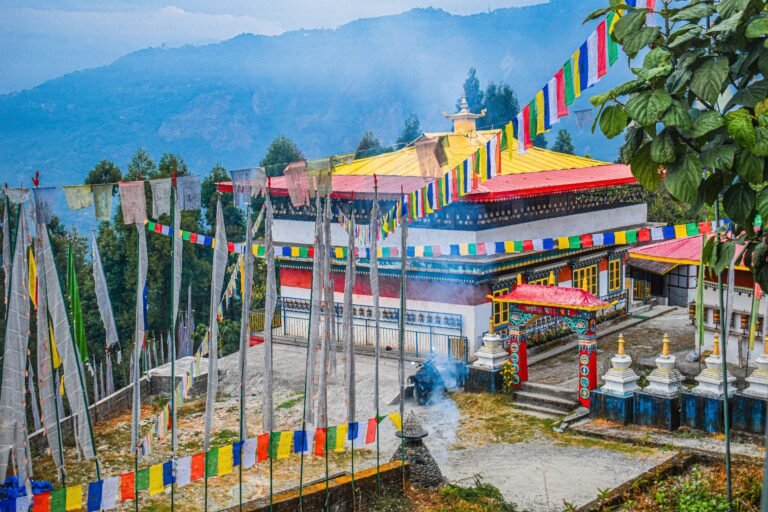
The route passes through areas influenced by Nepali, Tibetan, and local Himalayan traditions. You may notice prayer flags, monasteries, traditional mountain food, and friendly homestay hosts who value simplicity and mountain life.
Nearby Attractions
- Darjeeling: Tea gardens, toy train heritage, viewpoints, and colonial-era charm.
- Manebhanjan: The main gateway to the Sandakphu route and a useful base point.
- Tumling: A peaceful stop with wide ridge views and quiet homestays.
- Phalut: Known for vast Himalayan panoramas and a more remote trekking feel.
- Kalimpong: A scenic hill town that can be combined with a broader North Bengal trip.
- Sukhiapokhri and surrounding viewpoints: Great for short scenic detours near Darjeeling.
Accommodation Options and Estimated Costs
Accommodation options
- Homestays: Common on the route and ideal for an authentic local experience.
- Basic lodges/guesthouses: Available at popular stopping points.
- Trekking camps: Some itineraries include camping, especially with organized groups.
Rooms are usually simple, with basic bedding and shared facilities in many places. Comfort levels are modest but practical for trekkers.
Estimated costs
- Budget trek: Around INR 8,000 to INR 15,000 per person for a multi-day trek package, depending on inclusions.
- Mid-range guided trek: Around INR 15,000 to INR 25,000 per person with better stays and full support.
- Independent travel: Costs vary based on transport, food, permits, and lodging, but can sometimes be managed lower or similar depending on season.
Costs can change based on season, group size, transport choice, and whether permits, guides, porters, meals, and transfers are included.
Travel Tips for Different Travelers
For families
- Choose a shorter itinerary or a guided package with comfortable stops.
- Keep children warm and well-hydrated.
- Do not overpack the schedule; the altitude needs slow adjustment.
For honeymooners
- Pick stays with better room comfort and scenic views.
- Travel in autumn or spring for better weather and mountain visibility.
- Carry warm layers for early mornings and evenings.
For friends and adventure groups
- Plan for flexible weather and possible delays.
- Pack light but include rain protection and extra socks.
- Book guides and stays in advance during peak trekking months.
Packing and safety tips
- Carry layered clothing, gloves, a cap, and sturdy trekking shoes.
- Keep a rain jacket or poncho even in clear seasons.
- Bring a refillable water bottle, basic medicines, and sunscreen.
- Acclimatize properly and avoid rushing to higher points.
- Check weather updates and trail conditions before starting each day.
FAQs
Q: Is Sandakphu Trek suitable for beginners?
A: Yes, many beginners do this trek with a guide or a well-planned itinerary. The trail is long and can be tiring, but it does not require technical climbing skills.
Q: How many days are needed for the Sandakphu Trek from Darjeeling?
A: Most trekkers plan 4 to 6 days, depending on the route, pace, and whether they include Phalut or additional side stops.
Q: What mountain views can I see from Sandakphu?
A: On clear days, you may see Everest, Kanchenjunga, Lhotse, and Makalu, along with many other Himalayan peaks.
Q: Is a guide necessary for the trek?
A: A guide is not always mandatory for experienced trekkers, but it is strongly recommended for route safety, weather guidance, local navigation, and smoother logistics.
Q: What is the main challenge on this trek?
A: The biggest challenges are altitude, cold weather, long walking hours, and sudden weather changes. Fitness and proper layering help a lot.
Conclusion
Sandakphu Trek from Darjeeling is a rare mix of adventure, scenery, and cultural charm. Its ridge walk, mountain panoramas, village stays, and seasonal beauty make it one of the most memorable treks in the Eastern Himalayas. With the right season, sensible packing, and a steady pace, it offers an experience that feels both peaceful and inspiring.