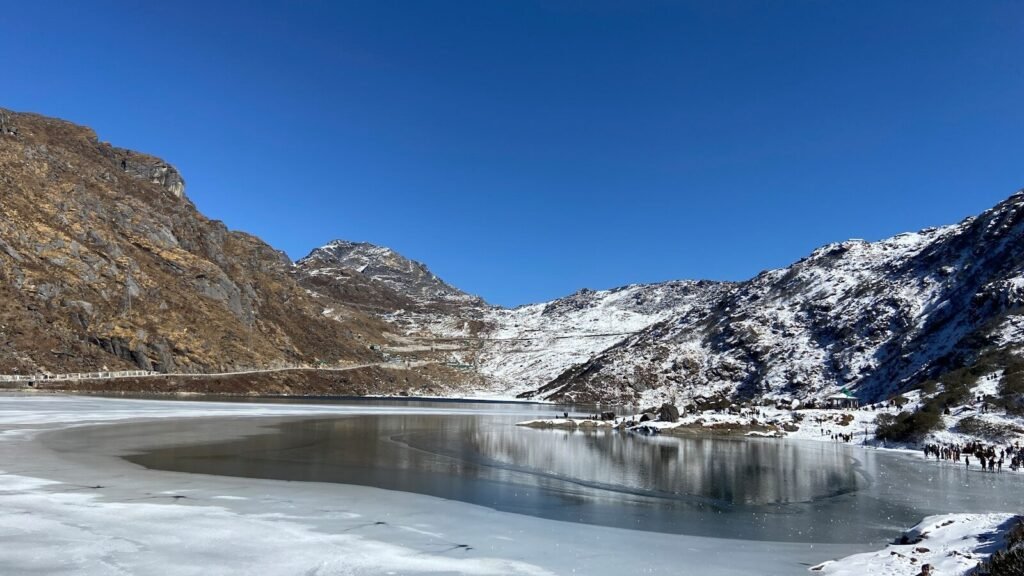
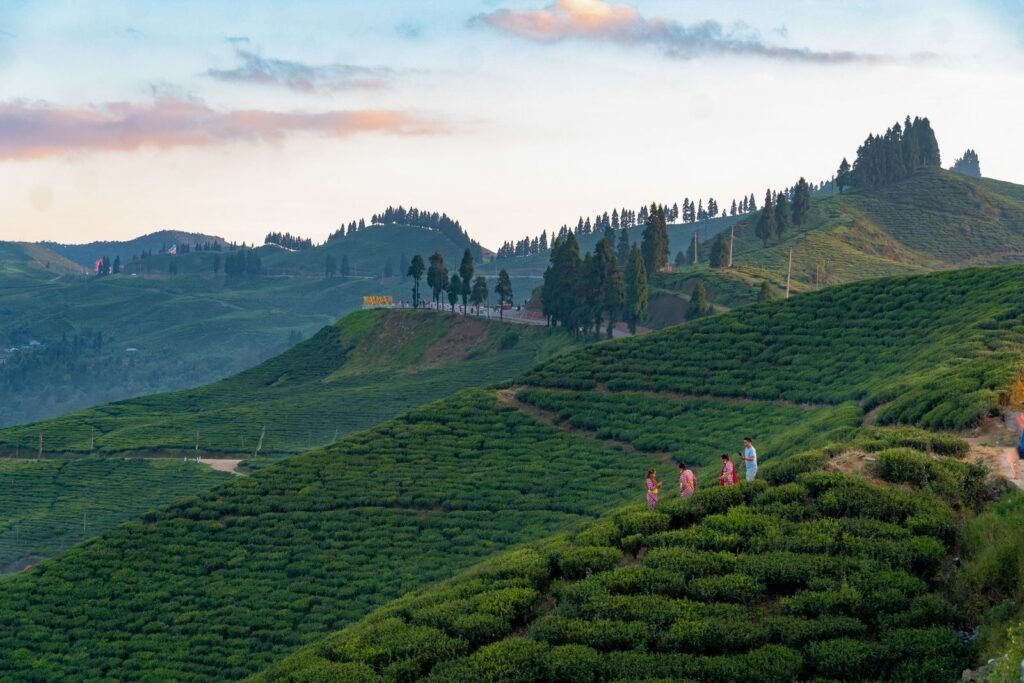
Tendong Hill, rising above the town of Namchi in South Sikkim, is one of the region’s most evocative landmarks — a place where landscape, legend and living culture meet. For visitors, Tendong offers panoramic Himalayan views, cool mountain air and an accessible walk into nature; for the indigenous Lepcha community it is a sacred site that anchors a foundational origin story. This article explores the historical and cultural significance of Tendong Hill and situates that history within contemporary tourism: what travelers experience today, how pilgrimage and recreation overlap, and why responsible visitation matters.
Located near Namchi, the administrative centre of South Sikkim, Tendong Hill commands views across terraced valleys and distant snow‑capped peaks. The hill’s slopes are covered with mixed broadleaf and temperate forest, punctuated by rhododendron and orchid species, and it functions as both a natural vantage point and a cultural landmark for surrounding communities.
Tendong Hill is inseparable from the oral history of the Lepcha, one of Sikkim’s indigenous communities. According to the Lepcha tradition, a catastrophic deluge once engulfed the land, and the ancestors of the Lepcha survived by climbing and sheltering on the slopes and summit of Tendong. The event is not merely a tale of survival; it encodes communal memory, moral lessons and a rooted sense of belonging to place.
The annual observance known as Tendong Lho Rum Faat commemorates the rescue and preservation of the Lepcha people. During the festival, elders and villagers gather on Tendong to perform prayers, chant traditional songs and hold rituals that reaffirm the community’s ties to the land and to their ancestors. The festival has cultural, religious and social dimensions, and it continues to attract both locals and visitors who wish to witness living tradition.
While the Lepcha legend is the most salient historical thread, Tendong’s slopes have also been shaped by later waves of settlement, land use and modern infrastructure connected to Namchi. Over decades Tendong has moved into public consciousness not only as a sacred refuge but as a scenic destination for tourists and nature lovers.
The approach to Tendong is a mix of paved roads and well‑marked trails. Depending on the season, paths may be muddy or carpeted with leaves and flowers. Along the way, visitors often pass small hamlets and terraced fields, giving a sense of the region’s rural life. On the hill, there are viewpoints, prayer sites and informal rest areas rather than large commercial developments.
Tourism at Tendong tends to be small‑scale and community‑oriented. Local guides, homestays and small eateries around Namchi benefit from visitor spending. Infrastructure remains modest compared with larger Himalayan tourist centres, which has helped preserve the hill’s natural and cultural atmosphere. Where visitor facilities exist, they are usually designed to be unobtrusive and to serve pilgrims and trekkers alike.
Tendong’s ecology reflects the temperate Himalayan environment. Its forested slopes support a range of flora — from oaks to rhododendrons and a variety of understory plants — and a diversity of birdlife. These natural assets are a key part of the hill’s attraction and a reminder that cultural history and biodiversity are intertwined.
Local communities, traditional custodians and government agencies have a shared interest in balancing access and protection. Initiatives that promote guided visits, interpretive signage, controlled waste disposal and community‑managed tourism help maintain the hill’s ecological integrity while supporting livelihoods.
The growth of tourism brings both opportunities and responsibilities. Well‑managed tourism can generate income, encourage cultural revitalization and fund conservation. Poorly planned visitation risks cultural commodification, environmental degradation and loss of authenticity. The most positive path forward combines respect for Lepcha traditions, community leadership, and sustainable visitor practices.
Tendong Hill is more than a scenic lookout near Namchi; it is a living historical landscape where culture, memory and nature converge. For the Lepcha people its slopes tell a foundational story of survival and belonging, and for visitors it offers an accessible window into Sikkim’s natural beauty and indigenous heritage. Thoughtful, community‑centred tourism can ensure that Tendong’s history continues to be told and experienced without diminishing the ecological and cultural values that make it special.
What makes us different from other tour package companies
Our travel experts have core and intense knowledge about Sikkim sector with over 10 years of experience that will help you choose the best possible itinerary as per your requirements.
Our travel experts are just one call away during your tour to help you with any kind of immediate assistance so that your tour is a more enjoyable and hassle-free tour.
eSikkimTourPackages ensures best rates to all our esteemed guests since we have our own hotels and fleet of vehicles and drivers and there is no third-party involvement. This ensures personalized service and best rates.























Kindly enter the details below for your Sikkim Tour Package