Table of Contents
- Introduction
- Best Time to Visit Darjeeling
- Must-Visit Places in Darjeeling
- Local Culture, Food & Shopping
- Nearby Getaways from Darjeeling
- How to Reach Darjeeling
- Accommodation Options & Estimated Costs
- Solo Traveller Tips
- Tips for Families, Honeymooners & Friends
- FAQs
- Conclusion
Darjeeling Tour Guide for Solo Travellers
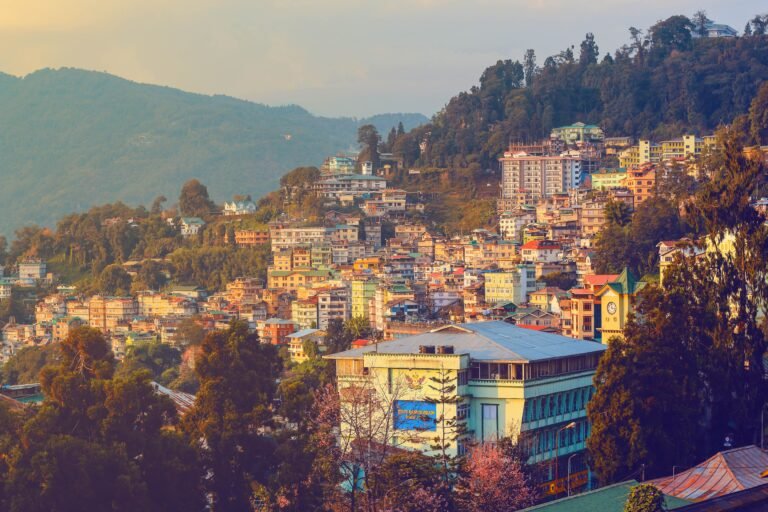
Darjeeling is one of those rare destinations that feels both lively and peaceful at the same time. Perched in the Eastern Himalayas, it offers tea gardens, mountain views, colonial-era charm, and a walkable town center that suits solo travellers beautifully. You can spend a morning watching Kanchenjunga glow at sunrise, an afternoon sipping tea in a quiet café, and an evening wandering Mall Road at your own pace.
For solo travellers, Darjeeling works especially well because it is compact, scenic, and rich in local experiences. Whether you are planning a short weekend escape or a longer hill break, this guide covers the practical details you need: what to see, how to move around, where to stay, what to eat, and how to travel safely and comfortably on your own.
Best Time to Visit Darjeeling
Darjeeling is a year-round destination, but the experience changes with the seasons.
- March to May: Pleasant weather, blooming landscapes, and clear mountain mornings.
- October to December: Crisp air, excellent views of Kanchenjunga, and a festive atmosphere.
- June to September: Monsoon season brings mist and lush greenery, but road delays and landslides can happen.
- January to February: Cold, quiet, and ideal if you enjoy fewer crowds and cool mountain weather.
For solo travellers, October to November is often the best balance of weather, visibility, and ease of movement.
Must-Visit Places in Darjeeling
Tiger Hill
Tiger Hill is the classic Darjeeling sunrise point. On a clear day, the first light touches Kanchenjunga before reaching the town below. It is an early start, but the view is worth it.
Chowrasta and Mall Road
This is the heart of Darjeeling town. It is perfect for a slow walk, people-watching, café stops, and buying local snacks or souvenirs. Solo travellers often find it the easiest place to settle into the rhythm of the hill station.
Batasia Loop and War Memorial
Famous for its spiral railway track and landscaped gardens, Batasia Loop is one of the most photographed places in the region. The War Memorial adds a reflective note to the visit.
Darjeeling Himalayan Railway
The toy train is a UNESCO-recognized experience and one of the town’s biggest draws. Even if you do not take the full heritage ride, seeing the steam engine and railway stations is part of Darjeeling’s identity.
Peace Pagoda
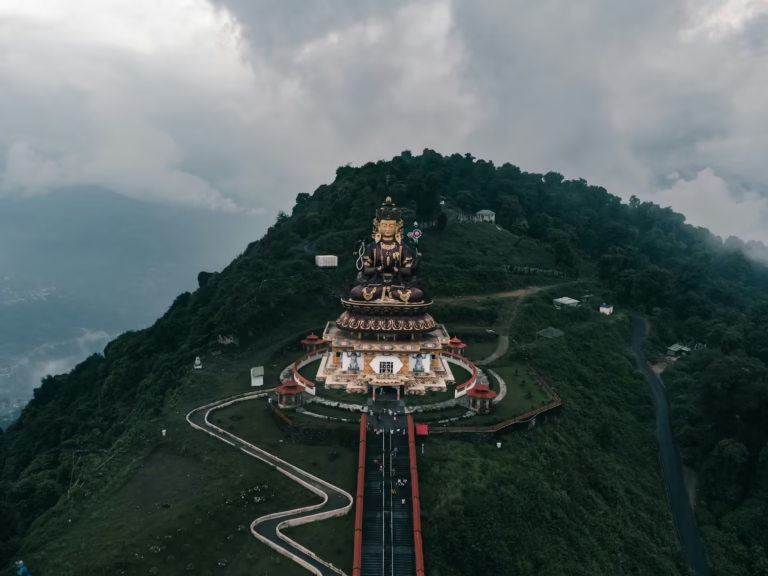
This serene Buddhist monument offers calm surroundings and mountain views. It is a good stop if you want a break from the busier parts of town.
Padmaja Naidu Himalayan Zoological Park and Himalayan Mountaineering Institute
These two attractions work well together. The zoo is known for high-altitude species, while the mountaineering institute gives insight into the region’s adventure culture and climbing legacy.
Tea Gardens and Estates
Darjeeling tea is world-famous, and visiting a tea estate helps you understand why. You can walk through the plantations, learn about tea processing, and enjoy a calmer side of the hills.
Observatory Hill and Mahakal Temple
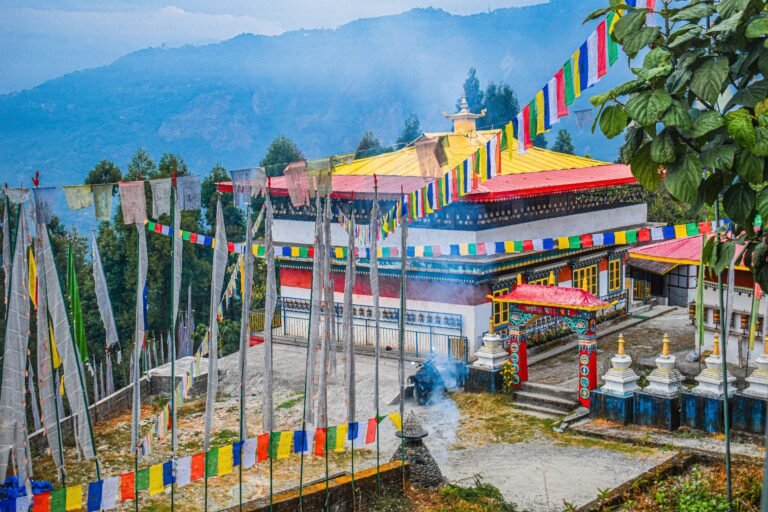
This area combines spiritual significance with local character. You may hear prayer flags, bells, and chants while moving through a setting that feels deeply tied to the town’s cultural roots.
Local Culture, Food & Shopping
Local Culture
Darjeeling reflects a rich mix of Nepali, Tibetan, Lepcha, Bhutia, and Bengali influences. This diversity shows up in the food, language, clothing, festivals, and everyday life. The town feels relaxed, but it also has a strong cultural identity shaped by the mountains and by tea-growing history.
What to Eat
Food is a major part of the Darjeeling experience. Try these local favorites:
- Momos: Steamed, fried, or soup-style, usually with spicy chutney.
- Thukpa: A comforting noodle soup, perfect in cold weather.
- Sha phaley: A Tibetan-style bread stuffed with meat or vegetables.
- Alu dum and sel roti: Common local breakfast and snack items.
- Darjeeling tea: Freshly brewed and best enjoyed slowly.
For solo travellers, small cafés and family-run eateries are ideal because the food is fresh, affordable, and easy to enjoy without rushing.
Shopping
Shopping in Darjeeling is best kept practical and local. Look for:
- Loose-leaf Darjeeling tea
- Handmade woollens and shawls
- Tibetan handicrafts and prayer items
- Locally made snacks and preserves
- Simple souvenirs from Mall Road and Chowrasta
Always check quality before buying tea or woollens, and compare a few shops if you want the best value.
Nearby Getaways from Darjeeling
Mirik
Mirik is known for its lake, pine forests, and gentler pace. It is a peaceful day trip if you want a softer hill experience.
Kurseong
Kurseong is quieter than Darjeeling and often feels more local. It is a good option for tea gardens, short walks, and a less crowded mountain break.
Lamahatta
Lamahatta is ideal for nature lovers. It offers landscaped gardens, viewpoints, and a calm atmosphere that feels far from the town bustle.
Tinchuley and Takdah
These villages are scenic and more relaxed, with tea gardens, homestays, and excellent options for travelers who want to slow down.
Kalimpong
Kalimpong is a rewarding extension if you have extra time. It combines views, monasteries, markets, and a more spread-out town layout.
How to Reach Darjeeling
Darjeeling is usually reached via Bagdogra Airport or New Jalpaiguri Railway Station, followed by a hill drive.
- By air: Fly to Bagdogra Airport, then take a taxi or shared vehicle to Darjeeling.
- By train: New Jalpaiguri (NJP) is the main railhead. From there, you can continue by road or take the toy train for part of the journey.
- By road: Shared jeeps and private taxis run from Siliguri, NJP, and Bagdogra.
Travel tip: Hill roads can be slow. If you are arriving alone, choose daytime travel whenever possible so transfers feel easier and more predictable.
Accommodation Options & Estimated Costs
Darjeeling offers stays for every budget, from simple guesthouses to heritage hotels and boutique stays.
- Budget stays: INR 1,200 to INR 2,500 per night
- Mid-range hotels: INR 3,000 to INR 6,000 per night
- Boutique or premium stays: INR 7,000 and above per night
- Homestays: Often INR 1,500 to INR 4,000 per night, depending on location and meals
For solo travellers, a centrally located stay near Chowrasta, Mall Road, or the main market area is usually the most convenient because it reduces dependence on transport.
Approximate daily budget for a solo traveller: INR 2,500 to INR 6,000, depending on stay type, food choices, and sightseeing pace.
Solo Traveller Tips
Stay Central
Choose accommodation near the town center for easy walking access to cafés, shops, and viewpoints.
Plan Early Starts
Popular spots like Tiger Hill are best visited early in the day. Starting early also helps you avoid traffic and enjoy clearer views.
Pack Smart
- Warm layers, even in spring and autumn
- Comfortable walking shoes
- Rain protection during monsoon months
- Power bank, flashlight, and basic medicines
Stay Connected and Safe
Keep your phone charged, share your daily plan with someone you trust, and use registered taxis or hotel-arranged transport where possible. Darjeeling is generally traveler-friendly, but mountain conditions can change quickly.
Move at a Relaxed Pace
Solo travel in Darjeeling is most rewarding when you do not overpack the schedule. Leave space for tea breaks, weather changes, and spontaneous walks.
Tips for Families, Honeymooners & Friends
For Families
- Keep sightseeing clusters short and manageable.
- Choose larger rooms or family homestays with heating if visiting in winter.
- Include child-friendly stops like the zoo, toy train views, and tea garden walks.
For Honeymooners
- Pick a stay with mountain views or a balcony.
- Plan quiet time for tea estates, sunrise points, and café evenings.
- Book transport in advance during peak seasons for a smoother trip.
For Friends
- Mix sightseeing with café hopping and short hikes.
- Split transport costs for nearby day trips.
- Keep one flexible day for weather-dependent viewpoints.
General Safety and Comfort Guidance
No matter who you travel with, carry light luggage, respect local customs, and keep buffer time for hilly roads. In Darjeeling, comfort matters more than squeezing in too many stops.
FAQs
Q: Is Darjeeling good for solo travellers?
A: Yes. Darjeeling is one of the more comfortable hill stations for solo travel because the main town area is walkable, scenic, and full of cafés, shops, and transport options.
Q: How many days are enough for Darjeeling?
A: Two to three days is enough for the main sights. If you want tea estates, nearby getaways, and a slower pace, four to five days is better.
Q: What is the best time to see Kanchenjunga clearly?
A: October to December usually offers the clearest views, especially on early mornings after a dry night.
Q: What should I eat first in Darjeeling?
A: Start with momos, thukpa, and a cup of fresh Darjeeling tea. These are the most classic local choices.
Q: Is Darjeeling expensive?
A: It can be moderate to expensive depending on the season and hotel choice, but budget and mid-range options are available. A solo trip can be managed comfortably with careful planning.
Conclusion
Darjeeling is a destination that rewards slow travel. For solo travellers, it offers a rare combination of easy movement, mountain beauty, tea culture, and peaceful town life. From Tiger Hill and the toy train to local cafés, markets, and nearby hill getaways, the town gives you enough variety without feeling overwhelming.
With the right season, a central stay, and a relaxed itinerary, Darjeeling becomes more than a sightseeing trip. It becomes a calm, memorable mountain experience shaped by good views, warm food, and the easy rhythm of the hills.