Table of Contents
- Introduction
- 3-Day Lachung Itinerary from Gangtok
- Must-Visit Places in and around Lachung
- Best Time to Visit Lachung
- How to Reach Lachung from Gangtok
- Permits and Regulations for North Sikkim
- Accommodation Options in Lachung
- Estimated Trip Cost (3 Days)
- Local Food, Culture, and Shopping
- Nearby Getaways to Extend Your Trip
- Travel Tips and Packing Guide
- Tips by Traveler Type
- Safety and Health at High Altitude
- FAQs
- Conclusion
Introduction
Lachung, a postcard-perfect mountain village in North Sikkim, is your gateway to Yumthang Valley’s spring blooms, snow-kissed meadows at Zero Point, and tranquil monasteries framed by alpine forests. Planning a 3-day Lachung trip from Gangtok is ideal for travelers who want dramatic landscapes without a long leave. This guide blends a practical, day-by-day plan with permits, costs, stay options, and local experiences—so you can go from tea in Gangtok to rhododendron valleys in under 72 hours.
3-Day Lachung Itinerary from Gangtok
Day 1: Gangtok to Lachung (115–120 km | 5–7 hours)
- Route: Gangtok – Kabi Lungchok – Phodong – Mangan – Singhik – Chungthang – Lachung.
- Start early (by 8:00 am) to beat traffic and afternoon fog.
- En route stops (time permitting):
- Kabi Lungchok (historic treaty site, forested vistas)
- Seven Sisters Waterfall (photo stop)
- Singhik Viewpoint (Kanchenjunga views on clear days)
- Chungthang Confluence (Teesta and Lachung Chu meet)
- Check in at Lachung by late afternoon; stroll to Lachung Monastery and the village bridge at sunset.
- Dinner at your hotel; sleep early for an alpine start.
Day 2: Yumthang Valley + Optional Zero Point or Katao
- Depart 5:30–6:30 am (roads are smoother, light is magical).
- Yumthang Valley (approx. 1 hour from Lachung):
- Spring (Apr–May): Rhododendrons in Shingba Rhododendron Sanctuary.
- Autumn (Oct–Nov): Golden-brown meadows and crystal skies.
- Winter (Dec–Mar): Snow-laden landscapes; access depends on conditions.
- Yumthang Hot Springs (basic changing huts): Warm dip if open; carry slippers and a towel.
- Choose one extension (subject to permits and weather):
- Zero Point (Yumesamdong) (~4,600 m): Snow fields and high-altitude vistas; extra vehicle charge is common.
- Katao (~4,000 m): Panoramic ridge-line views; may require a separate local permit and often military-dependent access.
- Return to Lachung by afternoon; free evening for village walks and local bites.
Day 3: Lachung to Gangtok
- Leisurely breakfast; depart by 8:00–9:00 am.
- Optional stops:
- Bhim Nala (Bhewma) Waterfall near Khedum
- Namok and Phensong viewpoints (weather dependent)
- Arrive Gangtok by mid to late afternoon; buffer for traffic and check-post formalities.
Must-Visit Places in and around Lachung
- Yumthang Valley (Valley of Flowers): Alpine meadows, river bends, and spring blossoms.
- Shingba Rhododendron Sanctuary: 20+ rhododendron species; peak bloom Apr–May.
- Zero Point (Yumesamdong): Near-treeline snowfields; very high altitude—pace yourself.
- Katao: Sweeping snow-views; access varies by season and permissions.
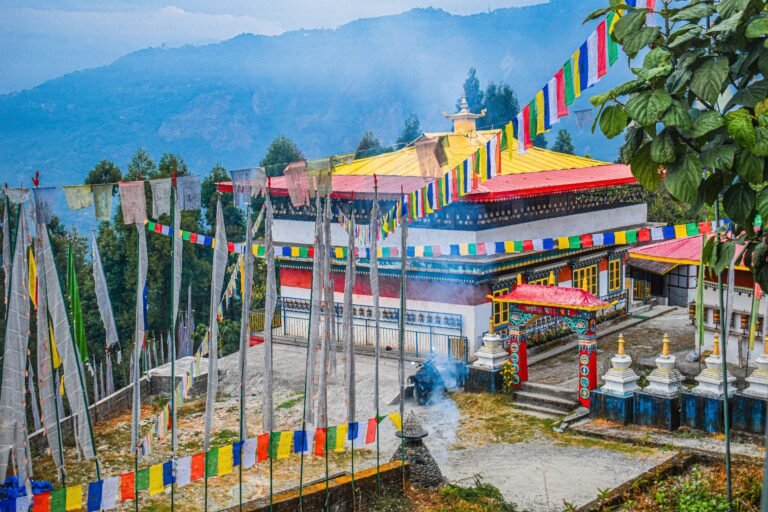
- Lachung Monastery: Quiet courtyard, prayer flags, and village panoramas.
- Bhim Nala Waterfall: Thunderous cascade; quick photo halt.
- Chungthang: River confluence and local legends; small market.
Best Time to Visit Lachung
- Spring (Apr–May): Rhododendron bloom; mild days, chilly nights.
- Autumn (Oct–Nov): Clear skies, great mountain views; post-monsoon freshness.
- Winter (Dec–Mar): Snow possible; road closures can occur—keep flexible plans.
- Monsoon (Jul–Sep): Frequent landslides; not advised for short trips.
How to Reach Lachung from Gangtok
- Distance/Time: ~115–120 km; 5–7 hours depending on road and weather.
- By Road (most common):
- Shared North Sikkim package jeeps: Budget-friendly; permits, meals, and stays often bundled.
- Private SUV with driver: Comfortable with photo stops; permits arranged via operator/hotel.
- Self-drive: Not recommended; permit logistics and rough mountain roads.
- Public transport: Direct buses are not reliable for this route; organized tours or taxis are standard.
- Nearest airport/railhead:
- Pakyong Airport (PYG): Limited flights; weather diversions possible.
- Bagdogra Airport (IXB): Major hub; ~5–6 hours to Gangtok.
- NJP Railway Station: ~4–5 hours to Gangtok by road.
Permits and Regulations for North Sikkim
- Who needs permits: All travelers visiting North Sikkim (Lachung, Yumthang, Zero Point).
- Indian nationals: Carry a valid government photo ID (passport, voter ID, driving license) and 2 passport-size photos. Aadhaar may work but carry an alternate ID.
- Foreign nationals: Require a Protected/Restricted Area Permit arranged via a registered tour operator. Passport and Indian visa copies needed. Access may be limited for some high-altitude zones.
- Where arranged: Usually by your Gangtok-based tour operator/hotel; apply at least one day in advance.
- Closures: Permits/roads are weather and army dependent; Zero Point and Katao are the first to close during heavy snow.
- Drone and plastic rules: Drone use needs special permission; avoid single-use plastics—carry back all trash.
Accommodation Options in Lachung
- Homestays & Guesthouses: Cozy, family-run; basic heating, hearty meals.
- Mid-range Hotels: Comfortable rooms, electric blankets, mountain views.
- What to expect: Limited luxury; intermittent electricity and mobile data; hot water often time-bound.
- Booking tip: In peak seasons (Apr–May, Oct–Nov), pre-book via a reputable operator; packages often include all meals.
Estimated Trip Cost (3 Days)
- Shared 2N/3D Lachung package: ₹6,500–₹12,000 per person (includes permits, transport, basic stays, most meals).
- Private SUV (with driver): ₹4,500–₹6,500 per day (vehicle only); fuel/tolls included typically in quoted tour prices.
- Stay (mid-range): ₹2,500–₹5,000 per room per night with meals.
- Zero Point add-on: ₹3,000–₹5,000 per vehicle (payable locally; weather/permit dependent).
- Permits/Entry: Usually bundled; standalone ~₹200–₹300 per person.
- Meals/snacks: ₹300–₹700 per person per meal if not included.
- Contingency buffer: 10–15% for weather delays and price variability.
Local Food, Culture, and Shopping
Food to Try
- Momo and Thukpa/Thenthuk (noodle soups)
- Shaphaley (stuffed fried bread)
- Chhurpi (local yak/cow cheese), Butter tea in colder months
- Seasonal: Rhododendron squash, Sikkim teas
Culture
- Lepcha and Bhutia heritage reflected in monasteries, prayer flags, and village architecture.
- Respect local customs; ask before photographing people or monastery interiors.
Shopping
- Handwoven woolens, scarves, caps
- Local teas, incense, small prayer flags
- Carry cash; ATMs can be unreliable in North Sikkim.
Nearby Getaways to Extend Your Trip
- Lachen & Gurudongmar Lake: Often a separate 1–2 nights from Gangtok; very high altitude.
- Dzongu (Lepcha Reserve): Quiet homestays, riverside walks; permit required.
- Gangtok: MG Marg cafes, Tashi Viewpoint, monasteries (Rumtek, Enchey).
- Mangan & Singhik: Viewpoints and village life; good for slow travel days.
Travel Tips and Packing Guide
- Layers: Thermal base, fleece/sweater, down/warm jacket, beanie, gloves, woolen socks.
- Footwear: Waterproof shoes; snow boots in winter; good grip soles.
- Sun & cold care: Sunglasses (UV), SPF 50 sunscreen, lip balm, moisturizer.
- Health: Personal meds, motion-sickness tablets, basic first aid; consult a doctor about altitude medication if needed.
- Utilities: Power bank, extra batteries (cold drains power fast), flashlight.
- Documents & cash: Multiple ID copies, 2–4 passport photos, adequate cash.
- Connectivity: Networks are patchy; BSNL works best; others intermittent.
- Sustainability: Reusable water bottle, no littering, do not pluck flowers at Shingba.
Tips by Traveler Type
Families
- Keep Day 2 flexible; choose Yumthang only if kids feel tired.
- Pack extra snacks, thermals, and a thermos for warm water.
Honeymooners
- Book a room with mountain view and heating; request electric blankets.
- Sunrise at Yumthang and a slow village walk add quiet moments.
Friends/Groups
- Hire a private SUV to control stops and add Zero Point/Katao if open.
- Carry cards/games for long evenings; power can be intermittent.
Safety and Health at High Altitude
- Altitude: Lachung ~2,600 m; Yumthang ~3,564 m; Zero Point ~4,600 m.
- Prevent AMS: Ascend gradually, stay hydrated, avoid alcohol, eat light.
- Watch for symptoms: Headache, nausea, unusual fatigue. Descend if symptoms worsen.
- Weather: Can change quickly; always carry a warm layer and rain protection.
- Roads: Mountain roads are narrow; wear seatbelts, avoid night travel.
FAQs
Q: Do I need a permit to visit Lachung and Yumthang Valley?
A: Yes. North Sikkim requires special permits. Your Gangtok tour operator or hotel typically arranges them with your ID copies and photos.
Q: Can foreigners visit Zero Point and Katao?
A: Access for foreigners may be restricted in some high-altitude zones. Most can visit Lachung and Yumthang with proper permits; check current rules for Zero Point/Katao with a registered operator.
Q: What’s the best month for flowers in Yumthang?
A: April to May is peak rhododendron bloom, depending on snowfall and the onset of spring.
Q: Are ATMs and mobile networks reliable in Lachung?
A: No. Carry sufficient cash. Network is patchy; BSNL works best while others are intermittent or absent.
Q: Is a 3-day trip enough for Lachung?
A: Yes. Three days comfortably cover Gangtok–Lachung transfers and a full day at Yumthang with an optional extension to Zero Point or Katao.
Conclusion
A 3-day Lachung trip from Gangtok blends scenic drives, alpine meadows at Yumthang, and optional high-altitude adventures to Zero Point or Katao. Travel light but warm, arrange permits in advance, and keep plans flexible for weather. With the right season and sensible pacing, you’ll capture North Sikkim’s finest landscapes in a long weekend.