Table of Contents
- Introduction
- Best Time to Visit Pelling
- Must-Visit Places in Pelling
- Local Experiences: Food, Shopping, Culture
- Nearby Getaways and Day Trips
- How to Reach Pelling
- Where to Stay: Accommodation Guide
- Estimated Trip Costs
- Travel Tips (Families, Honeymooners, Friends)
- Suggested Itineraries
- FAQs
- Conclusion
Introduction
Pelling, a mist-kissed town in West Sikkim at around 2,150 meters, is famed for front-row views of Kanchenjunga and serene monasteries cradled by dense forests. From the 17th-century Pemayangtse Monastery to the historic Rabdentse Ruins (the second capital of Sikkim), Pelling blends heritage with Himalayan drama. Whether you are here for crystal-clear mountain vistas, gentle village walks, or thunderous waterfalls, timing your trip makes all the difference.
Best Time to Visit Pelling
The best time to visit Pelling is October to November and March to May. These months offer crisp mountain views, pleasant temperatures, and minimal rain.
Season-by-Season Breakdown
- Autumn (October–November): Peak visibility for Kanchenjunga, cool days and chilly nights (8–18°C). Great for photography, monasteries, and gentle hikes. Moderate crowds.
- Spring (March–May): Rhododendrons bloom, forests turn vibrant. Temperatures 10–20°C. Good visibility overall, occasional showers by late May. Ideal for nature walks and lake visits.
- Winter (December–February): Cold (2–12°C), with crisp mornings. Expect very clear skies on many days. Pelling rarely sees heavy snow, but higher spots nearby may. Thin crowds and lower hotel rates.
- Monsoon (June–September): Lush landscapes and gushing waterfalls, but heavy rain and possible landslides disrupt roads. Visibility is poor, leeches on trails, and travel times increase. Go only if you’re rain-gear ready and flexible.
Best Time by Interest
- Classic mountain views: October–November
- Flowers and forests: April–May
- Budget and quiet: January–February
- Waterfalls at their wildest: July–August (with caution)
Must-Visit Places in Pelling
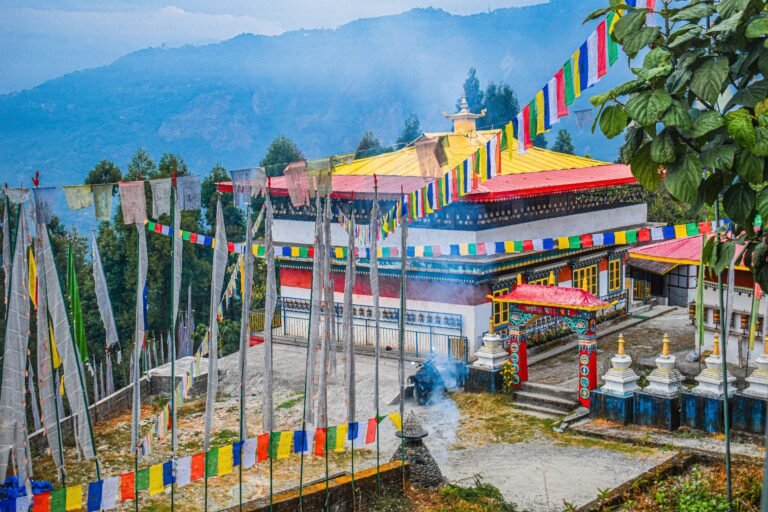
- Pemayangtse Monastery: One of Sikkim’s oldest monasteries; serene courtyards and exquisite woodwork.
- Rabdentse Ruins: A short forest walk leads to hilltop palace ruins with spectacular valley views.
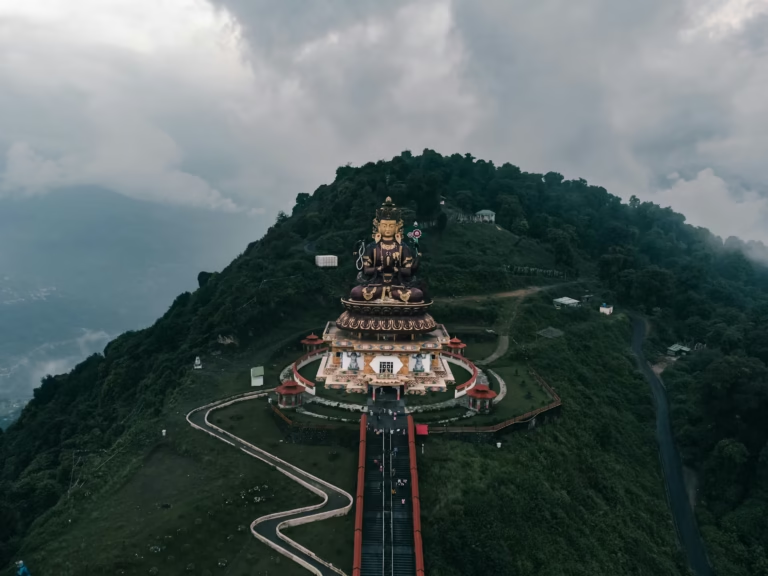
- Pelling Skywalk & Chenrezig Statue: Glass-bottom skywalk leading to a towering statue and panoramic lookout.
- Khecheopalri Lake: Sacred, mirror-still lake set in a tranquil forest; revered by Buddhists and Hindus.
- Kanchenjunga Waterfalls: Powerful cascade, especially impressive post-monsoon.
- Singshore Bridge: One of India’s highest suspension bridges; dramatic gorge views.
- Rimbi Waterfalls & Sewaro Rock Garden: Easy outing with picnic-friendly spots.
- Sanga-Choling Monastery: Short hike up; sunrise views if skies are clear.
- Darap Village: A Lepcha settlement offering slow travel, homestays, and farm walks.
Local Experiences: Food, Shopping, Culture
Food
- Momos and thukpa: Piping hot staples perfect for cool evenings.
- Sikkimese thali: Expect gundruk (fermented greens), kinema (fermented soybeans), and seasonal veggies.
- Phagshapa: Pork with radish and chilies; hearty and flavorful.
- Local brews: Try millet-based tongba or chhaang in traditional settings.
Shopping
- Handwoven woolens, carpets, prayer flags, and thangka art.
- Organic tea, Sikkim cardamom, and forest honey.
- Browse Pelling Upper Market and Gyalshing (Geyzing) bazaar for handicrafts and daily-life souvenirs.
Culture
- Monastic rituals: Respect quiet hours and dress modestly inside monasteries.
- Festivals nearby: Bumchu at Tashiding (Jan–Feb), Pang Lhabsol (Aug–Sep), Losar (Feb–Mar) bring masked dances and communal prayers.
Nearby Getaways and Day Trips
- Yuksom (40–50 km): Historic first capital of Sikkim; trailhead for Dzongri/Goecha La trek.
- Tashiding Monastery (30–40 km): Sacred ridge-top site, especially lively during Bumchu.
- Uttarey and Hee–Bermiok: Quiet villages with birding trails and ridge views.
- Ravangla and Buddha Park (70–80 km): Striking statue and landscaped gardens with mountain backdrops.
- Namchi (80–90 km): Char Dham complex and Samdruptse statue.
- Darjeeling (approx. 110–120 km by road): Tea country and heritage rail, doable as a next-stop rather than a day trip.
How to Reach Pelling
- By Air: Bagdogra (IXB) near Siliguri is the most reliable gateway (road to Pelling: 5–6 hours). Pakyong (IXP) near Gangtok has limited and weather-dependent operations.
- By Train: New Jalpaiguri (NJP) is the nearest major railhead. Transfer by shared jeep or private taxi.
- By Road: Shared jeeps run from Siliguri/Gangtok to Gyalshing–Pelling. Private taxis are flexible and faster. Roads are mountain-grade; travel times vary with weather.
- Permits: Indian nationals don’t need permits for Pelling. Foreign nationals require an Inner Line/Restricted Area Permit (e-ILP available) to enter Sikkim; obtainable online or at entry check posts like Rangpo. Additional permits are needed for certain treks and restricted zones.
Where to Stay: Accommodation Guide
- Upper Pelling: Best for Kanchenjunga-facing rooms, quick access to the Skywalk and monasteries.
- Lower Pelling/Gyalshing: Central markets, easier transport, more budget stays.
- Darap & nearby villages: Homestays for culture-rich, quiet stays.
Price ranges (indicative, per night):
- Budget guesthouses and homestays: INR 1,200–2,500
- Mid-range hotels: INR 2,500–6,000
- Boutique and heritage stays: INR 6,000–12,000
- Luxury resorts: INR 12,000–25,000+
Book well in advance for October–November and April–May. In winter, ask about room heating and power backup.
Estimated Trip Costs
- Transport: Shared jeep Siliguri–Pelling: INR 500–900 per seat; private SUV: INR 4,500–7,000 (season-dependent).
- Daily budget per person:
- Shoestring: INR 2,000–3,500
- Comfort: INR 3,500–7,000
- Splurge: INR 8,000–15,000+
- Entry fees: Skywalk, certain parks, and museums may charge INR 50–300.
- Local taxis for sightseeing: INR 2,500–4,500 per day depending on circuit and vehicle type.
Travel Tips (Families, Honeymooners, Friends)
Essential Packing and Safety
- Layered clothing; warm jacket for evenings year-round.
- Rainproof jacket, quick-dry wear, and non-slip shoes, especially March–September.
- Sun protection at altitude: sunglasses, SPF, cap.
- Motion-sickness meds; mountain roads are winding.
- Cash buffer; ATMs can be scarce or offline.
- Check road/weather updates in monsoon; keep flexible plans.
- Hire experienced mountain drivers; avoid risky edges and selfie spots near waterfalls.
For Families
- Choose hotels with heating and on-site dining; ask for view rooms if traveling in clear seasons.
- Plan short outings (1–2 hours) interspersed with rest; carry snacks and warm layers for kids.
- Avoid long road days in heavy rain; keep a buffer day in itinerary.
For Honeymooners
- Book Kanchenjunga-facing rooms in Upper Pelling; aim for October–November or March–April.
- Catch sunrise from the Skywalk or Sanga-Choling; visit Khecheopalri Lake for a tranquil stroll.
- Consider a spa-equipped property or cozy boutique stay for quiet evenings.
For Friends and Adventure Seekers
- Combine Pelling with Yuksom and the Dzongri trail (permits, guides, and fitness required).
- Try village walks in Darap, birding near Hee–Bermiok, and photo stops at Singshore Bridge.
- Travel in a group to split taxi costs for sightseeing circuits.
Suggested Itineraries
2 Days in Pelling
- Day 1: Pemayangtse Monastery, Rabdentse Ruins, Pelling Skywalk and Chenrezig Statue.
- Day 2: Khecheopalri Lake, Kanchenjunga Waterfalls, Rimbi Waterfalls and Sewaro Rock Garden.
3–4 Days in Pelling
- Days 1–2: Cover the 2-day plan at an easy pace with sunrise at Sanga-Choling.
- Day 3: Singshore Bridge and Uttarey; village time in Darap with a homestay lunch.
- Day 4: Day trip to Ravangla Buddha Park or Namchi (Char Dham) depending on interest.
FAQs
Q: What is the best month to see Kanchenjunga clearly from Pelling?
A: October and November typically offer the clearest skies, followed by late winter mornings in January–February and early spring in March.
Q: Is Pelling suitable for a monsoon trip?
A: It’s lush and dramatic, but heavy rain can cause landslides and delays. If visiting June–September, keep flexible plans, carry rain gear, and monitor road updates.
Q: How many days are enough for Pelling?
A: Two full days cover the highlights. With three to four days, you can add Darap, Singshore Bridge, and a day trip to Ravangla or Namchi.
Q: Do foreigners need permits for Pelling?
A: Yes. Foreign nationals require an Inner Line/Restricted Area Permit to enter Sikkim (e-ILP available). No special permit is needed for Pelling itself, but some treks and regions have additional requirements.
Q: Will I find snow in Pelling?
A: Heavy snowfall in Pelling town is uncommon. For snow in winter, head to higher nearby areas or plan treks toward Dzongri (with proper permits and guides).
Conclusion
Pelling rewards the well-timed traveler with sweeping views of Kanchenjunga, soulful monasteries, and soothing forests. Visit in autumn or spring for the best visibility, winter for quiet charm, and monsoon only if you’re ready for weather swings. With heritage sites, sacred lakes, waterfalls, and welcoming villages, this West Sikkim gem makes a memorable Himalayan holiday.