Table of Contents
- Introduction
- Must-Visit Places in Gangtok
- Best Time to Visit
- Local Culture, Food & Shopping
- Nearby Getaways from Gangtok
- How to Reach Gangtok
- Accommodation Options
- Estimated Costs
- Suggested Itineraries
- Tips for Travelers
- FAQs
- Conclusion
Introduction
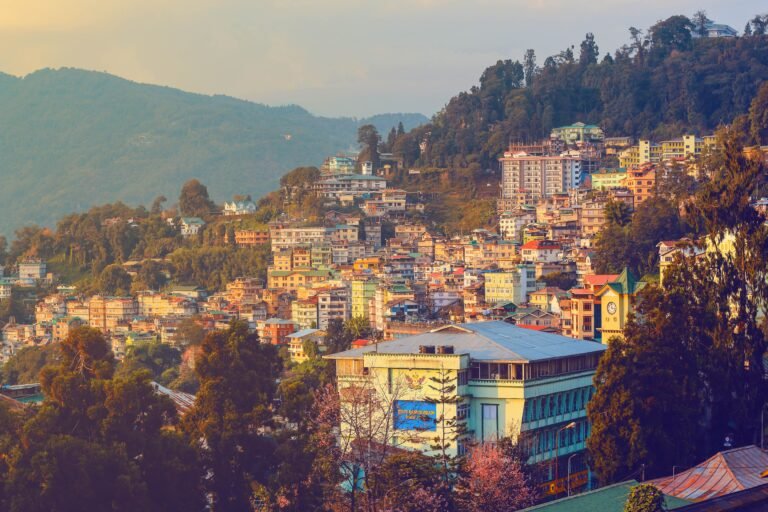
Ringed by rippling hills and framed by distant Kanchenjunga, Gangtok is Sikkim’s breezy capital and a perfect base to explore monasteries, alpine lakes, tea-laced valleys, and cozy cafes. Whether you’re here for a weekend city hop or a longer Sikkim road trip, this guide curates the absolute best places to visit in and around Gangtok—plus practical tips on permits, seasons, stays, and costs.
Must-Visit Places in Gangtok
1) MG Marg
A spotless, pedestrian-only promenade lined with cafes, momos joints, and souvenir stores. Come at dusk for music, soft lights, and people-watching.
- Top for: Evening strolls, cafes, bakeries
- Nearby: Lal Bazaar (local market), Ropeway base
2) Rumtek Monastery
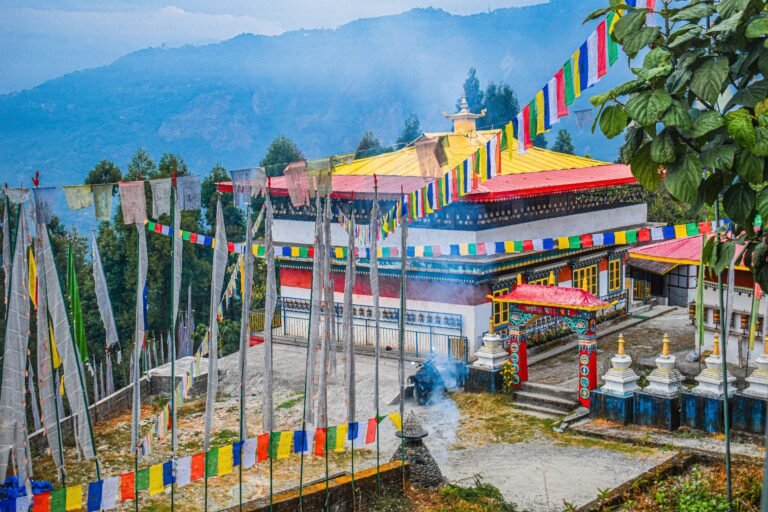
Seat of the Karmapa (Kagyu lineage), Rumtek’s golden-roofed gompa, prayer wheels, and murals showcase Tibetan Buddhist art.
- Distance: ~23 km from MG Marg
- Entry: ~INR 50–100
- Tip: Dress modestly; photography may be restricted in prayer halls
3) Tsomgo (Changu) Lake
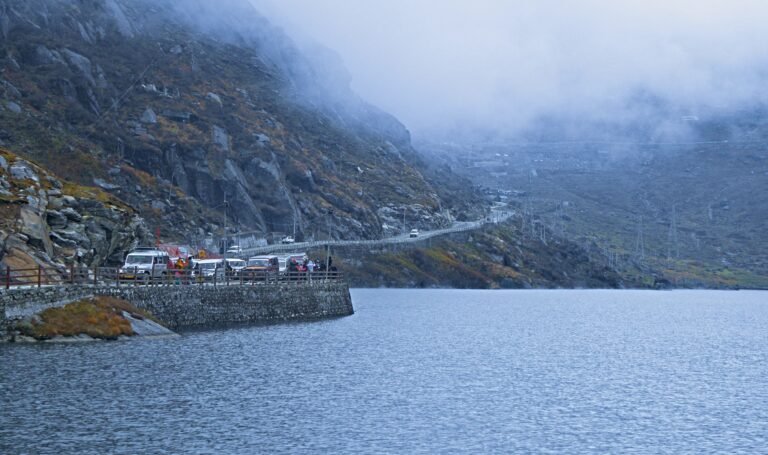
A high-altitude glacial lake (approx. 3,753 m) that mirrors the sky. In spring, rhododendrons bloom; in winter, the lake often freezes.
- Distance: ~40 km from Gangtok
- Permits: Mandatory; arranged via registered operators
- Good to know: Carry warm layers; altitude can affect breathing
4) Nathula Pass
A historic pass on the Indo–China border (~4,310 m). Dramatic snowscapes and military memorials make this a bucket-list detour.
- Access: Indian nationals only, limited permits
- Closed: Usually Mon–Tue; weather-dependent
- Health: Not advised for kids under 5, elderly with heart/respiratory issues
5) Hanuman Tok & Ganesh Tok
Two serene hilltop temples with sweeping city and Kanchenjunga views.
- Best time: Clear mornings
- Vibe: Quiet, scenic, photogenic
6) Tashi View Point
Popular for sunrise over Kanchenjunga on clear days.
- Tip: Carry a light jacket; mornings can be chilly
7) Enchey Monastery
A 200-year-old Nyingma gompa set amid pines—peaceful, atmospheric, and close to the city center.
8) Do Drul Chorten
A revered stupa encircled by prayer wheels—ideal for a quiet clockwise kora (circumambulation).
9) Namgyal Institute of Tibetology
Museum and research center with thangkas, manuscripts, and ritual objects.
- Entry: Nominal fee; closed on some holidays
10) Flower Exhibition Centre, Ridge Park
Seasonal orchids, lilies, and anthuriums—vibrant in spring and summer.
- Entry: ~INR 20–40
11) Banjhakri Falls & Energy Park
Wooded trails and a roaring waterfall; families love the open-air displays.
12) Gangtok Ropeway (Cable Car)
Short but scenic ride that glides over rooftops for panoramic city views.
- Fare: ~INR 150–200 per adult (approx.)
- Tip: Lines are shorter before noon
13) Himalayan Zoological Park (Bulbulay)
Spread-out, semi-natural enclosures home to red pandas, Himalayan civets, and more.
- Entry: ~INR 25–50; wear comfy shoes
Best Time to Visit
- Spring (Mar–May): Mild weather, rhododendrons in bloom; great for Tsomgo.
- Autumn (Oct–Nov): Crisp skies and best mountain visibility.
- Winter (Dec–Feb): Clear days, cold nights; snow likely at higher passes.
- Monsoon (Jun–Sep): Lush but rainy; landslides may disrupt travel.
Local Culture, Food & Shopping
Sikkimese Culture
A harmonious blend of Lepcha, Bhutia, and Nepali traditions. Respect temple/monastery customs: modest clothing, silence, and no flash inside prayer halls.
What to Eat
- Momos and thukpa (local staples)
- Phagshapa (pork with radish), gundruk & kinema (fermented specialties)
- Churpi (hard Himalayan cheese), niguru (fiddlehead ferns)
- Local sips: Butter tea, tongba (millet brew), Temi tea
Where to Try
- MG Marg: Cafes, bakeries, and multi-cuisine restaurants
- Lal Bazaar: Weekend market snacks and local produce
- Handicrafts & Handloom Emporium: Quality souvenirs and textiles
What to Buy
- Thangka art, prayer flags, singing bowls
- Organic tea, handmade soaps, winter accessories
- Local pickles, bamboo and cane crafts
Nearby Getaways from Gangtok
North Sikkim Circuit: Lachen–Lachung
- Gurudongmar Lake (~5,183 m; from Lachen): Stunning but very high altitude; foreigners generally not permitted.
- Yumthang Valley & Zero Point (from Lachung): Rhododendrons, snow vistas, hot springs.
- Permits: Mandatory; travel via registered operators only.
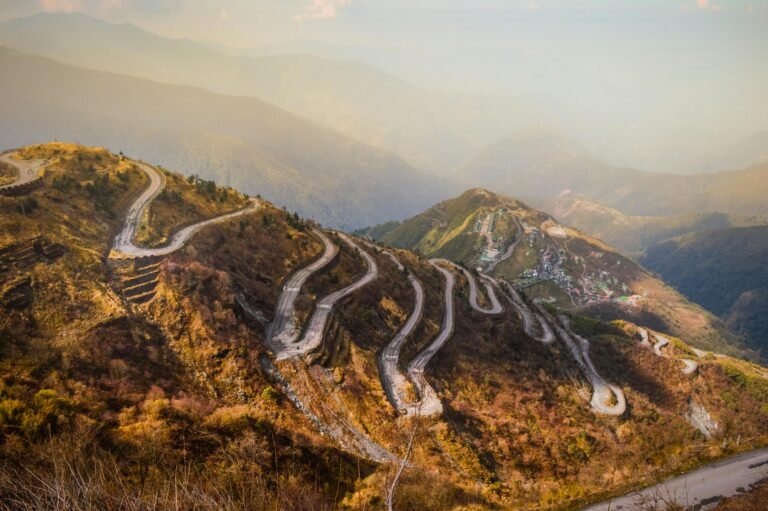
Old Silk Route: Zuluk–Gnathang
- Endless hairpins, cloud play, war memorials.
- Best for: Photographers and road-trip lovers.
South & West Sikkim
- Ravangla: Buddha Park, mellow vibes, tea gardens.
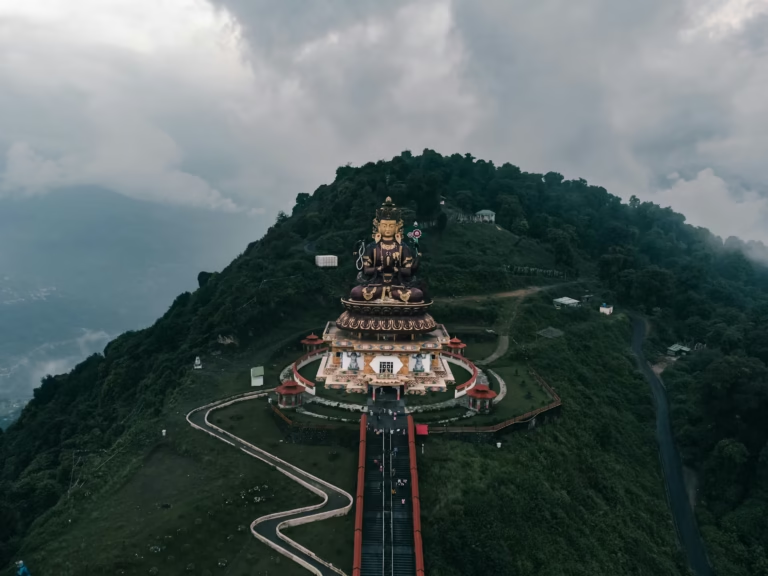
- Namchi: Samdruptse statue, Chardham complex.
- Pelling: Skywalk, Rabdentse ruins, Kanchenjunga views.
How to Reach Gangtok
By Air
- Pakyong Airport (PYG): Closest; limited, weather-dependent flights.
- Bagdogra Airport (IXB): Major gateway (~125 km, 4–5 hours by road).
By Rail
- New Jalpaiguri (NJP): Nearest major railhead (~120 km).
By Road
- From Siliguri/NJP/IXB: Shared jeeps (budget) and private taxis available.
- Approx taxi fare: INR 3,500–5,500 per small car (season/time dependent).
- Shared seats: ~INR 400–600 per person.
Permits & Regulations
- Indian nationals: Permits needed for Tsomgo, Nathula, North Sikkim; tour operators arrange with photo ID and passport-sized photos.
- Foreign nationals: Protected/Restricted Area Permits required for certain zones (e.g., Tsomgo, North Sikkim). Must travel with registered operators; some areas are off-limits.
- Always carry government ID; keep multiple photocopies.
Accommodation Options
- Best areas to stay: MG Marg (walkable, lively), Development Area and Tibet Road (quieter, central), Tadong (value stays), Bojoghari/Chandmari (view rooms).
- Budget: Hostels/guesthouses at INR 600–1,200 per night.
- Mid-range: Comfortable hotels at INR 2,000–4,500 per night.
- Boutique/View stays: INR 4,500–8,000 per night.
- Premium/Luxury: INR 8,000–15,000+ per night.
- Peak seasons (Apr–May, Oct–Nov): Book ahead for better rates and options.
Estimated Costs
- Airport/NJP–Gangtok taxi: INR 3,500–5,500 (private), INR 400–600 (shared seat).
- City cabs/point-to-point: INR 150–600 depending on distance/time.
- Day trip Tsomgo–Baba Mandir:
- Shared: ~INR 900–1,500 per person
- Private: ~INR 5,500–8,500 per vehicle (permits extra as applicable)
- Nathula add-on (Indian nationals): Extra ~INR 500–1,500 per person or ~INR 1,500–3,000 per vehicle, subject to availability.
- Entry fees: Rumtek ~INR 50–100; Flower Centre ~INR 20–40; Zoo ~INR 25–50; Ropeway ~INR 150–200.
- Meals: INR 300–700 per person at MG Marg cafes; local eateries can be less.
- Adventure:
- Paragliding (seasonal): ~INR 2,500–4,000
- Teesta rafting: ~INR 1,000–1,800
Daily budgets (approx):
- Backpacker: INR 2,000–3,000
- Comfort: INR 4,000–7,000
- Premium: INR 9,000+
Suggested Itineraries
Classic 2 Days in Gangtok
- Day 1: MG Marg stroll → Ropeway → Namgyal Institute → Do Drul Chorten → Enchey Monastery → Sunset at Tashi View Point.
- Day 2: Hanuman Tok & Ganesh Tok → Banjhakri Falls → Flower Exhibition Centre → Café hop at MG Marg.
3 Days with a High-Altitude Excursion
- Day 1: City highlights (as above).
- Day 2: Tsomgo Lake + Baba Mandir (+ Nathula for Indian nationals, subject to permits and weather).
- Day 3: Rumtek Monastery → Himalayan Zoological Park → Leisure shopping.
Tips for Travelers
General Tips
- Packing: Layered clothing, rain jacket (year-round), warm cap/gloves for high passes, sunscreen, lip balm.
- Health: Gangtok is ~1,650 m—generally fine, but Tsomgo/Nathula are much higher; hydrate, ascend gradually, and avoid exertion if unwell.
- Monsoon caution: Check road updates; landslides can cause delays.
- Cash & Connectivity: ATMs available in town; UPI widely accepted. Networks (Jio/Airtel) decent in city; patchy in remote areas.
- Permits: Apply a day in advance via a registered operator; carry passport-size photos.
- Responsible travel: No littering; avoid plastic where possible; respect local customs.
For Families
- Choose central hotels near MG Marg for easy walks and meals.
- Avoid very high-altitude trips (Nathula) for kids under 5.
- Pack snacks, basic meds, and a light stroller (hilly terrain can be challenging).
For Honeymooners
- Book a room with mountain views (Bojoghari/Chandmari areas).
- Plan sunrise at Tashi View Point or a quiet temple visit at Hanuman Tok.
- Opt for private day trips for flexible stops and photos.
For Friends/Adventure Lovers
- Try paragliding (seasonal) near Baliman Dara/Reshithang.
- Raft the Teesta (check flow conditions first).
- Split costs with private cabs; permits are easier when arranged together.
FAQs
Q: Do I need a permit to visit Tsomgo Lake and Nathula Pass?
A: Yes. Indian nationals require permits for both, arranged via registered tour operators. Foreign nationals need special permits and are not allowed at Nathula; some zones have additional restrictions.
Q: Is Gangtok suitable to visit during the monsoon?
A: You can visit, but expect heavy rain and potential landslides. Keep buffer time, choose central stays, and check road conditions daily.
Q: What’s the best area to stay in Gangtok?
A: MG Marg and nearby lanes for walkability and dining; Development Area/Tibet Road for quieter but central stays; Bojoghari/Chandmari for panoramic views.
Q: Can foreigners visit North Sikkim (Lachen/Lachung/Gurudongmar)?
A: Foreigners can visit some parts of North Sikkim with Protected/Restricted Area Permits via registered operators, but Gurudongmar Lake is generally not permitted for foreign nationals.
Q: What should I wear in Gangtok and at high passes?
A: In town, light layers and a rain jacket work well. For Tsomgo/Nathula, carry thermal layers, a windproof jacket, warm cap, gloves, and good shoes.
Conclusion
Gangtok pairs monastery calm with café culture and alpine adventures. From MG Marg’s glow to Rumtek’s murals, from flower-bursting ridges to mirror-still lakes, the city is an easy springboard into Sikkim’s high passes and hidden valleys. Plan around seasons and permits, keep an eye on altitude, and you’ll find Gangtok as welcoming as its hillsides are wide.