Table of Contents
- Introduction
- Must-Visit Places in Gangtok
- Local Culture & Food
- Shopping in Gangtok
- Best Time to Visit
- Nearby Getaways
- How to Reach
- Getting Around Gangtok
- Accommodation Options
- Estimated Costs
- Tips for First-Time Visitors
- Traveler-Specific Tips
- Suggested Itineraries
- FAQs
- Conclusion
Introduction
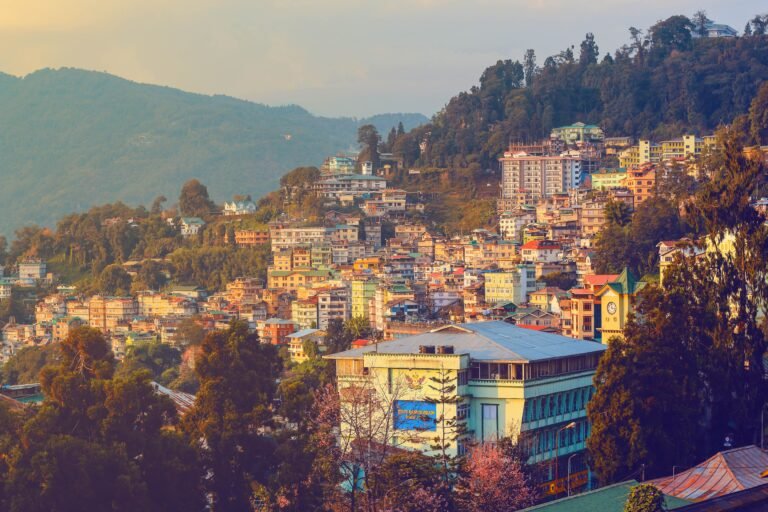
Perched at about 1,650 m in India’s Eastern Himalaya, Gangtok blends sweeping Kanchenjunga views with calm monasteries, café-lined promenades, and crisp mountain air. This first-timer’s guide distills the best places to visit, practical ways to get in and around, what to eat, where to stay, and smart tips to make your Gangtok trip smooth and memorable.
Must-Visit Places in Gangtok
Shortlist these highlights to get the city’s full flavor:
- MG Marg: A clean, pedestrian-only boulevard lined with cafés, bakeries, and shops. Evenings are vibrant yet laid-back.
- Ropeway (Gangtok Cable Car): A scenic glide over the city with valley views. Go on a clear afternoon.
- Tashi View Point: Sunrise spot for Kanchenjunga on crisp mornings (Oct–Nov, late Feb–Apr).
- Hanuman Tok & Ganesh Tok: Hilltop temples with panoramic city and snow-peak vistas.
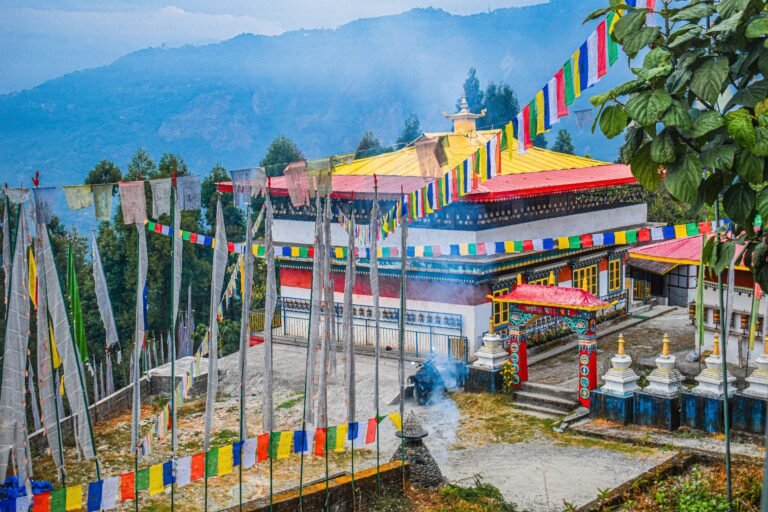
- Enchey Monastery: 200-year-old Gompa wrapped in pines; peaceful morning chants.
- Do Drul Chorten & Namgyal Institute of Tibetology: Iconic stupa and a superb collection on Tibetan Buddhism.
- Banjhakri Falls & Energy Park: Short nature walk, cascades, and folk sculptures.
- Himalayan Zoological Park (Bulbulay): Forested enclosures; go early for better sightings.
- Flower Exhibition Centre (Ridge Park): Seasonal orchids and rhododendrons in bloom.
- Rumtek Monastery (approx. 23 km): Seat of the Kagyu lineage; intricate murals and courtyards.
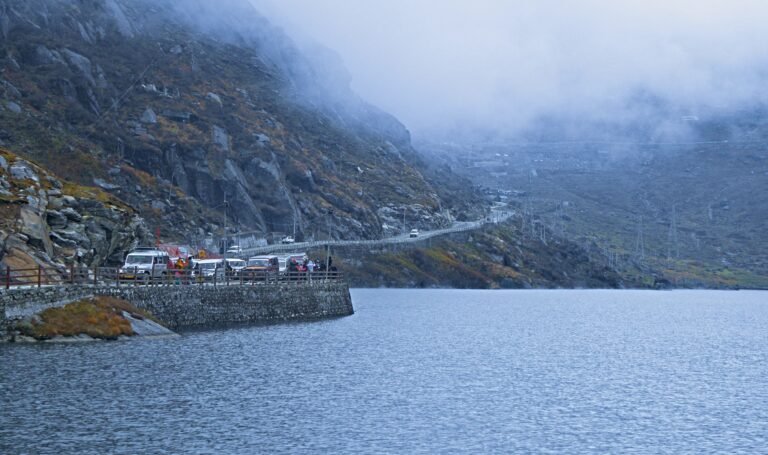
- Tsomgo (Changu) Lake & Baba Mandir (day trip): High-altitude glacial lake; permits required.
- Nathula Pass (day trip, permits required): Historic silk route border post; Indian nationals only; weather/weekday closures possible.
Local Culture & Food
Gangtok’s character is shaped by Lepcha, Bhutia, and Nepali communities. Monasteries hum with prayer wheels; MG Marg hums with live music and coffee. Food borrows from Tibetan, Nepali, and local Sikkimese kitchens—simple, hearty, and perfect for mountain weather.
Food Guide
- Momos (steamed/fried) and thukpa/gyathuk (noodle soups) for comfort.
- Sha phaley (fried meat pies) and phagshapa (pork with radish and chili).
- Gundruk and sinki soups; kinema (fermented soybean dish); chhurpi (local cheese).
- Sel roti (ring-shaped fried bread) with tea; try butter tea or local millet brew tongba where available.
- Cafés and bakeries on/near MG Marg serve great coffee, bakes, and Himalayan fusion plates.
Culture & Etiquette
- Remove shoes and hats in monasteries; dress modestly; keep voices low.
- Ask before photographing monks or prayer rituals.
- Sikkim is eco-forward and largely plastic-free. Carry a reusable bottle; don’t litter or smoke on MG Marg (designated no-smoking zone).
- Languages: Nepali is widely spoken; Hindi and English are common in tourist areas.
Shopping in Gangtok
- MG Marg: Souvenirs, woolens, tea, prayer flags, local snacks.
- Lal Bazaar/Khangchendzonga Shopping Complex: Livelier market for spices (large cardamom), handcrafted items, organic produce.
- Directorate of Handicrafts & Handloom (Ridge area): Carpets, thangkas, woodcarvings, and handlooms with better authenticity.
- Look for: Sikkim tea, bamboo crafts, thangkas, incense, organic soaps, and local pickles.
- Haggle politely in markets; fixed prices in government outlets.
Best Time to Visit
- October–November: Clearest mountain views; cool and dry.
- March–May: Bloom season for orchids and rhododendrons; pleasant days, cool nights.
- December–February: Cold in Gangtok; high-altitude spots (Tsomgo/Nathula) may have snow and intermittent road closures.
- June–September: Monsoon brings mist and landslide risks; fewer crowds, but plan buffer days.
Nearby Getaways
- North Sikkim (permit required): Lachung–Yumthang Valley (flowers, hot springs), Lachen–Gurudongmar Lake (very high altitude; acclimatize).
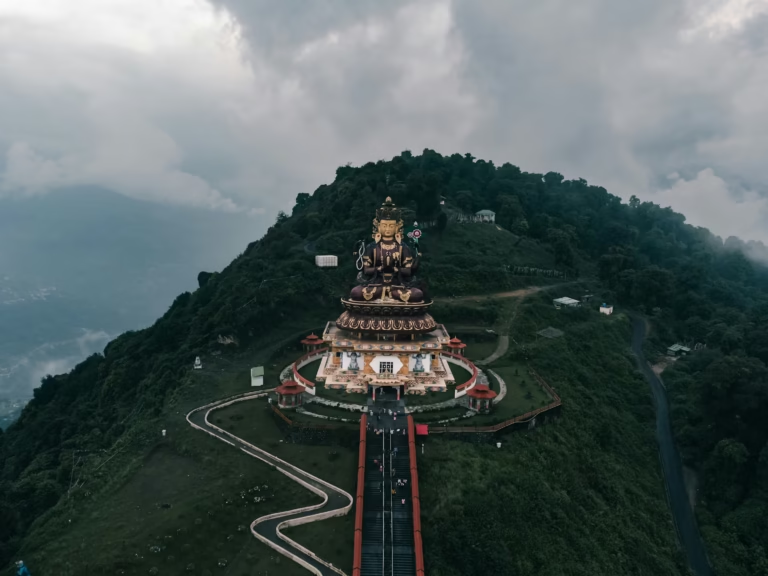
- Ravangla & Buddha Park (approx. 65 km): Serene hill town with giant Buddha statue and views.
- Namchi & Samdruptse (approx. 78 km): Char Dham complex and hilltop statue of Guru Padmasambhava.
- Pelling (approx. 115 km): Skywalk, Rabdentse ruins, and superb Kanchenjunga views.
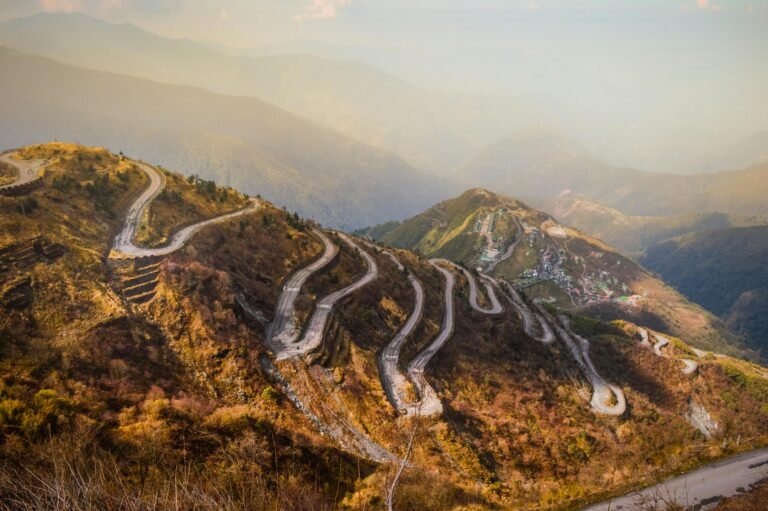
- Old Silk Route (Zuluk, Gnathang) (permit required): Hairpin bends, sunrise points, and raw landscapes.
How to Reach
- By Air:
- Pakyong Airport (PYG): ~30 km from Gangtok; scenic but weather-dependent with potential cancellations.
- Bagdogra Airport (IXB), Siliguri: ~125 km; most reliable air gateway. Private cabs/shared taxis to Gangtok (4–5 hours, road and weather dependent).
- By Rail:
- New Jalpaiguri (NJP): Major railhead near Siliguri. Taxis/shared cabs and buses to Gangtok.
- By Road:
- Frequent shared jeeps and private taxis from Siliguri, NJP, and Bagdogra. Roads are winding; carry motion-sickness meds if needed.
- Permits:
- Indians: No entry permit for Gangtok itself. Permits needed for Tsomgo, Nathula, and North Sikkim; arrange via registered tour operators (carry government ID and 2 passport photos).
- Foreigners: Require a Restricted/Protected Area Permit (RAP/PAP) to enter Sikkim and further permits for specific zones. Obtainable at Rangpo check post, Sikkim Tourism offices, or via tour operators. Foreigners are generally not allowed to visit Nathula.
Getting Around Gangtok
- Local taxis operate on zoned routes; confirm fare before boarding. App cabs are limited.
- Walking: MG Marg and Ridge areas are pedestrian-friendly.
- Ropeway: Useful for views, not a primary commute option.
- Self-drive is not recommended for first-timers due to steep, narrow, and winding roads.
Accommodation Options
Pick areas based on convenience versus tranquility:
- MG Marg & Tibet Road: Walk-to-everything convenience; lively ambiance.
- Development Area: Quieter neighborhoods with wider views; short taxi ride to the center.
- Ranipool/Periphery Resorts: Spacious, resort-style stays; best for slow travelers and honeymooners.
Price ranges (per night, indicative):
- Budget: INR 1,000–2,500 (hostels, simple guesthouses).
- Mid-range: INR 2,500–6,000 (boutique stays, view rooms, breakfast often included).
- Premium: INR 6,000–15,000+ (heritage and resort properties with amenities).
Book view rooms facing the valley when possible; check for heating, hot water timings, and on-site dining in winter.
Estimated Costs
Approximate per-person, per-day budgets (excluding flights), subject to season and availability:
- Shoestring: INR 1,500–2,500 (shared taxis, budget stays, local eateries).
- Comfort: INR 3,000–6,000 (mid-range hotels, a few paid attractions, private local cabs).
- Premium: INR 7,000–12,000+ (premium stays, private sightseeing, guided day trips).
Sample costs:
- Shared Siliguri/NJP to Gangtok: INR 400–600; private cab: INR 3,500–5,500 (vehicle type/season dependent).
- Gangtok Cable Car: approx. INR 200–300 per adult (subject to change).
- Tsomgo Lake shared tour: approx. INR 800–1,500 per person; private SUV: INR 3,500–6,500 + permits (rates vary by season/road conditions).
- Nathula add-on: vehicle surcharge + permit fees; check latest availability and weekday closures.
- Meals: INR 200–600 per person at casual to mid-range places; cafés slightly higher.
Tips for First-Time Visitors
- Weather layers: Mornings/evenings get chilly; pack a light down/jacket, beanie, gloves in winter.
- Altitude awareness: Gangtok is moderate altitude, but Tsomgo/Nathula are high; go slow, hydrate, and avoid strenuous activity on arrival days.
- Monsoon buffers: Build buffer days for roadblocks (June–September).
- Cash & connectivity: ATMs and UPI work in Gangtok; carry cash for outskirts and day trips.
- Responsible travel: No littering, avoid single-use plastic, respect quiet in monasteries.
- Permits: Carry original ID, photocopies, and passport photos. Arrange permits a day in advance via a licensed operator.
- Health: Motion-sickness tablets for winding roads; sunscreen, sunglasses, and lip balm for high-altitude sun and wind.
Traveler-Specific Tips
Families
- Base yourselves near MG Marg to minimize taxi hops with kids.
- Choose gentler outings: Ropeway, Flower Centre, Banjhakri Falls, and Enchey Monastery.
- Avoid long, high-altitude day trips with toddlers; carry snacks, water, and rain covers.
Honeymooners
- Book valley-view rooms in quiet neighborhoods or resorts on the outskirts.
- Time a sunrise at Tashi View Point; enjoy slow breakfasts and evening strolls on MG Marg.
- Consider a private car for Tsomgo to travel unrushed and stop for photos.
Friends/Groups
- Try paragliding (seasonal, at Baliman Dara), mountain biking trails, or river rafting on the Teesta (near Rangpo).
- Plan a Zuluk or North Sikkim extension for adventure with proper permits.
- Evenings: cafés with live music around MG Marg; nights are relaxed rather than late.
Solo Travelers
- Pick central stays, join shared cabs for day trips, and connect with licensed operators for permits.
- Gangtok is friendly and walkable; keep family informed about high-altitude excursions.
Suggested Itineraries
Gangtok in 2 Days
- Day 1: MG Marg stroll, Ropeway, Enchey Monastery, Namgyal Institute of Tibetology, Do Drul Chorten, Flower Centre.
- Day 2: Tashi View Point sunrise, Hanuman Tok/Ganesh Tok, Banjhakri Falls, shopping and café-hop on MG Marg.
Gangtok + Tsomgo in 3–4 Days
- Two days as above + a Tsomgo Lake & Baba Mandir day trip (permits). Add Nathula if open and eligible.
One Week with North Sikkim
- 2–3 days in Gangtok, then Lachung–Yumthang or Lachen–Gurudongmar (permits, acclimatization, and weather-dependent).
FAQs
Q: Do I need a permit to visit Gangtok city?
A: Indians do not need a permit for Gangtok city. Foreigners require a RAP/PAP to enter Sikkim. Separate permits are needed for Tsomgo Lake, Nathula (Indians only), and North Sikkim.
Q: How many days are enough for Gangtok?
A: Two full days cover city highlights. Add 1–2 more days for Tsomgo/Nathula. A week allows extensions to North, South, or West Sikkim.
Q: What is the best month to see Kanchenjunga from Gangtok?
A: Late October to November and late February to April offer the clearest views, especially at sunrise from Tashi View Point.
Q: Is Gangtok safe for solo travelers?
A: Yes, it’s considered safe and traveler-friendly. Use licensed taxis, keep permits/IDs handy for day trips, and check weather/road updates.
Q: Can foreigners visit Nathula Pass?
A: Generally, no. Access to Nathula is restricted to Indian nationals with permits. Foreigners may visit other areas with appropriate RAP/PAP and zone permits.
Conclusion
Gangtok rewards first-time visitors with an easy blend of Himalayan views, monastery calm, and café culture. Plan around clear-weather months, stay central for convenience, arrange permits in advance for high-altitude day trips, and embrace the region’s eco-conscious ethos. With this guide’s places, routes, costs, and practical tips, you’re set to experience Gangtok smoothly and meaningfully.