Table of Contents
- Introduction
- Best Time to Visit Lachung
- Must-Visit Places in and around Lachung
- Local Culture, Food and Shopping
- Nearby Getaways from Lachung
- How to Reach Lachung
- Where to Stay and Estimated Costs
- Travel Tips and Packing Guide
- Traveler-Specific Advice
- FAQs about Visiting Lachung
- Conclusion
Introduction
Lachung, set at around 2,600 m (8,530 ft) in North Sikkim, is the classic Himalayan village that opens the door to Yumthang Valley (the famed Valley of Flowers), Shingba Rhododendron Sanctuary, and Yumesamdong/Zero Point. Whether you’re chasing knee-deep snow, carpets of rhododendrons, or crystal-clear views of snowy summits, timing your trip is everything here—because weather and road access shift dramatically across seasons.
Best Time to Visit Lachung
For Snow
Best window: January to early March (peak chances), with late February to mid-March offering the best balance between snow and open roads.
- Where: Zero Point (Yumesamdong, ~4,600 m) and Katao (permit-dependent) usually hold snow longer; Yumthang can have snow in deep winter.
- Trade-offs: Roads can close after fresh snowfall, especially Jan–Feb. Expect sub-zero mornings, icy patches, and limited facilities at high points.
- Tip: Keep one buffer day; hire a local 4×4. Check road status in Gangtok/Chungthang before departure.
For Flowers
Best window: Late April to late May is prime bloom in Yumthang Valley and Shingba Rhododendron Sanctuary.
- What blooms: Rhododendrons in many hues, primulas, and alpine wildflowers paint the valley.
- Weather: Cool days, cold nights; occasional pre-monsoon showers from late May. Roads are typically open.
- Tip: Start early for softer light, fewer crowds, and clearer skies before afternoon clouds gather.
For Clear Views
Best window: October to November, and late February to March.
- Why: Post-monsoon air is dust-free; winter-skies are crisp. Early spring brings clarity before pre-monsoon haze.
- Bonus: Autumn also aligns with festivals and harvest scenes in the villages.
Month-by-Month Weather and Road Access
- Dec–Jan: Very cold (down to -5°C at night). High chance of snow at Zero Point/Katao; intermittent road blocks possible.
- Feb–Mar: Cold, clearer spells. Great for snow with better access than deep winter; late Mar starts warming.
- Apr: Cool and vibrant; early rhododendrons. Morning views often clear; afternoons can cloud over.
- May–early Jun: Peak flowers; occasional showers. Pleasant but can be busy.
- Mid Jun–Sep (Monsoon): Heavy rain, landslides, clouded views; travel disruptions likely. Not ideal.
- Oct–Nov: Dry, crisp, and scenic. Best for photography and stable roads; cold nights.
Must-Visit Places in and around Lachung
- Yumthang Valley (3,500+ m): Meadows, Lachung Chu river, spring blooms; winter brings frost and occasional snow.
- Shingba Rhododendron Sanctuary: Core bloom zone Apr–May with dozens of rhodo species.
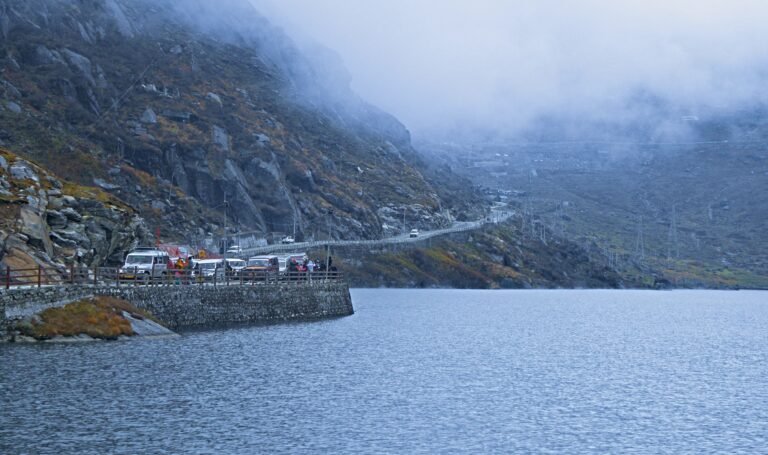
- Zero Point / Yumesamdong (~4,600 m): High-altitude moonscapes; snow most of winter and often till April. Access depends on permits/roads.
- Mt. Katao: Panoramas and winter snow play; permit-dependent, often controlled by the army.
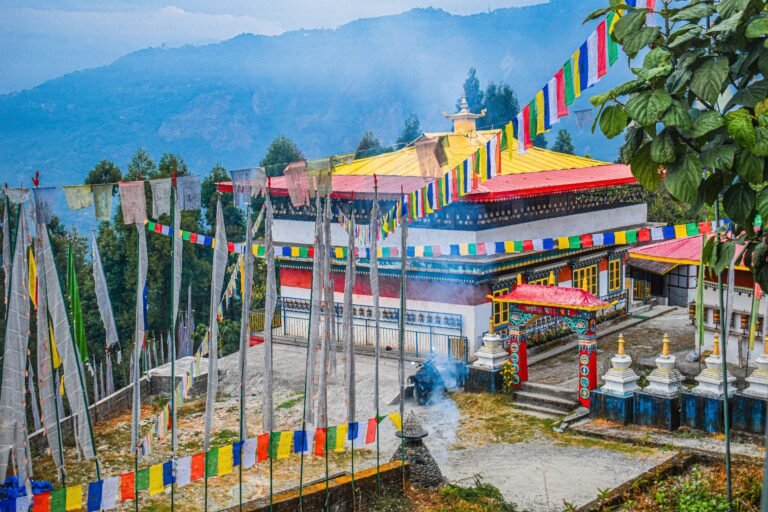
- Lachung Monastery: Serene stop for local culture and valley views.
- Waterfalls en route: Bhim Nala, Naga, and Seven Sisters (on the Gangtok road) are photogenic breaks.
- Yumthang Hot Spring: Rustic soak near the river; basic facilities.
- Chungthang Confluence: Where Lachen Chu and Lachung Chu meet—dramatic valley scenery.
Local Culture, Food and Shopping
Culture: Lachung is predominantly Bhutia with strong Buddhist traditions. Village life is slow, communal, and closely tied to the seasons.
Food to try:
- Momos and thukpa (comfort staples in the cold)
- Phagshapa (pork with radish), gundruk soup, churpi (yak/ cow’s milk cheese)
- Butter tea and local millet brews (where available)
- Simple riverside Maggi/tea stalls at high points
Shopping: Small markets sell woolens, caps, prayer flags, and local handicrafts. Carry cash; ATMs and card acceptance are limited.
Nearby Getaways from Lachung
- Lachen & Gurudongmar Lake: Stark high-altitude beauty; usually done as a separate 1N trip from Gangtok/Lachen.
- Dzongu (Lepcha Reserve): Community stays, nature walks, hot springs—great offbeat add-on.
- Gangtok: Ropeway, monasteries, cafes; base for permits and transfers.
How to Reach Lachung
- By Air: Bagdogra (IXB) is the main gateway; Pakyong (PYG) has limited flights (weather-dependent).
- By Rail: New Jalpaiguri (NJP) is the nearest major railhead.
- By Road:
- IXB/NJP to Gangtok: 4–5 hours by taxi/shared cab.
- Gangtok to Lachung: 5–6 hours via Mangan–Chungthang (road condition and season dependent).
- Permits: North Sikkim is a restricted area. Indian nationals need permits (arranged by licensed tour operators; carry valid photo ID and passport photos). Foreign nationals require Protected Area Permits, and access beyond Yumthang (e.g., Zero Point/Katao) may be restricted—check latest rules in Gangtok.
- Seasonal note: Monsoon (Jun–Sep) and deep winter (Jan–Feb) can bring closures/landslides. Always check current status before departure.
Where to Stay and Estimated Costs
Accommodation types: Homestays, basic-to-mid-range hotels, a few boutique lodges. Heating is often via electric blankets/room heaters (sometimes charged extra).
- Budget: INR 1,500–2,500 per room/night (simple rooms, hot water at fixed hours)
- Mid-range: INR 3,000–6,000 per room/night (better views, meals included in some)
- Premium: INR 7,000–12,000+ per room/night (limited availability; book early in flower/autumn seasons)
Daily trip budgeting (per person):
- Budget: INR 2,500–4,000 (shared cab, homestay, simple meals)
- Mid-range: INR 5,000–9,000 (private vehicle share, mid hotel, permits/meals)
- Higher: INR 12,000+ (private 4×4, premium stay, guided excursions)
Transport costs: 2N/3D North Sikkim packages (Lachung/Yumthang/Zero Point) commonly range from INR 4,500–9,000 per person in a shared vehicle; private 4×4 charters can be INR 18,000–35,000+ per vehicle depending on season and inclusions.
Travel Tips and Packing Guide
- Acclimatization: Spend a night in Gangtok before heading higher. Zero Point is very high; walk slowly, stay hydrated, avoid heavy exertion.
- Clothing: Layer up—thermals, fleece/down, waterproof jacket, gloves, woolen cap. In spring/autumn, mornings and evenings are cold.
- Footwear: Waterproof hiking shoes or sturdy sneakers with good grip; warm socks.
- Sun and glare: Sunglasses (Category 3/UV), SPF 30+ sunscreen, lip balm. Snow glare can be intense.
- Health kit: Personal meds, motion-sickness tablets, basic first aid. Oxygen cans can help for brief relief at high passes but are not a substitute for acclimatization.
- Cash & connectivity: Carry sufficient cash. Mobile networks are patchy; BSNL/Jio often work better, but expect long no-signal stretches.
- Responsible travel: No littering in alpine zones; avoid plucking flowers in Shingba Sanctuary; minimize single-use plastics.
- Timing: Start drives early to avoid afternoon clouds and possible check-post queues.
Traveler-Specific Advice
For Families
- Choose late Feb–Apr or Oct–Nov for manageable cold and clearer roads.
- Carry snacks, thermos bottles, and extra warm layers for kids; limit time at Zero Point due to altitude.
- Confirm hotel heating and 24/7 hot water.
For Honeymooners
- Pick boutique homestays with valley views in Oct–Nov or late Mar–May.
- Book a private 4×4 for flexibility and comfort; pack moisturizers and humidifier tablets (dry air).
- Target sunrise/sunset viewpoints for photography on clear days.
For Friends/Adventure Seekers
- Jan–Mar for snow play; Apr–May for trekking-lite meadow walks and blooms.
- Carry microspikes or good traction in winter; respect army zones and local rules.
- Keep a buffer day for weather-related delays.
FAQs about Visiting Lachung
Q: What is the best time to visit Lachung for snow?
A: January to early March offers the highest snow probability, especially at Zero Point and Katao. Late February to mid-March balances snow with better road access.
Q: When do flowers bloom in Yumthang Valley?
A: Late April through May is peak bloom in Yumthang and the Shingba Rhododendron Sanctuary, with vibrant rhododendrons and alpine flowers.
Q: Which months give the clearest mountain views?
A: October–November and late February–March usually provide the crispest skies and best photography conditions.
Q: Is Lachung accessible during monsoon?
A: Technically yes, but heavy rain (mid Jun–Sep) brings landslides and poor visibility. Travel disruptions are common, so it’s not recommended.
Q: Do I need permits to visit Lachung, Yumthang, and Zero Point?
A: Yes. North Sikkim permits are mandatory and are arranged by licensed operators. Indian citizens typically get them with valid ID. Foreign nationals require Protected Area Permits, and access beyond Yumthang (e.g., Zero Point/Katao) may be restricted—check current rules in Gangtok.
Conclusion
Time your Lachung trip to match your dream experience: Jan–Mar for snow thrills, late Apr–May for flower-filled meadows, and Oct–Nov or late Feb–Mar for crystal-clear Himalayan vistas. With permits sorted, an early start each day, and smart layering, you’ll unlock the best of Yumthang, Zero Point, and the gentle rhythms of this Bhutia village in North Sikkim.