Table of Contents
- Introduction
- Why Visit Darjeeling in March
- Must-Visit Places in Darjeeling
- Local Culture and Food
- Nearby Getaways from Darjeeling
- How to Reach Darjeeling
- Accommodation and Estimated Costs
- Local Experiences, Shopping, and Tea Trails
- Travel Tips for Families, Honeymooners, and Friends
- Frequently Asked Questions
- Conclusion
Introduction
Darjeeling in March feels like a gentle opening act to spring. The chill of winter begins to soften, the skies are often clearer than in the monsoon months, and the hills wear a fresh, green look that makes every viewpoint and tea garden feel even more inviting. If you are planning a trip to this beloved Himalayan town, March is one of the most rewarding times to go.
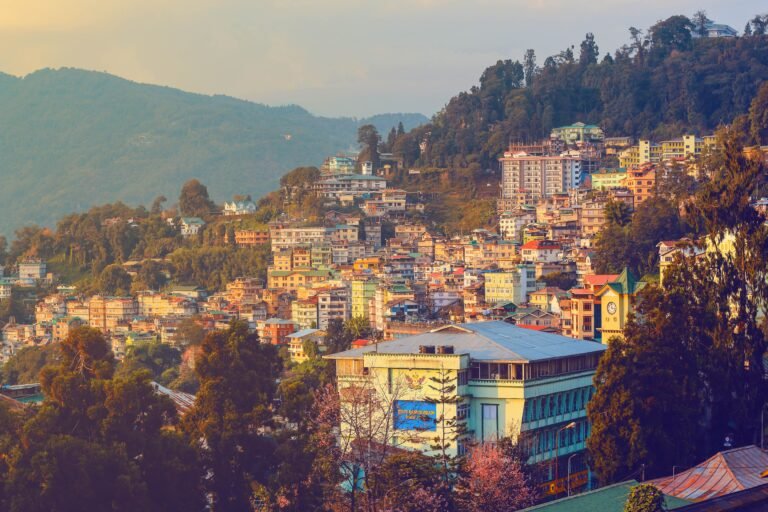
Known for its tea estates, toy train charm, and sweeping views of Kanchenjunga, Darjeeling offers a mix of scenic beauty, heritage, and everyday mountain life. In this guide, you will find the best places to visit, how to reach, where to stay, what to eat, and practical tips for a smooth March getaway.
Why Visit Darjeeling in March
March is a shoulder season in Darjeeling, which means the town is lively but not yet overwhelmed by peak-season crowds. It is a great month for sightseeing, tea garden walks, and sunrise views, especially when the weather stays clear.
What to expect in March
- Temperature: Usually cool and pleasant, with cold mornings and evenings.
- Visibility: Often better than during the monsoon, making mountain views more likely.
- Landscape: Fresh greenery, blooming flowers, and comfortable conditions for walking.
- Crowds: Moderate, which helps with hotel availability and easier sightseeing.
If you enjoy crisp hill air without the harsher winter freeze, March is an excellent time to experience Darjeeling at a relaxed pace.
Must-Visit Places in Darjeeling
Darjeeling is compact enough to explore comfortably, yet rich enough to keep you busy for several days. These are the places most travelers should include in a March itinerary.
1. Tiger Hill
Famous for its sunrise views, Tiger Hill is the classic Darjeeling experience. On clear March mornings, the first light often reveals Kanchenjunga in glowing shades of gold and pink. On especially clear days, you may even catch a distant glimpse of Mount Everest.
2. Batasia Loop
This scenic railway loop combines engineering, history, and mountain views. The landscaped gardens and the war memorial make it a meaningful stop, especially when paired with a toy train sighting.
3. Darjeeling Himalayan Railway
The heritage toy train is one of Darjeeling’s most iconic experiences. Even a short ride is enough to feel the old-world rhythm of the hills and appreciate the charm of this UNESCO-listed railway.
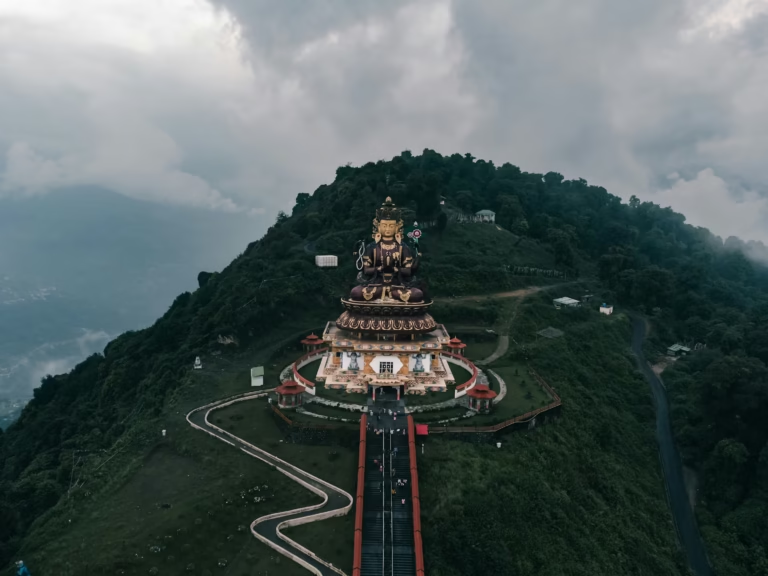
4. Peace Pagoda
Located on the slopes of the town, the Peace Pagoda offers a calm and spiritual atmosphere. It is a lovely spot for quiet reflection, photography, and panoramic views.
5. Padmaja Naidu Himalayan Zoological Park
This well-known zoo focuses on Himalayan wildlife, including red pandas and snow leopards. It is one of the best places to understand the region’s fragile mountain ecosystem.
6. Himalayan Mountaineering Institute
Located near the zoo, this institute gives insight into the history of mountaineering in India. It is especially interesting for families and adventure enthusiasts.
7. Mall Road and Chowrasta
These are among the most popular social spaces in Darjeeling. You can enjoy a slow walk, watch local life unfold, shop for souvenirs, or simply sit with a cup of tea and mountain views.
8. Tea Gardens and Estates
No Darjeeling itinerary is complete without visiting a tea estate. In March, the tea bushes begin to look lush and vibrant, and the rolling plantations create one of the most photogenic landscapes in the region.
Suggested order for a 2-day trip
- Day 1: Tiger Hill, Batasia Loop, Ghoom Monastery, Mall Road, Chowrasta
- Day 2: Tea estate visit, Peace Pagoda, Himalayan Mountaineering Institute, Padmaja Naidu Himalayan Zoological Park
Local Culture and Food
Darjeeling’s charm is not only in its views but also in its cultural mix. The town reflects Nepali, Tibetan, Bengali, and other Himalayan influences, which show up in its festivals, food, and everyday habits.
Local culture
- Tea heritage: Darjeeling tea is world-famous and central to the local identity.
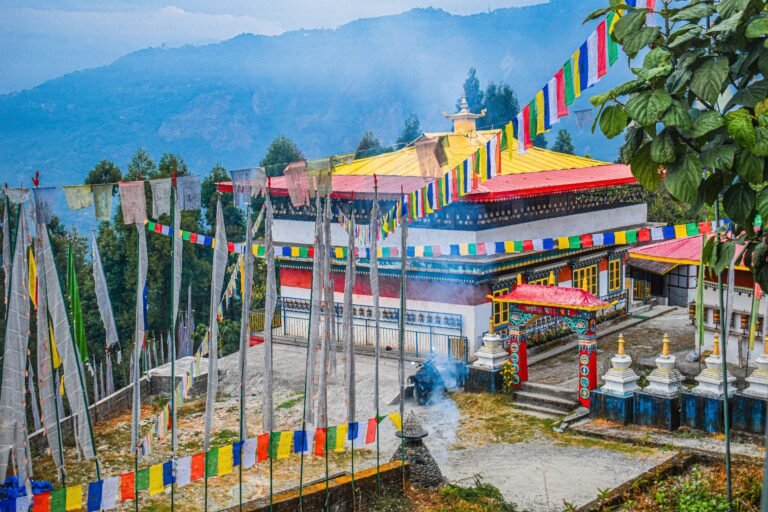
- Monastic culture: Buddhist monasteries and prayer flags are part of the hillscape.
- Community life: The town has a relaxed mountain rhythm, with cafes, schools, markets, and heritage spaces blending together.
What to eat in Darjeeling
- Momos: Steamed or fried, often served with spicy chutney.
- Thukpa: A warm noodle soup that is especially comforting in the hills.
- Alu dum: A flavorful local-style potato dish, often eaten with sel roti or bread.
- Sel roti: A traditional ring-shaped rice bread, popular in Nepali households.
- Darjeeling tea: Light, fragrant, and best enjoyed fresh in a local tea shop or estate.
Where to try local food
- Small family-run eateries near Chowrasta and the main market
- Tea lounges and heritage cafes
- Roadside stalls for quick snacks like momos and steamed corn
Nearby Getaways from Darjeeling
If you have extra time, several lovely hill destinations sit within comfortable driving distance of Darjeeling. These can be added as day trips or short overnight extensions.
1. Mirik
Mirik is known for its serene lake, pine forests, and quieter atmosphere. It is ideal for families and travelers who want a calmer mountain outing.
2. Kalimpong
Kalimpong offers monasteries, flower nurseries, and broad valley views. It has a gentler pace and works well as a contrasting stop to Darjeeling.
3. Lamahatta
This eco-park-like destination is appreciated for nature walks, forest paths, and scenic viewpoints. It is a pleasant stop for a half-day or day trip.
4. Lepchajagat
Lepchajagat is known for its peaceful forest setting and mountain views. It is especially appealing for couples and travelers looking for quiet stays.
5. Kurseong
Kurseong is another charming hill town with tea gardens, churches, and a laid-back atmosphere, making it a good stop along the route to Darjeeling or back toward the plains.
How to Reach Darjeeling
Darjeeling does not have a direct airport or railway station in the town itself, so most travelers arrive via Siliguri and then continue uphill by road or toy train connections.
By air
- Nearest airport: Bagdogra Airport
- From airport to Darjeeling: About 3.5 to 4.5 hours by road, depending on traffic and weather
By train
- Nearest major railheads: New Jalpaiguri (NJP) and Siliguri
- From NJP: Hire a car, shared jeep, or connect via the heritage toy train route where available
By road
- Shared jeeps and private taxis are common from Siliguri, NJP, and Bagdogra
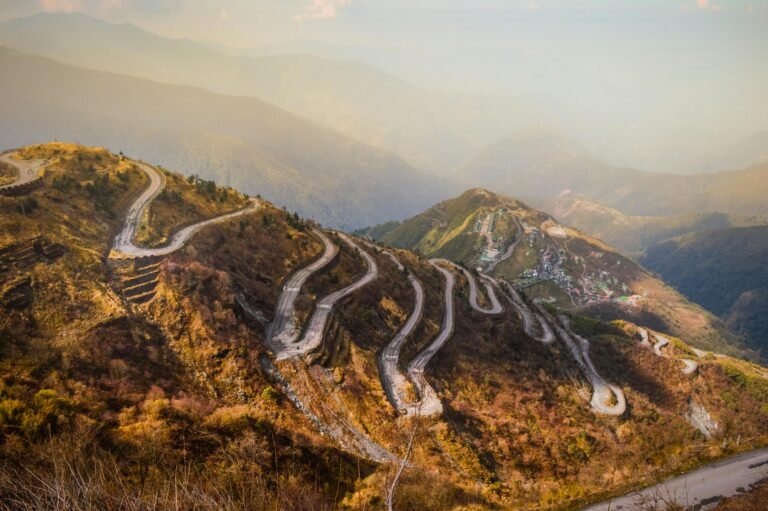
- The road climbs through winding hills, so allow extra time, especially in the morning or during foggy conditions
Travel note for March
March usually brings manageable road conditions, but hill traffic, road repairs, or sudden weather changes can still affect travel time. Starting early is the safest approach.
Accommodation and Estimated Costs
Darjeeling has accommodation for nearly every travel style, from budget guesthouses to heritage hotels and boutique stays. In March, booking a little in advance is smart, especially for rooms with valley or Kanchenjunga-facing views.
Where to stay
- Near Mall Road / Chowrasta: Best for easy access to shopping, cafes, and town walks
- Near Gandhi Road and the main market: Convenient for transport and local dining
- Tea estate stays: Great for a scenic, slower experience
- Hillside boutique hotels: Ideal for couples and travelers seeking views
Estimated costs per day
- Budget stay: INR 1,200 to 2,500 per room
- Mid-range stay: INR 3,000 to 6,000 per room
- Premium or heritage stay: INR 7,000 and above per room
Typical travel budget for a 2-night trip
- Budget traveler: INR 6,000 to 10,000 per person
- Mid-range traveler: INR 10,000 to 18,000 per person
- Comfort-focused trip: INR 18,000 and above per person
These estimates can vary depending on season, room category, transport choice, and whether you include guided sightseeing or tea estate visits.
Local Experiences, Shopping, and Tea Trails
Some of the best Darjeeling memories come from slow, ordinary moments: a hot cup of tea, a walk through a market lane, or a quiet hour looking over the hills.
Tea experiences
- Visit a tea garden or factory to learn how Darjeeling tea is processed
- Taste different tea varieties, including first-flush blends when available
- Buy sealed tea from trusted sellers for a fresh takeaway
Shopping in Darjeeling
- Tea: The most classic souvenir
- Woolens: Shawls, scarves, gloves, and sweaters for the cool climate
- Handicrafts: Local crafts, prayer flags, and small decorative pieces
- Snack items: Packaged noodles, local cookies, and hill produce from the market
Simple local experiences to enjoy in March
- Take an early morning walk before the town gets busy
- Watch the toy train pass through scenic sections
- Spend time at a tea shop with a view rather than rushing from one attraction to another
- Enjoy sunset from a quiet ridge or hotel terrace if skies are clear
Travel Tips for Families, Honeymooners, and Friends
Darjeeling works beautifully for different kinds of travelers, but a little planning makes the trip more comfortable.
For families
- Choose centrally located hotels to reduce travel time in the hills
- Plan shorter sightseeing days to avoid fatigue, especially with children or older travelers
- Keep snacks, water, and light jackets handy during outings
For honeymooners
- Book a room with a view if possible, as mornings are especially romantic in March
- Include tea estate visits, peaceful walks, and a slow café stop in the itinerary
- Choose private transfers for a smoother and more intimate trip
For friends
- Combine sightseeing with food hopping and market walks
- Plan one flexible day for spontaneous stops and viewpoint photography
- Keep group logistics simple by staying in the same central area
Packing tips for March
- Layered clothing for cool mornings and mild afternoons
- A light woolen jacket or windproof coat
- Comfortable walking shoes with grip
- Sunscreen, sunglasses, and lip balm
- Basic medicines for motion sickness if you are sensitive to hill roads
Safety and comfort tips
- Start early for sunrise or long-distance sightseeing
- Check weather updates before heading to viewpoints
- Keep some cash handy, as small shops may not always accept digital payments reliably
- Respect local customs near monasteries and heritage spaces
Frequently Asked Questions
Q: Is March a good time to visit Darjeeling?
A: Yes, March is one of the better months to visit Darjeeling. The weather is generally pleasant, the hills look fresh after winter, and the chances of clear mountain views are often good.
Q: What should I pack for Darjeeling in March?
A: Pack layered clothing, a light woolen jacket, comfortable shoes, sunscreen, sunglasses, and a small umbrella or rain layer just in case the weather changes.
Q: How many days are enough for Darjeeling?
A: A 2-night, 3-day trip is good for the main highlights, but 4 to 5 days is better if you want to add tea gardens, nearby getaways, and a slower pace.
Q: How do I reach Darjeeling from the nearest airport?
A: The nearest airport is Bagdogra. From there, Darjeeling is usually reached by car or shared jeep, with travel time depending on road and traffic conditions.
Q: Is the toy train worth experiencing in Darjeeling?
A: Yes, the Darjeeling Himalayan Railway is one of the town’s most memorable experiences. Even a short ride can add a strong sense of heritage and charm to the trip.
Conclusion
Darjeeling in March offers a balanced mix of clear mountain views, comfortable sightseeing weather, tea-garden beauty, and relaxed hill-town atmosphere. From Tiger Hill and Batasia Loop to local food, monastery visits, and nearby escapes like Mirik and Kalimpong, the town has enough variety to satisfy both first-time visitors and repeat travelers. With the right packing, early starts, and a flexible itinerary, March can be one of the most enjoyable times to experience Darjeeling’s timeless charm.